
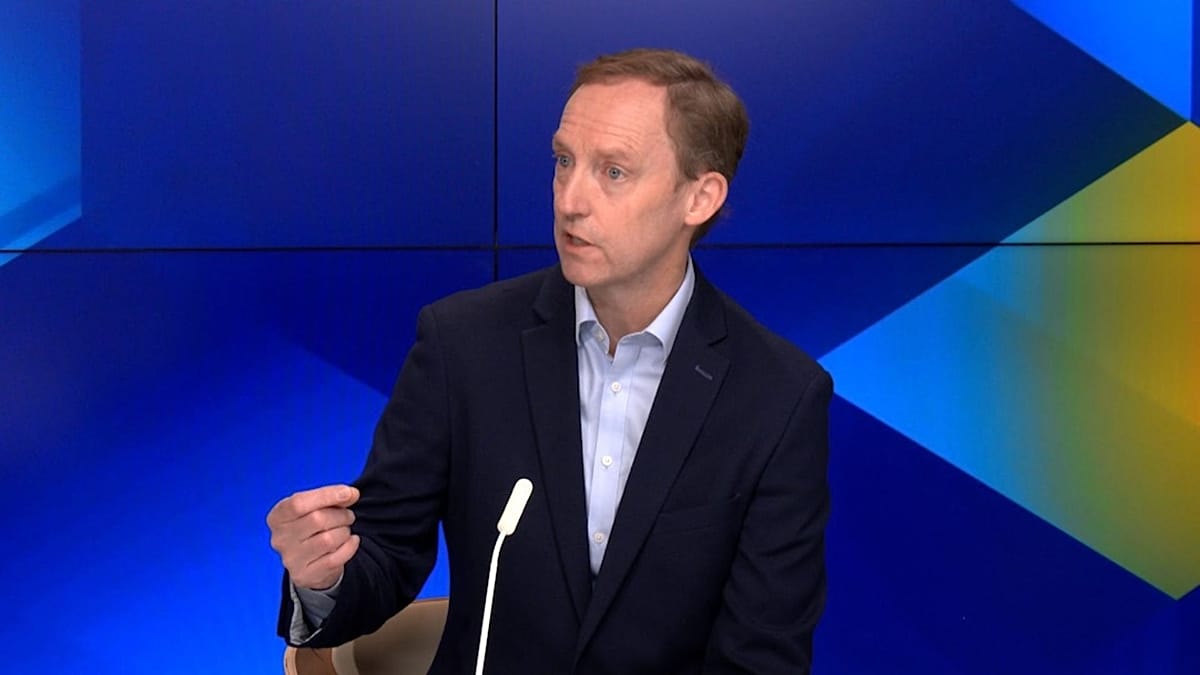


Probes such as the ongoing investigation into how the College of Europe was awarded a contract by the EU’s diplomatic arm (EEAS) could tarnish the EU’s name, the bloc’s watchdog, Teresa Anjinho, said in Euronews’ interview programme 12 Minutes With.
“Whenever you have these kinds of allegations that are related to integrity issues, it is very important to acknowledge that you always have high risks in terms of damaging the reputation of the European Union as a whole,” Anjinho said.
The inquiry revolves around suspicions that the EEAS broke its own rules by providing upfront information to the College of Europe regarding a 2021-2022 tendering process. As part of the probe, police raided the College of Europe in Bruges and the EEAS offices in Brussels.
The investigation implicates the former EU foreign policy chief Federica Mogherini, who served as a rector at the institute of European studies until she resigned after news broke of the inquiry.
This latest investigation comes on the back of this year’s probe into Chinese tech giant Huawei engaging in illicit lobbying practices to sway EU policy in its favour, and the 2022 “Qatargate” scandal, involving allegations of a cash-for-influence scheme that linked MEPs and ex-MEPs to third countries, namely Morocco and Qatar.
“It also hinders the already very high standards that exist and efforts that institutions are making to guarantee that they do have strong integrity frameworks,” Anjinho said.
She added that this is the “time for justice”. The ongoing investigation is outside the EU watchdog’s mandate, and is instead overseen by the European Public Prosecutor’s Office (EPPO), alongside Belgian police and the European Anti-Fraud office (OLAF).
The EPPO said that, if proven, the facts “could constitute procurement fraud, corruption, conflict of interest and violation of professional secrecy”.
“I can only hope that this case will be solved as fast as possible and that all the facts will be clear and that the institutions will also be transparent and collaborative in guaranteeing that the public can continue to trust the European Union institutions,” Anjinho said.
Watchdog under scrutiny
Anjinho leads the watchdog responsible for probing cases of “maladministration” across the EU institutions and holding government bodies to account. This includes probing tendering procedures and hiring decisions.
She herself came under scrutiny earlier this year after she offered her head of cabinet, Lampros Papadias, the job of secretary general, the most senior civil servant role in her institution.
This decision raised questions about cronyism, which her role aims to stamp out, and Anjinho faced scrutiny from MEPs over this move.
The Parliament’s Budgetary Control Committee last month sent questions to the Ombudsman asking her to “shed light” on this decision; however, no investigation is ongoing.
Anjinho insists the process was “not a promotion, but a selection procedure”, which she was a part of.
“Yes, I was part of this procedure, but I was guaranteeing from the very beginning exactly this accountability with clear checks and balances and being transparent and public about it,” she said, adding that the hiring decision was “not dependent on any discretionary power” from her part.
When asked whether she was concerned that this decision could undermine her reputation, she noted that she is “not immune to media coverage”.
“I think that for the future it is important also to reflect on how I can safeguard the institution in these kinds of procedures for any kind of perception that might exist regarding possible favouritism,” she concluded.