

The EU’s diplomatic service is facing criticism from lawmakers and civil society after withdrawing its backing for a disinformation conference at the last minute, following pressure from Washington.
ADVERTISEMENT


ADVERTISEMENT
The European External Action Service (EEAS) pulled out of the conference, one of the few European-level gatherings devoted to the issue, saying its programme did not align with EU positions. Critics say the move contradicts the bloc’s own approach to protecting civil society.
“We have decided to have the EEAS logo removed from the material associated with the conference in view of the content of the program,” said Christian Wigand, the EU’s lead spokesperson for foreign affairs, on Thursday.
“The organisers chose to frame some of the discussions in a way which does not align with the positions held by the EU,” he continued.
Critics say that withdrawing support from an NGO-led initiative because of a clash with the EU’s official position undermines the European Democracy Shield, a framework intended to protect civil society and journalists from governmental pressure and foreign interference.
“Pressuring European governments to drop a disinformation conference to hide its own role in spreading disinformation is not diplomacy. It is foreign interference, and Europe should call it that,” said MEP Alexandra Geese (Germany/Greens/EFA).
The EEAS declined to say which parts of the conference did not align with EU views. It quietly asked organisers to remove its logo from the conference material just days before the event began.
Canada and Lithuania also asked for their logos to be removed following pressure from the US State Department, Euronews can confirm.
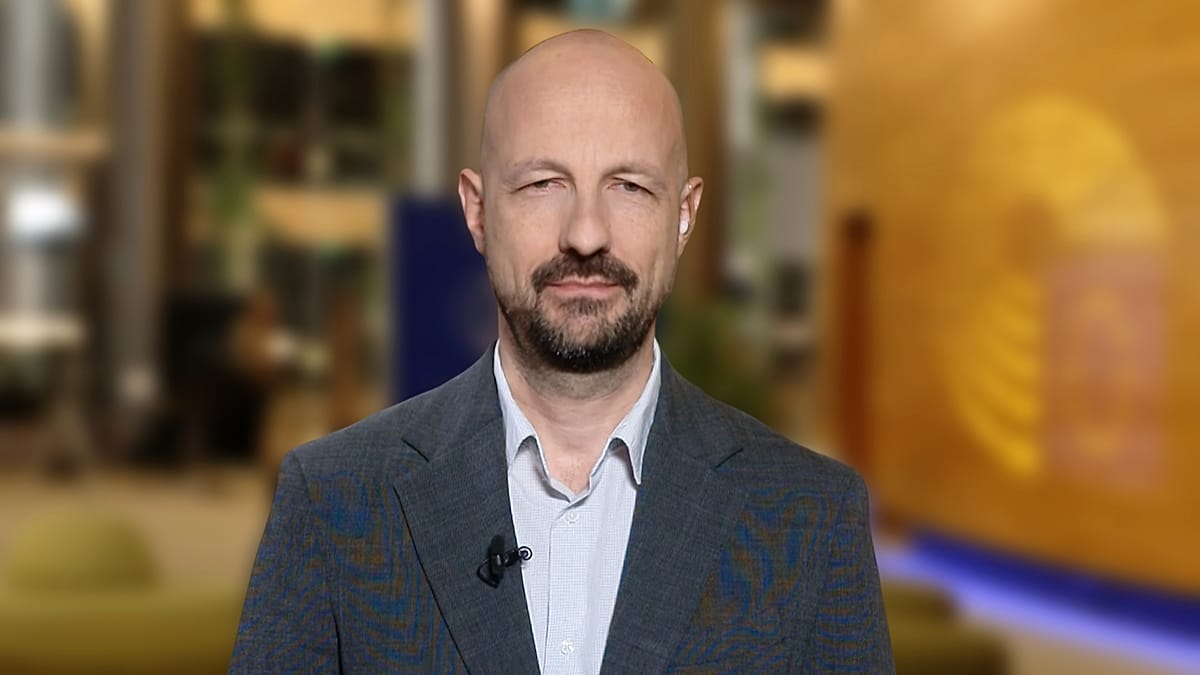
“Pulling support from the conference at the last minute is a hugely irresponsible move, especially from the EEAS. It shows a lack of commitment to actually fighting disinformation. That looks like the EU is treating disinformation as a commodity,” Domen Savic, co-founder of the NGO Državljan D, told Euronews.
The conference, organised by the NGO EU DisinfoLab, is taking place on Wednesday and Thursday in Vilnius, Lithuania.
For MEP Brando Benifei (Italy/S&D), the EEAS’s withdrawal of support is a serious matter that deserves a full explanation.
“Frankly, it is difficult to see how the Vilnius discussions are so at odds with the EU’s stated position. Nor does it seem that we are filling this void with stronger European democracy by hiding our logos,” Benifei told Euronews.
In EU jargon, FIMI stands for foreign information manipulation and interference. The latest EEAS report on the subject, published in March, names China and Russia as hostile actors conducting such operations in Europe but does not mention the US.
The programme includes a panel titled “USA as a FIMI threat: acknowledge, adapt, push back”, featuring two researchers and Alex Finley, a former CIA official.
“There are no good and bad interferences in our democracies, the ones we decide to ignore versus the ones we agree to counter. My approach to the fight against FIMI is country-agnostic, and so it should be for the EEAS,” MEP Nathalie Loiseau (France/Renew), chair of the special committee on the Democracy Shield, told Euronews.
“The Trump government publicly states that they want to help the far right rise to power in Europe. If the Commission does not even dare to recognise US interference, because they fear Trump, we are lost,” said MEP Kim van Sparrentak (the Netherlands/Greens/EFA).
“With this mentality I’m starting to question whether the European Commission can credibly lead and coordinate our European responses to hybrid threats,” she added.
The decision was taken at a very high level within the EU institutions and caught even officials working directly on the issue off guard, Euronews understands.
A few days before the conference, Michael Shellenberger, a right-wing US commentator, emailed several speakers. He asked whether they had received government funding and what they hoped to achieve with their sessions.
“Do you regard the US government as a source of foreign information manipulation and interference (FIMI) in Europe? Have you had any contact with the State Department or another US agency about your work or this conference?” reads the email, seen by Euronews.
At the same time, others argue that Brussels should not bicker with Washington, least of all over an NGO-led conference, because transatlantic unity is needed to confront what they see as the West’s real enemies.
“I regret that the US feels it is being perceived as a FIMI actor by the EU. When it comes to FIMI, the EU should remain firmly focused on the threat posed by Russia and other hostile actors. Full stop,” MEP Tomas Tobé (Sweden/EPP) told Euronews.
By contrast, some argue that withdrawing support at the last minute from a conference that is one of the few serious European-level venues where experts, civil society and private actors discuss disinformation sends a clear message to the community to steer clear of US interference.
“The US actions are hardly surprising, the disinformation community has already been under increasing pressure since Donald Trump returned to the White House, but it has never been so blatant,” Mattia Caniglia, an affiliate lecturer at the University of Glasgow, told Euronews.
“EU institutions and the majority of member states react to these incidents like the world was still the one we had in 2010, but things have changed. Sacrificing the support to an NGO not to put important dossiers in peril will not work; standing for what we believe in will,” he said.
Vincenzo Genovese contributed to the reporting.