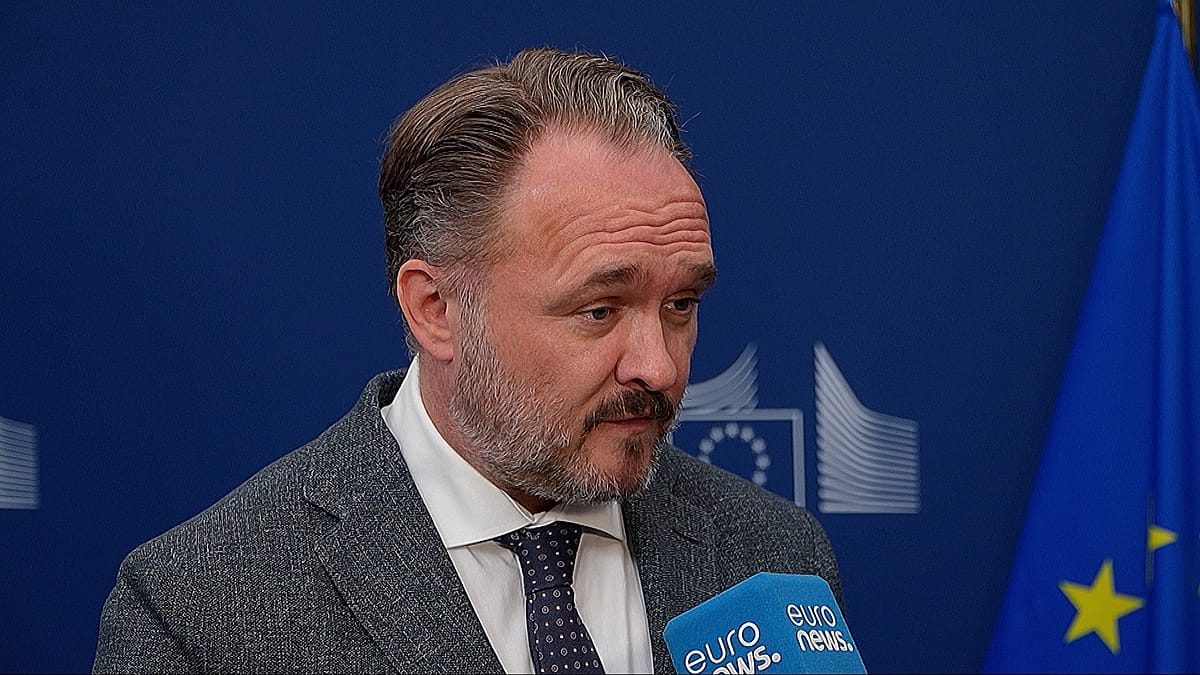

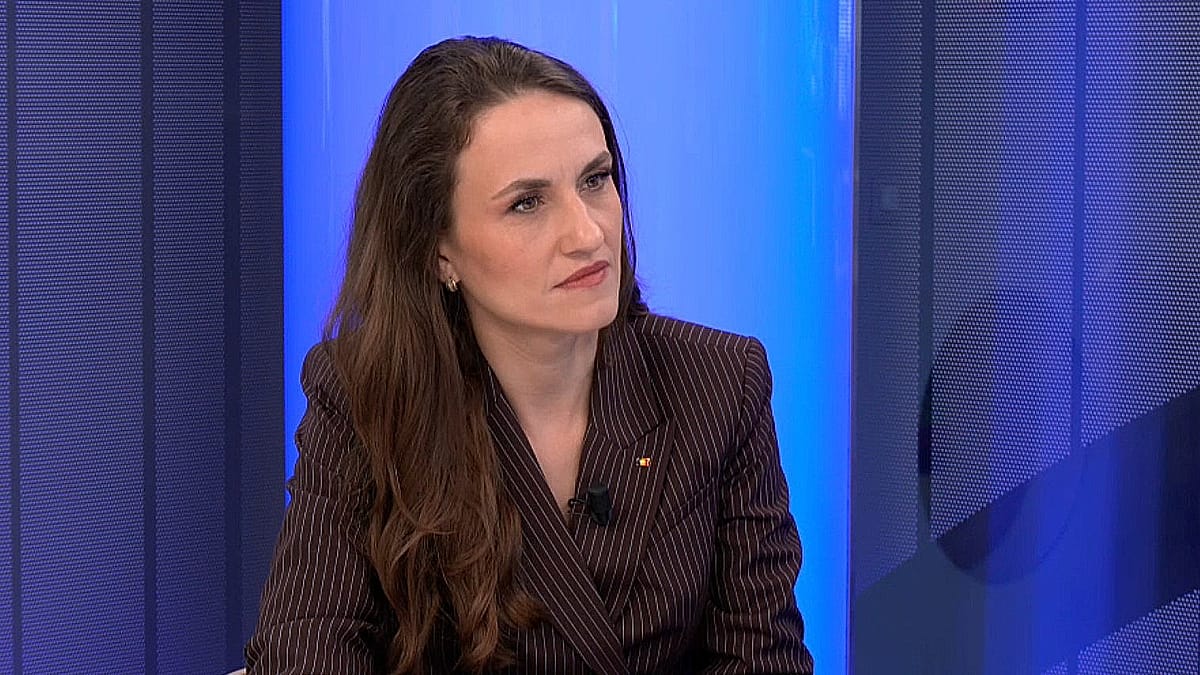



The European Union needs to “pin down” the precise scope of Ukraine’s growing budget needs before deciding how to fill the gap, Economy Commissioner Valdis Dombrovskis, who oversees support for the war-weary country, told Euronews.
ADVERTISEMENT


ADVERTISEMENT
“We obviously need to do a proper, detailed assessment, but we understand that the war continues to rage at high intensity. If anything, Russia is intensifying its attacks,” Dombrovskis said in an interview recorded in Riga, Latvia.
“Correspondingly, the economic situation in Ukraine is also very difficult. So we can understand that this may lead to higher financing needs for Ukraine,” he added.
“There are still open questions.”
Last month, Ukrainian President Volodymyr Zelenskyy caught allies off guard when he asked them to plug a $27 billion (€23 billion) deficit in the Ministry of Defence.
Kyiv argues the shortfall is the result of bringing forward funds earmarked for the second half of the year to cover costs in the first six months.
The €23 billion is needed for personnel, social support and weapons purchases, including around €6 billion in advance payments for deliveries due at the beginning of 2027.
Brussels, though, is not yet convinced and wants a comprehensive breakdown to understand how big the gap is, where it comes from and how it can be filled. The International Monetary Fund is also involved in the technical talks.
As a possible solution, Zelenskyy has suggested that the EU accelerate disbursements under its €90 billion support loan. But this would upset the bloc’s original timeline, which reserves €45 billion for 2026 and another €45 billion for 2027.
Frontloading payments risks running out of assistance next year and exacerbating the problem.
The Commission has not yet received a formal request from Kyiv to do so.
“First of all, we need to find out exactly what these additional financing needs are and then discuss with the Ukrainian authorities how we are financing them,” Dombrovskis said, noting that the €90 billion loan allows for “some adjustments”.
The unexpected shortfall has raised questions over accountability and transparency, issues that have dogged Ukraine since the start of Russia’s full-scale invasion. The country has faced multiple corruption scandals and reports of fraud, waste and misspending.
As a condition for the loan, Kyiv granted Brussels monitoring rights over its bank account. The Commission also checks contracts for weapons purchases.
“We attach very strong attention to questions of good governance, good financial management and anti-corruption in all those programmes, and those are also part of the conditionality of our macro-financial assistance programme,” Dombrovskis said.
So far, €3.2 billion in budgetary aid and €8.35 billion in military aid have been paid out under the €45 billion tranche earmarked for 2026.
A ‘way forward’ on the assets
As an alternative to speeding up the loan, Ukraine has encouraged EU countries to reconsider tapping into the immobilised assets of the Russian Central Bank.
The EU holds €210 billion of these assets, most of them in Euroclear in Belgium.
Sweden, the Netherlands, Spain and Poland, backed by the Baltic states, are leading a new push to revive the untested plan, which fell apart last year after fraught discussions.
Belgium has already warned that its objections have not “magically disappeared”.
The Commission is willing to assist member states, Dombrovskis said, but has stopped short of committing to tabling a new legal text.
“Last year, we came forward with a concrete legislative proposal to use those assets. Unfortunately, member states were not able to agree on this, mainly because of resistance (from) Belgium,” he said.
“But we certainly are ready to re-engage in those discussions, seek those additional reassurances which may be needed and help find a way forward.”
Dombrovskis declined to say what changes in the political constellation would be required to prod the executive into taking the issue further. But he hinted that it would wait for guarantees that an “agreement can be reached among member states”.
In the previous attempt, Belgian officials lambasted the Commission for failing to consult the country before pitching the audacious plan, which has no precedent.
Seeking to break the deadlock, Ukraine has proposed moving the Russian assets held in Euroclear to an EU-owned custodian.
A cross-party coalition of 122 Members of the European Parliament has also backed the transfer. As the debate rumbles on, Brussels is turning up the pressure on Western allies, who are expected to finance one-third of Kyiv’s needs.
US President Donald Trump said last week that he would ask Europeans to repay the American aid provided to Ukraine under the previous administration.
In his interview with Euronews, Dombrovskis brushed off Trump’s threat.
“The European Union and its member states are by far the largest supporter and financial contributor to Ukraine,” he said.
“But it’s important that other jurisdictions, including the US, are also playing their part. So that’s, in a sense, how we are looking at this question.”