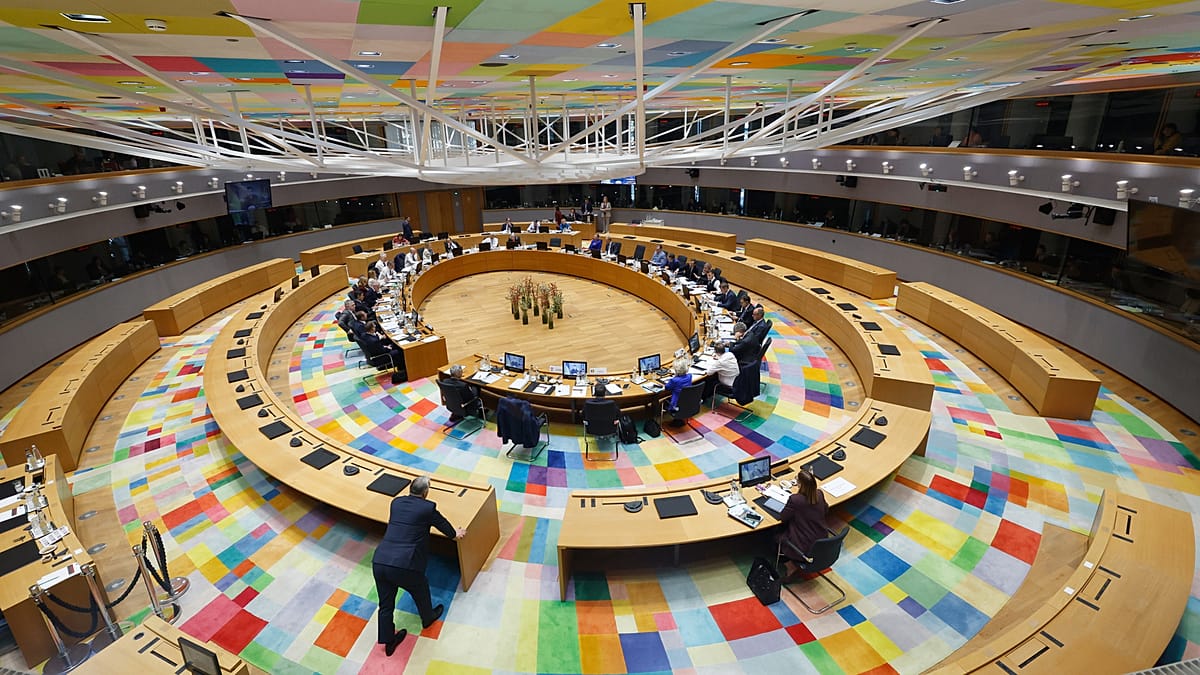




The European Parliament approved on Thursday a law aimed at speeding up the return of irregular migrants in larger numbers by building deportation centres outside the EU, alongside stricter rules reflecting a shift in political priorities as Europe pivots to the right.
ADVERTISEMENT


ADVERTISEMENT
The law will also increase the legal detention period to up to two years and impose practically unlimited entry bans in the EU on the returned people.
The “return regulation” is considered crucial to increasing the return rate of people with no legal right to stay in the EU and is seen as the cornerstone of a fresh European push to crack down on irregular migration.
The law enables EU countries to return irregular migrants to third countries unrelated to their origin, as long as they have bilateral agreements in place with a non-EU state to build centres called “return hubs” in its territory.
The bill was supported by 389 MEPs, with 206 lawmakers against and 32 abstentions. After the vote, a large part of the hemicycle burst into applause and cheers.
The final version of the law will now be discussed between the Parliament and EU member states. The negotiation is expected to be smooth, as there are no substantial differences between the two texts.
Both MEPs and EU countries want to include in the deportations to third countries families with children, excluding from the provision only the unaccompanied minors.
Parliament and Council also aim to change the automatic suspensive effect of appeals, which, under current law, suspend any deportation of a migrant until a final judgment is rendered. The approved text seeks to remit this decision to the judicial authorities on a case-by-case basis.
The Parliament’s version added a provision allowing talks with “non-recognised third country entities” for the purposes of readmission, which could result in cooperation with non-democratic regimes to return people.
“The adopted text gives a green light to the cooperation with the Talibans to enable the forced return of Afghan nationals. It is a total renouncement of the EU values,” Green MEP Melissa Camara told Euronews.
The Parliament also included a permanent entry ban for individuals posing a security risk and touted an unlimited maximum duration of the entry ban imposed on returned migrants, which the member states had set at 20 years.
On other aspects of the law, the Parliament’s text seems to be less strict than the Council’s. For example, the maximum detention period for migrant people who are waiting to be returned should be 24 months instead of the 30 suggested by member states.
The Parliament also removed a provision allowing authorities to search the place of residence or “other relevant places” where a third-country national who got an expulsion order could be found. This could translate into raids similar to those conducted by the US Immigration and Customs Enforcement (ICE), according to NGOs and civil society.
EPP teaming up again with the far-right on migration
In the vote, the European People’s Party (EPP) mainstream conservatives aligned with far-right groups to get it over the finish line, despite earlier backlash over their cooperation in drafting the bill at the committee level via a secret WhatsApp chat.
Only a handful of EPP MEPs from Luxembourg, Belgium, Ireland, and Finland opposed the bill or abstained.
“We will impose a simple principle: who comes to Europe illegally cannot stay,” French EPP MEP Francois-Xavier Bellamy, who drafted the text approved in the hemicycle, wrote on X.
Leftist groups voted against the law, raising concerns about its compatibility with fundamental rights. “This is no longer about returning people, but sending them virtually to any country in the world, maybe one that they have never seen before,” said MEP Cecilia Strada from Socialists and Democrats (S&D).
But Danish, Maltese, and Latvian S&D lawmakers voted in favour of the law, in line with their governments’ migration policies, as did Nordic and German MEPs from the Renew Europe group.