



Published on
The EU is set to urge Israel to reverse course after its parliament approved a bill allowing the execution of Palestinian convicted of nationalistic killings.
ADVERTISEMENT


ADVERTISEMENT
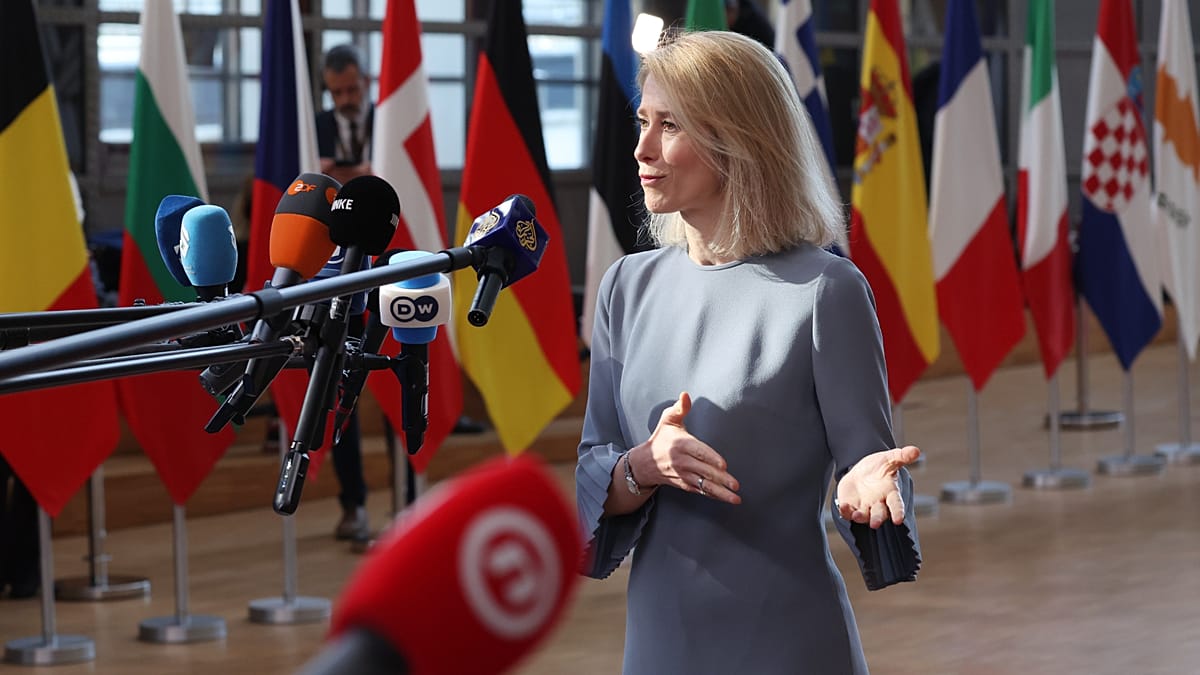
In a draft statement seen by Euronews, foreign policy chief Kaja Kallas warns the move marks a “grave regression” from Israel’s previous commitments under international law and the EU-Israel Association Agreement.
The text, to be issued on behalf of the 27 member states, highlights “particular concern” over what it describes as the bill’s “de facto discriminatory character”.
“The EU urges Israel to abide by its previous principled position and its obligations under international law,” the draft seen exclusively by Euronews says.
It reiterates the bloc’s long-standing opposition to capital punishment, stating: “The death penalty is a violation of the right to life and cannot be carried out without breaching the absolute prohibition on torture and other ill-treatment.”
The legislation — the Penal Bill (Amendment: Death Penalty for Terrorists) — passed its final stage on Monday in the Knesset. It allows courts to impose a death sentence for terrorism offences or for “negating the existence of the State of Israel”.
Legal experts warn the measure is likely to be applied almost exclusively to Palestinians, rather than Jewish Israelis accused of similar acts.
The bill was approved by 62 lawmakers, including Prime Minister Benjamin Netanyahu, with 48 voting against. It was championed by National Security Minister Itamar Ben-Gvir.
Under the law, judges can hand down death sentences without a request from prosecutors. In most cases, execution would be mandatory unless exceptional circumstances are recognised by the court.
Those sentenced would be held in separate facilities and denied family visits. According to Ben-Gvir, executions could take place within 90 days of sentencing.
The EU notes Israel has long maintained a de facto moratorium on executions, “leading by example in the region”.
Israel has carried out executions only twice: in 1962, when Nazi war criminal Adolf Eichmann was put to death, and in 1948, when officer Meir Tobianski was executed for treason — a conviction later overturned.
“Capital punishment has no proven deterrent effect and makes judicial errors irreversible,” the EU draft adds.
EU member states have until around 10:00 am Brussels today to propose amendments to the text.