

The US wants to help Europe save its identity.
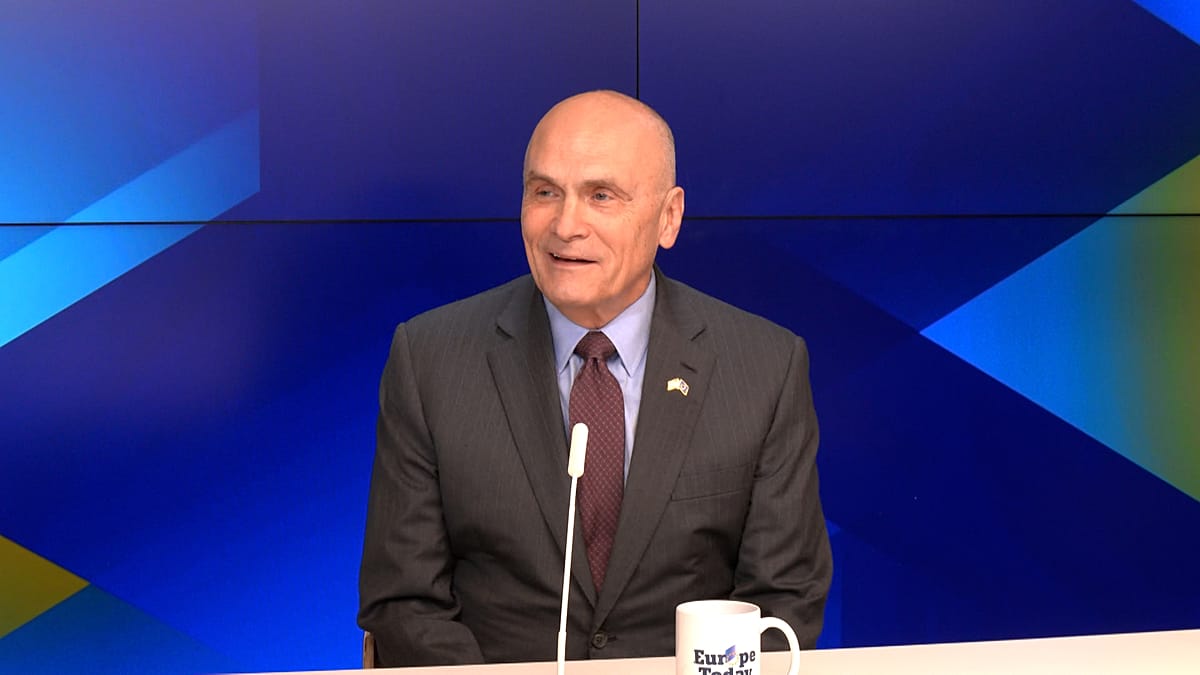
Speaking on Euronews’ flagship morning show Europe Today, US Ambassador to the European Union Andrew Puzder defended a controversial national security document in which the Trump administration called on the EU to change course or face a civilisational demise. In Europe, the document was met with surprise and criticism.
Ambassador Puzder defended the US position, stating that the document seeks to restore Europe’s “greatness” and should not be understood as an attack, but rather as a set of recommendations aimed at strengthening Europe.
“The section on Europe is titled ‘A Proposal for European Greatness,'” he told Euronews. “It’s not called we don’t like Europe, we want Europe to go away.”
“If you read it further, the document says Europe is strategically and culturally vital to the United States. Europe is a pillar of the global economy and American prosperity,” he added.
Last week, the US updated its national security review in which it suggested Europe risks civilisational decline as a result of excessive regulation, illegal migration and ill-designed economic policies.
Washington’s goal, the document said, is to “help Europe revert its current trajectory” and that involves cultivating relations with “European patriotic parties” resisting from within. The language and tone have rattled Europeans.
One diplomat speaking to Euronews said the document had very little to do with national security, as it barely mentioned Russia which Europeans consider a security threat, and a lot to do with political interference.
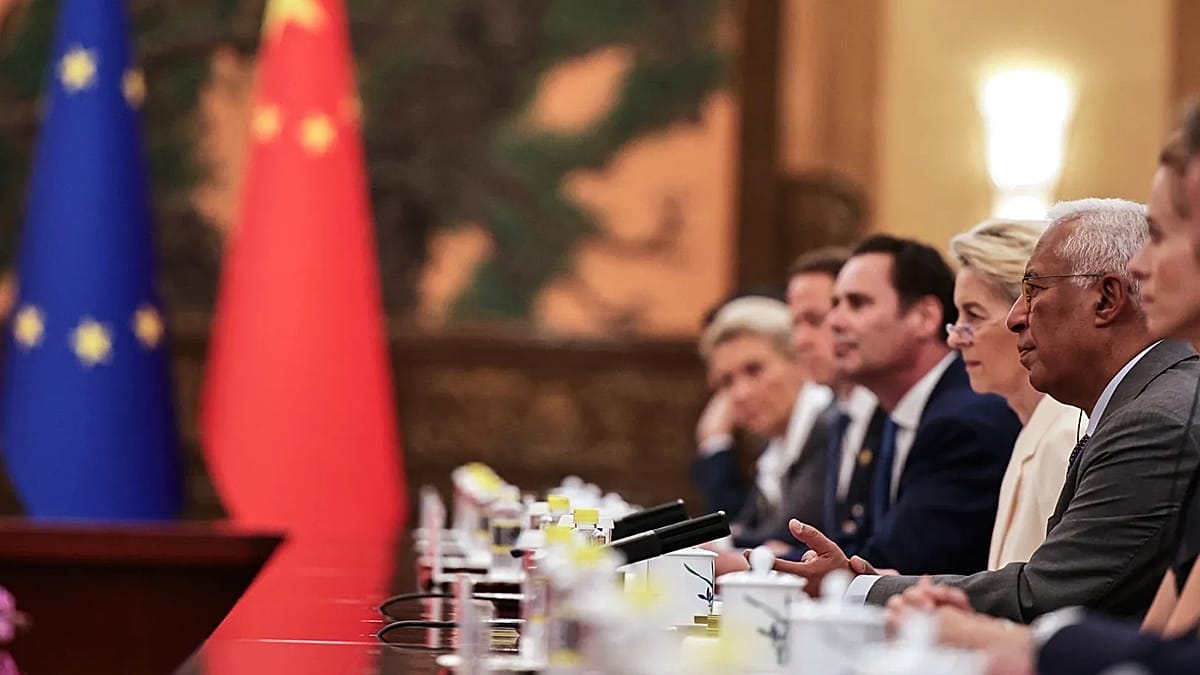
From German Chancellor Friedrich Merz to European Council President Antonio Costa and foreign policy chief Kaja Kallas, Europeans pushed back arguing that democracy does not need external saving and domestic matters are for the EU to handle alone.
Still, Ambassador Puzder said Europeans are misreading the US administration’s intentions and should view the document from a different perspective. “It really isn’t that a bad, really, it really is not,” he said.
He also denied that the Trump administration is looking for ways to weaken, even dissolve, the European Union from within.
That theory was amplified over the weekend when tech billionaire Elon Musk, who campaigned in favour of President Trump and briefly led the DOGE department, argued that the bloc is not a real democracy and should be dismantled.
Ambassador Puzder said there is no such plan but stressed that the US wants Europe to maintain its sovereignty and national values, as that is the pillar of the transatlantic relationship.
Shared identity and social cohesion
In its national security strategy document, the US said it welcomes “the growing influence” of patriotic parties resisting the EU machine from within, without elaborating on who those parties would be. Still, it is largely understood that it refers to conservative parties that oppose what they call “unelected officials” in Brussels.
The US envoy said the question comes down to how much influence the EU should have on cultural, national identity and migration matters.
The bloc’s member states are bound by common rules and shared principles around rule of law, which can also result in financial compensation for member states but also fines and withholding of funding.
“The question is how much of their sovereignty did these countries give up to be part of an economic union? Did they give up sovereignty to determine who comes in or out of their countries,” he said.
“Did they give up sovereignty on cultural issues that might be different in eastern Europe than they are in western Europe?”
Asked if keeping Europe “Europe” means ethnically white and Christian, Ambassador Puzder said it is about a shared identity and social cohesion. And it must be upheld.
“The same applies to the United States … If you reject the basic tenets of our societies, these are the kind of people we don’t want.”
“These are the kind of people where you see an increase in crime, a decline in the cultural values people have, there are even cities where European police don’t want to enter…We don’t want to see Europe lost its identity as a result (of it),” he added.