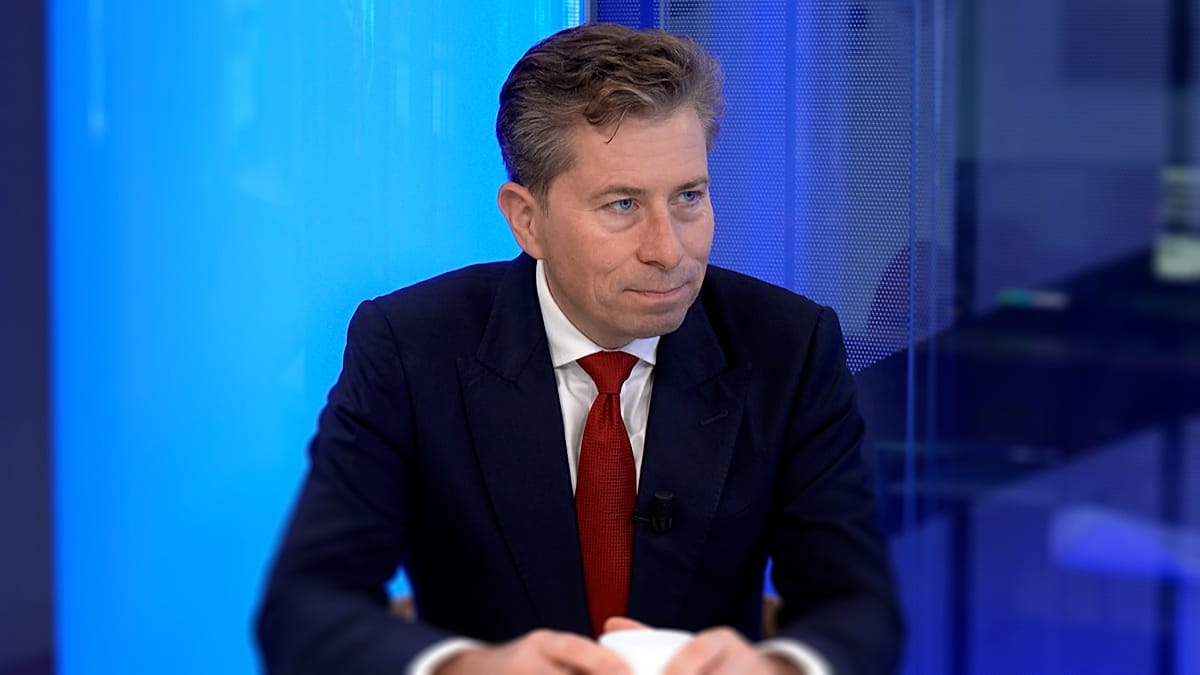

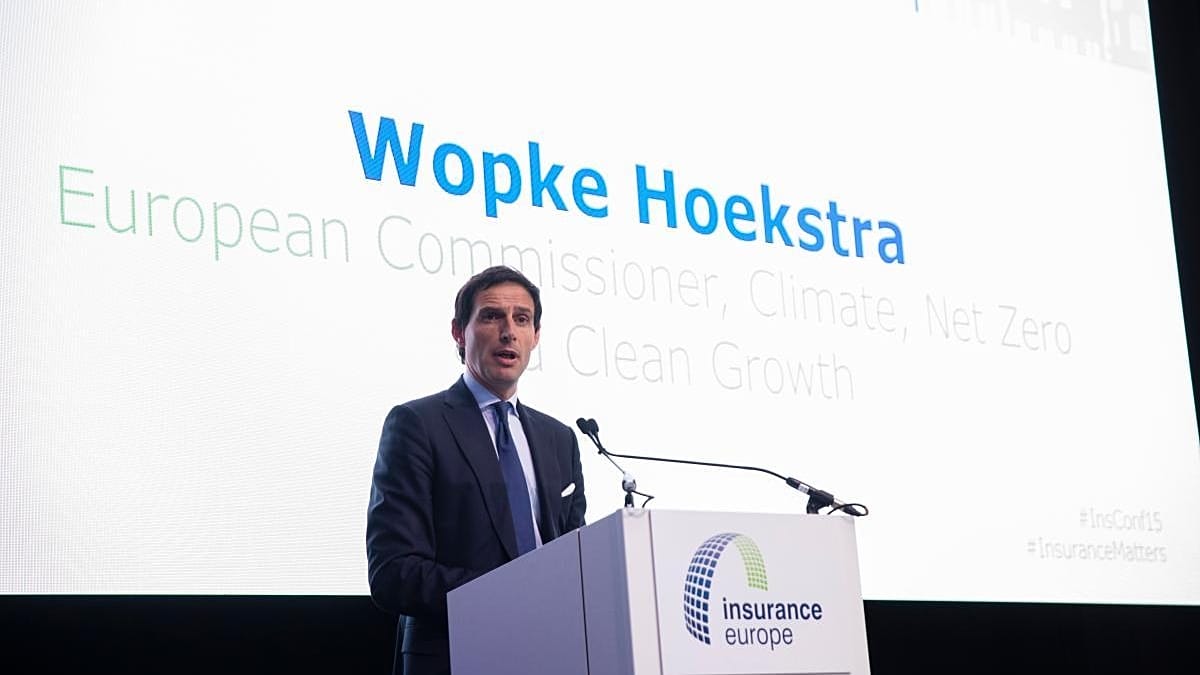
Europe must spend more upfront to protect itself from increasingly severe climate disasters, European Union Climate Action Commissioner Wopke Hoekstra told Euronews, arguing that paying for fires, floods and other damage after they strike will ultimately cost far more.
ADVERTISEMENT


ADVERTISEMENT
“All evidence shows that making the upfront investments is way cheaper than just being hit by fire, being hit by floods and then paying for the damage. That’s just way more costly,” Hoekstra said.
Describing the summer as “dramatic”, the Dutch Commissioner said the EU was better prepared than last year, with more firefighters, planes and helicopters deployed, but that the scale of destruction had barely improved.
Around an area twice the size of Luxembourg was lost to fires, while estimates of the economic damage range from €50 billion to €70 billion or more. Spain and France lost thousands of hectares to the blazes and at least 14 first responders lost their lives combating the flames.
The Commissioner rejected the idea that the EU can attach a single figure to climate resilience. Instead, he called for a more fundamental overhaul of how infrastructure is built, with bridges, for example, rebuilt to withstand the next flood rather than simply replacing what was lost.
However, he said much of the investment will have to come from national budgets.
“The reality is that we need to become much more granular and do a couple of things at the same time. That means we need the same assessment of the type of impact we’re going to see for the whole Union,” Hoekstra said.
“We need to be crystal clear about who is responsible for what. What is for the local governments, what is for regional governments, what is for national governments and what is for Europe.”
But EU governments are under pressure to reduce spending, with tension mounting as talks resume to decide on the EU’s proposed long-term budget for 2027–2034, with Germany, Austria, Denmark, Finland, the Netherlands and Sweden seeking to cut it.
Hoekstra acknowledged the fiscal tight situation but maintained that upfront investment is cheaper than repeatedly paying for climate damage. He also pushed back against attempts to frame climate action and economic competitiveness as competing priorities.
“There is no easy way out and there’s no alternative to continuing with our climate ambition,” the Commissioner added, after a summer of devastating fires and heatwaves that caused an excess death of at least 30,000 people, according to the European Mortality Monitoring Platform, which tracks data across 23 countries.
Hoekstra’s preferred formula combines climate action, competitiveness and European independence. This means continuing the green transition while reducing Europe’s dependence on China for clean technologies, Hoekstra noted. He pointed to Finland, Denmark and Sweden as examples where climate policy and competitiveness can reinforce each other.
“It is imperative that we marry-bridge climate action with competitiveness and with independence,” stressed Hoekstra.
For the Dutch Commissioner, the direction of the bloc’s climate policy is directly linked to Europe’s energy vulnerability, particularly amid uncertainty around the Strait of Hormuz, which accounts for 20% of the world’s oil and gas transit and affects global energy prices.
He also stressed that, in the long term, a successful climate transition will boost the EU’s economic sovereignty.
“In the medium term, by far our best bet is to move to a completely different energy system and that is where the money should be going,” Hoekstra said.
The EU cannot rely indefinitely on imported fossil fuels, he warned, citing the around 80% dependence on gas imports and 95% on oil imports as a signal the EU has “a very bad hand”. His proposed escape route includes more nuclear, solar and wind, combined with electrification and more European energy production.
On the immediate gas situation, which is currently at its lowest level (around 62%) since 2011, the Commissioner said EU countries must continue filling storage and prepare for the possibility of low storage combined with a severe winter, which he calls a scenario “no one can afford”.
“Our gas comes primarily from the US and from Norway. That makes it slightly easier, but of course it is a global market, so there is a fight for this gas potentially coming to us as well,” Hoekstra said.