
Prolonged disruption to liquified natural gas (LNG) supplies from the Middle East could send prices sharply higher and revive memories of the 2022 energy crisis, analysts warn, as Europe’s gas market is once again on edge.
ADVERTISEMENT


ADVERTISEMENT
Gas prices could climb as high as €155/MWh, tripling the current price of around €50/MWh, if Qatari LNG exports are halted for three months due to the escalating conflict in the Middle East, according to an analysis published on Thursday by Montel Analytics.
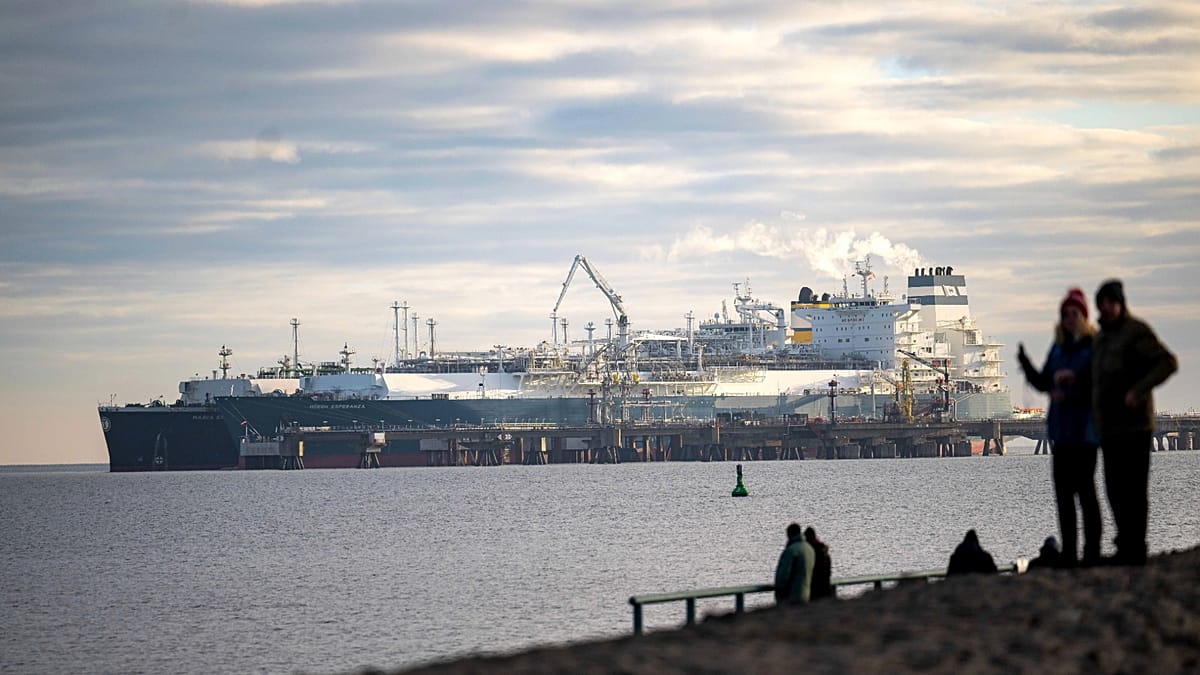
The shutdown of shipping through the Strait of Hormuz and the rerouting of LNG tankers from Europe to Asia have raised questions about inflated pricing and future supply security in the old continent, with countries like Italy and Belgium feeling the biggest impact from the halt in Qatari production.
Before the Russian invasion of Ukraine in late February 2022, European natural gas prices on the TTF benchmark, the primary benchmark for wholesale natural gas prices in Europe, traded between €70 and €100/MWh in January and early February.
Although this marked a steep increase from levels below €25/MWh in late 2020, it remained far below the unprecedented surge later in 2022, when prices soared beyond €300/MWh.
As the €345/MWh price peak remains fresh in mind, EU policymakers and traders are watching developments in the Middle East with growing concern.
Analysts estimate that a three-month halt would remove up to 21 million tonnes of LNG from the global market, draining European storage levels to what some describe as “critical lows” heading into summer.
As of late 2024 and early 2025, when EU gas storage facilities are filled to their 90–95% target, they contain approximately 100 bcm (billion cubic meters) of natural gas.
Most EU countries are currently below their 5-year average storage levels, with Germany and the Netherlands showing the most depleted reserves at around 4 bcm and 5 bcm, respectively, according to data from Gas Infrastructure Europe (GIE).
Bulgaria and Portugal are close to or slightly above average levels, GIE data reveals, while Austria, France, Hungary and Spain are moderately below average.
The European Commission maintained on Thursday that the EU27 is “not currently facing security of supply issues”.
European Energy Commissioner Dan Jørgensen has urged EU countries on March 20 to begin refilling gas reserves earlier than usual to avoid last-minute pressure and price spikes.
EU countries must maintain gas storage levels at 90% by 1 November each year. But the EU executive told capitals to lower the storage targets at 80% “in case of difficult conditions”. Some member states can refill up to 75%, while the exception can go as low as 70%.
“On storage, we will support any country that activates flexibility. Storage should start early enough to avoid a late rush. We will continue coordinating with member states and global partners,” Commission spokesperson Anna-Kaisa Itkonen told reporters on Thursday.
However, the stakes grow considerably if the outage extends. In that scenario, analysts speculate that governments could be forced to intervene, potentially reintroducing rationing measures.
6-month disruption scenario
More severe outcomes remain on the table. Should the disruption stretch to six months, experts warn of a “2022-style squeeze or worse.”
Price forecasts in that case vary widely, but some analysts see averages near €160/MWh, with spikes potentially exceeding €200/MWh.
At those levels, Europe’s ability to refill gas storage ahead of winter would be seriously compromised, the analysts say, leaving demand cuts as the only way to balance the market.
“If transit remained disrupted until the end of August, there would no longer be a credible path to end-of-October inventories higher than 82bcm, even with prices around €250/MWh over the summer”, said Energy Aspects senior LNG analyst Tom Purdie.