

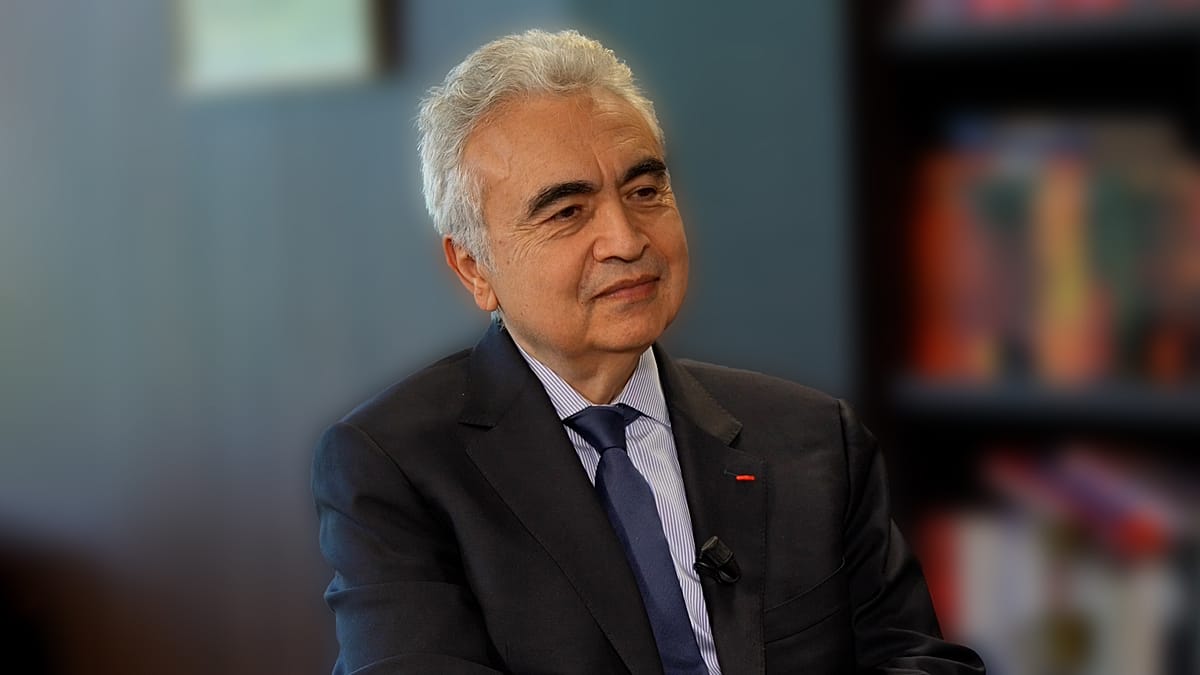
Easing sanctions on Russian energy would be a “major mistake” by European countries, International Energy Agency chief Fatih Birol warned in an interview with Euronews, as the bloc deals with the ramifications of a second energy shock in four years.
ADVERTISEMENT


ADVERTISEMENT
The EU is weighing measures to ease price pressures on member states resulting from the Strait of Hormuz crisis, a vital route that carries one fifth of global oil supplies, after the regime in Tehran effectively shut down the passage last March.
The turmoil in the Middle East has contributed to a 65% increase in oil prices, according to the European Commission’s own estimates. Meanwhile, gas prices have more than doubled. Still, Brussels has shut down any expectation that sanctions on Russian energy, even via third countries, could be eased.
Birol echoed that sentiment, arguing that “knocking on Russia’s door would be a major error” in comments to Euronews, after the IEA published a major report on Thursday warning of the “largest energy security crisis the world has ever faced.”
“Europe paid for its overreliance in 2022. Once, it’s a mistake, doing it for a second time, that’s no longer a mistake,” Birol told Euronews. “There are many other options Europe should look into, more secure in terms of energy, foreign and defence policies.”
Earlier this month, the United States announced it would extend a 30-day sanctions waiver on Russian oil at sea, suggesting that it would relieve some of the poorest countries from higher energy costs. The United Kingdom also eased restrictions on imports of Russian jet fuel and diesel refined in other countries to cope with rising prices and supply shortages, but insisted that this was not a waiver on core sanctions.
The EU has refused to ease any measures, arguing that financing Moscow through energy, directly or indirectly, will only help extend the war against Ukraine. In a separate interview with Euronews, Economy Commissioner Valdis Dombrovskis ruled out any waivers at any level, calling it a strategic decision from a security perspective.
Still, rising energy costs are fuelling tensions among member states. Last week, Italian Prime Minister Giorgia Meloni sent a letter to the European Commission saying the energy crisis is as important as defence, and that the EU should treat it as such. She also called on Brussels to exempt energy measures from debt and deficit rules.
World facing ‘largest energy security crisis in history’
The International Energy Agency said on Thursday that disruptions linked to the closure of the Strait of Hormuz could surpass the dislocations produced by the 1970s oil crisis, and predicted a more intensive push to diversify energy imports.
In its annual World Energy Investment report, the IEA estimates that global energy investments will reach $3.4 trillion this year. About $2.2 trillion is expected to fund grids, storage, low-emissions fuels, nuclear, renewables and electrification.
Around $1.2 trillion will be dedicated to oil, natural gas and coal.
Birol said the current crisis will have a lasting impact on Europe, highlighting the connection between economic and energy security. For the EU, the first shock came with the Russian gas crisis following its invasion of Ukraine, and the war in Iran has made a review of its long-term strategy even more pressing, as it exacerbates a price shock.
“European competitiveness and European sovereignty will critically hinge on its energy strategy. In my view, Europe’s energy future is electrification and we should electrify our economies as much as possible,” he said, noting that nuclear energy will be needed in a phase of transition away from fossil fuels.
“I am an energy man. I talk about energy. Europe didn’t always make the right choices, and we have made a lot of mistakes. Now we have to be very clear and make the right energy decisions. It is at the heart of the sovereignty of the continent,” he added.
Watch the full interview with Dr Fatih Birol, Executive Director of the International Energy Agency tonight exclusively on The Europe Conversation only on Euronews. Available on television, euronews.com and all streaming platforms.