




After years of negotiations between EU member states, the new Pact on Migration and Asylum has finally come online.
ADVERTISEMENT


ADVERTISEMENT
The package, adopted in May 2024 and which officially entered into force on 12 June, is designed to strengthen border procedures and reform the bloc’s asylum system.
The regulation has been a prime target for false and misleading claims.
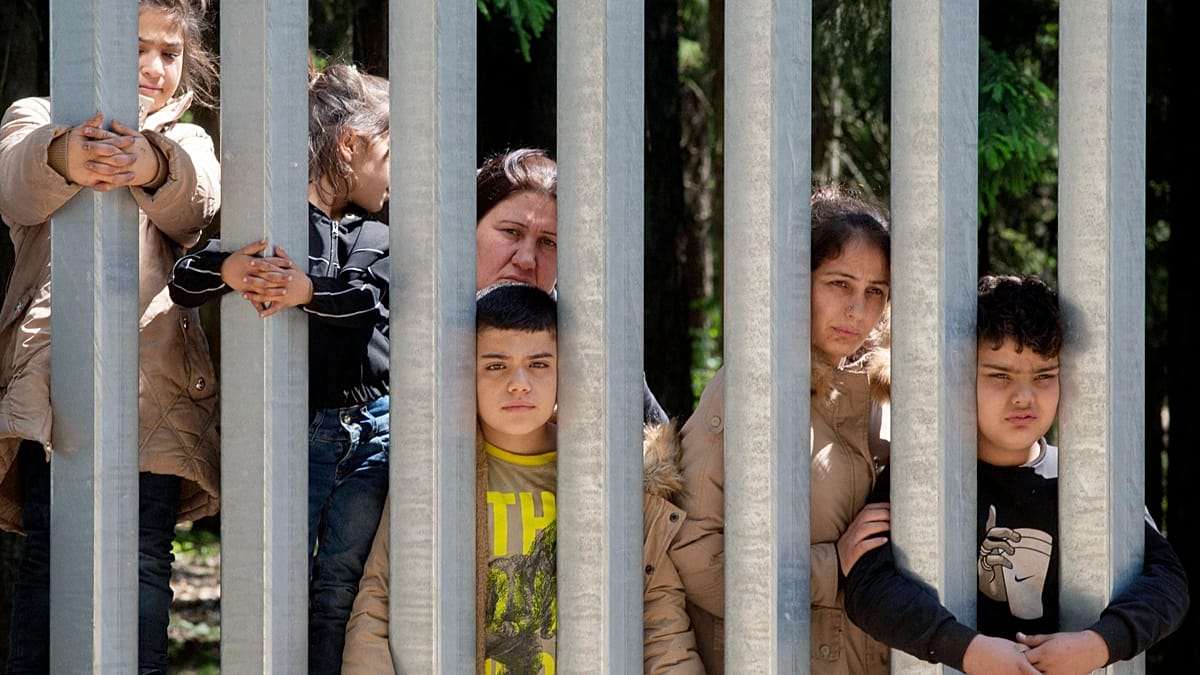
One of its most debated elements is a new solidarity mechanism intended to support member states facing the highest migratory pressure: in recent years, countries such as Italy, Greece, Cyprus and Spain have received the largest numbers of migrants and asylum seekers arriving by land and sea.
Several politicians from France’s far-right National Rally party have criticised the migration pact, claiming it would allow the EU to fine countries that refuse to accept migrants.
In a post on X, Marine Le Pen said the pact would “require European Union member states to welcome migrants, under the penalty of fines”.
Other posts from the National Rally party claimed that the fine would be set at €20,000 per migrant.
But describing the regulation in such a way is misleading and strips it of wider context.
A solidarity mechanism
Under existing EU asylum rules, the member state where an irregular migrant first enters the bloc is generally responsible for processing their asylum application.
This has placed a disproportionate burden on frontline countries such as Italy, Greece, Spain and Cyprus, which the European Commission identifies as member states under the most migratory pressure because they receive the majority of arrivals.
To address this imbalance, the Pact on Migration and Asylum introduces a solidarity mechanism intended to ensure a fairer sharing of responsibilities across the European Union.
The system is based on what the European Commission describes as “mandatory but flexible solidarity”.
Under the new rules, all member states are required to contribute to the mechanism. However, they are not obliged to do so by taking in asylum seekers from the frontline member states.
Relocation is, in fact, only one of several possible forms of contribution. Member states may instead provide operational support, finance border management measures, supply equipment and personnel, or make financial contributions.
It’s this last option that has been misinterpreted by some politicians: countries that choose not to take in any asylum seekers through the relocation measure can instead pay €20,000 for each one they opt not to receive. The funds are then channelled to member states experiencing the highest migratory pressure.
A European Commission spokesperson told The Cube, Euronews’ fact-checking team, that “member states have full discretion to choose from any of these solidarity measures.”
The payment is therefore not a fine imposed on governments for refusing migrants, as Le Pen and other National Rally politicians suggested. Rather, it is an alternative form of participation within the solidarity mechanism established by the pact.
At least 30,000 asylum seekers are set to be covered by the relocation measure, according to the text of the regulation, which also provides for at least €600 million in financial contributions.
However, this initial launching of the pact has already highlighted the political sensitivities surrounding it.
According to Euronews, member states have pledged fewer than 9,000 relocations for 2026, with many governments opting for financial contributions or other forms of support instead of taking in asylum seekers.