
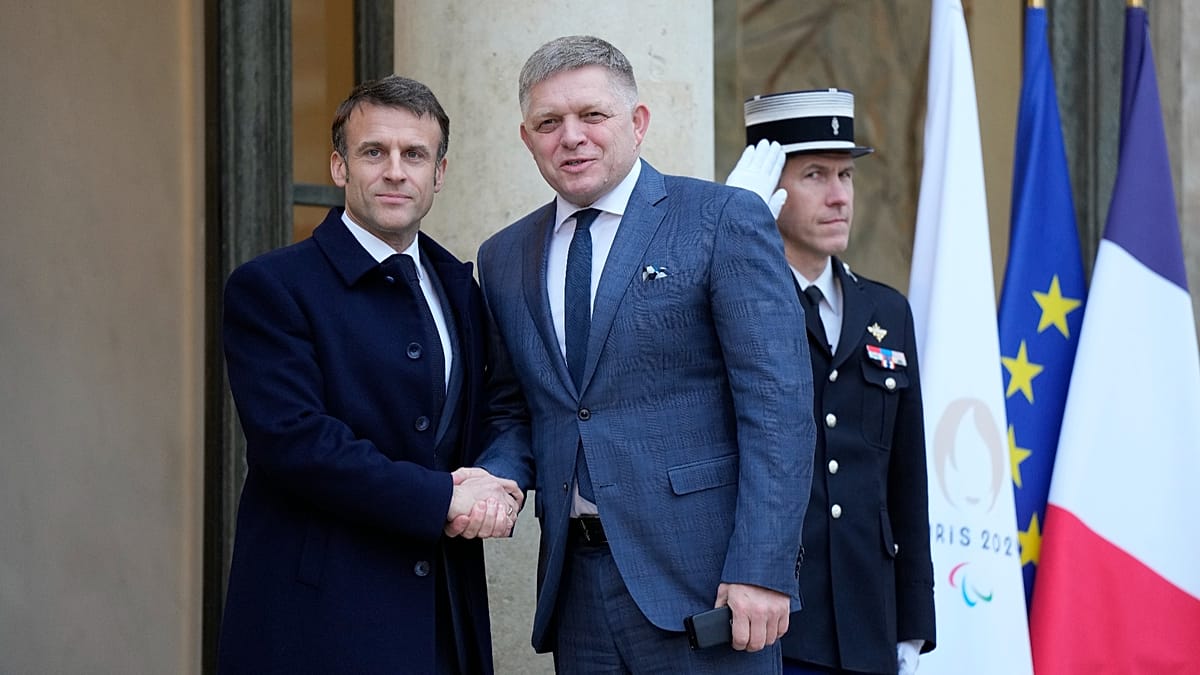
The deadlock on the renewal of EU sanctions on Russia deepened on Monday after France and Slovakia, in a rare joint effort that has baffled Brussels, continued to demand the removal of Russian-Uzbek businessman Alisher Usmanov from the blacklist.
ADVERTISEMENT


ADVERTISEMENT
Faced with an expiration date that loomed dangerously close, ambassadors agreed, as a last resort, to extend the sanctions for just one week until 22 September to give themselves more time to find a solution that has so far proven stubbornly elusive.
“Consultations will continue, and further discussions are expected to be held in due course,” a spokesperson for Ireland’s EU Council presidency said.
“Renewal of the listings is essential to continue undermining Russia’s war machine, and keeping the pressure on those individuals and entities supporting, enabling and benefitting from it. This is a priority for the Presidency.”
Diplomats are still trying to figure out why France has suddenly joined Slovakia’s yearslong campaign to spare Usmanov from the sanctions list, which covers almost 3,000 individuals and entities accused of propping up Russia’s war on Ukraine.
France has only argued a “national security” reason, without any details.
According to an EU diplomat, the French delegation did not elaborate further on their position during the discussion on Monday.
Usmanov was added to the backlist in the early days of the full-scale invasion over his “close ties” with Russian President Vladimir Putin and his stakes in “key sectors” of the Russian economy, according to the EU Council.
Usmanov has denied this.
Slovakia has long called for Usmanov and Mikhail Fridman, another high-profile oligarch, to be deleted from the sanctions list. Until now, other member states have been unwilling to grant the request, which they consider to be politically motivated.
Earlier this year, a media investigation published a two-page letter allegedly sent by Turkish President Recep Tayyip Erdoğan to Slovak Prime Minister Robert Fico asking for help to end what Erdoğan called “the unfair practice” involving Usmanov.
“Your support in removing him from the EU sanctions list and restoring his violated rights would be extremely valuable,” Erdoğan wrote in the letter dated 2 March 2026.
The document mentioned Azerbaijan, Kazakhstan, Kyrgyzstan and Uzbekistan as countries that also backed Usmanov’s removal.
“We have a separate issue related to national security, and we would like to respond positively to our international partners who are approaching us regarding Mr Usmanov,” a French diplomat told Euronews.
It is unclear if the French position has anything to do with the behind-the-scenes lobbying. What is clear, however, is that it has added an unexpected dimension to the Slovak veto and made it considerably harder to find an agreement by unanimity.
Member states are trying to renew the individual sanctions by 12 months to align them with the economic sanctions, which EU leaders extended by one year in June.
Amid the stalled negotiations, Ukrainian President Volodymyr Zelenskyy issued a rebuke.
“Usmanov and Fridman are exactly the kind of Russian business figures who need to find the courage to take concrete steps against the war,” Zelenskyy said.
“This is exactly the kind of Russian economy that should not be given additional opportunities while the Ukrainian economy is suffering from Russian terror and Putin’s refusal to stop the war.”