

Published on
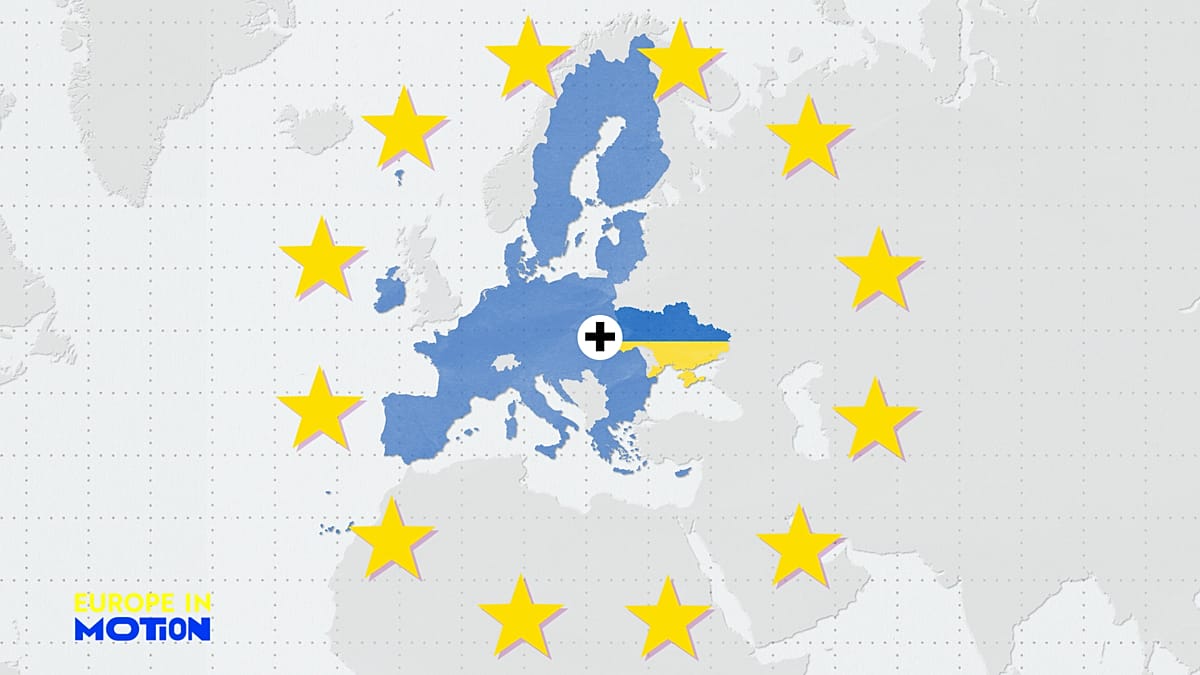
As Ukraine’s EU membership negotiations advance with the opening of a new cluster, a recent poll reveals public sentiment in the bloc on Kyiv’s potential accession.
ADVERTISEMENT


ADVERTISEMENT
Support is particularly strong in Spain, where 65% back Ukraine’s joining the EU, according to a Polling Europe survey.
Kyiv-Madrid ties have grown significantly after Russia launched its full-scale invasion in 2022.
Since then, Spain has trained more than 9,000 Ukrainian military personnel, and in 2026, it announced a €1 billion military aid package for the country.
Italians also broadly support Ukraine’s accession, with 52% in favour, although many believe Kyiv needs to enact reforms first.
Currently, accession talks are focusing on cluster number six, covering external relations, meaning how Ukraine aligns with the EU on defence, trade and international policies.
In general, 49% of all EU respondents support Kyiv joining the bloc, while 39% oppose its accession, at least for now, and 12% don’t know.
Surprisingly, opinion shifts in three countries that have been among Ukraine’s strongest supporters since the full-scale invasion: France, Germany and Poland, where a plurality of respondents are against Ukraine joining the EU, at least as a member with full voting rights.
One of the highest opposition rates was observed in Poland, at 49%.
Has the White Eagle Order row swayed Polish views?
It’s worth noting that the poll was conducted at the beginning of July, so immediately off the back of a major row between Poland and Ukraine.
It saw Poland’s president, Karol Nawrocki, strip Ukraine’s president, Volodymyr Zelenskyy, of Poland’s highest state honour, the Order of the White Eagle.
The move was a reaction to Ukraine naming a military unit after WW2’s Ukrainian Insurgent Army (UPA), a partisan group which, at the time, sought to establish an independent Ukrainian state.
In doing so, they fought the Nazi army as well as the Soviet one, but also conducted bloody ethnic cleansing operations against thousands of Polish people in Volhynia and Eastern Galicia, between 1943 and 1945.
In sending back the honour, President Zelenskyy curtly noted that Poland had failed to revoke the Order to the likes of Italian dictator Benito Mussolini, which he received in 1923, or former German Chancellor Gerhard Schröder, a close and long-standing acquaintance of Russian President Vladimir Putin.
Nonetheless, a few weeks back, Zelenskyy, who received the honour in April 2023, sought to heal the historical wounds with Warsaw on several fronts, including granting exhumation permits and archive access related to what he called those “tragic events”.
The move was welcomed in Poland, with “satisfaction and hope“.
“We are ready for a serious and friendly dialogue on the matters that unite us and those that divide us today”, said Polish Prime Minister Donald Tusk in a post on X.