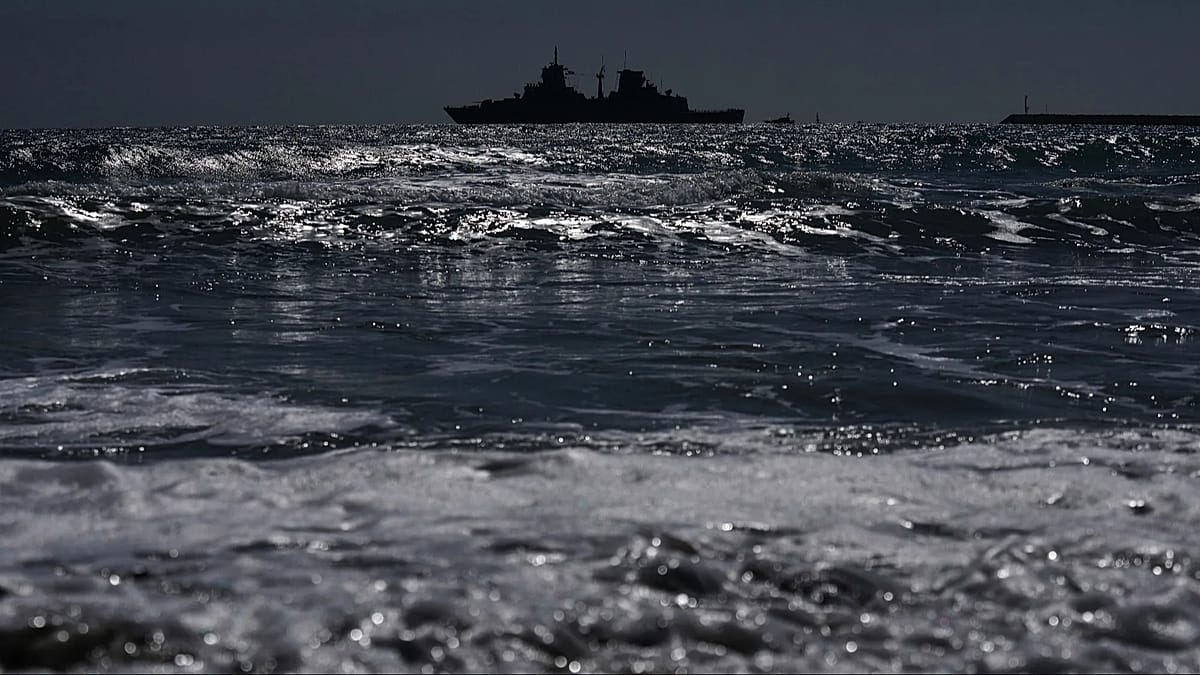



Just a few kilometres from the Belarusian border, thousands of NATO troops are focused on one objective: defending Alliance territory in Lithuania. For around six weeks, nearly 3,000 troops – most of them from the German military – trained at Pabradė, using drones, electronic warfare, heavy armour, artillery, infantry, helicopters and fighter jets to practise defending NATO territory against what the military describes as a “conventional aggressor”.
ADVERTISEMENT


ADVERTISEMENT
A major part of Exercise Freedom Shield I is Germany’s 45th Armoured Brigade, also known as the Lithuania Brigade. More than three years ago, Germany decided to permanently station around 4,800 troops in Lithuania by the end of 2027. Spread across two locations, the brigade will comprise five battalions.
Its purpose: to deter Russia.
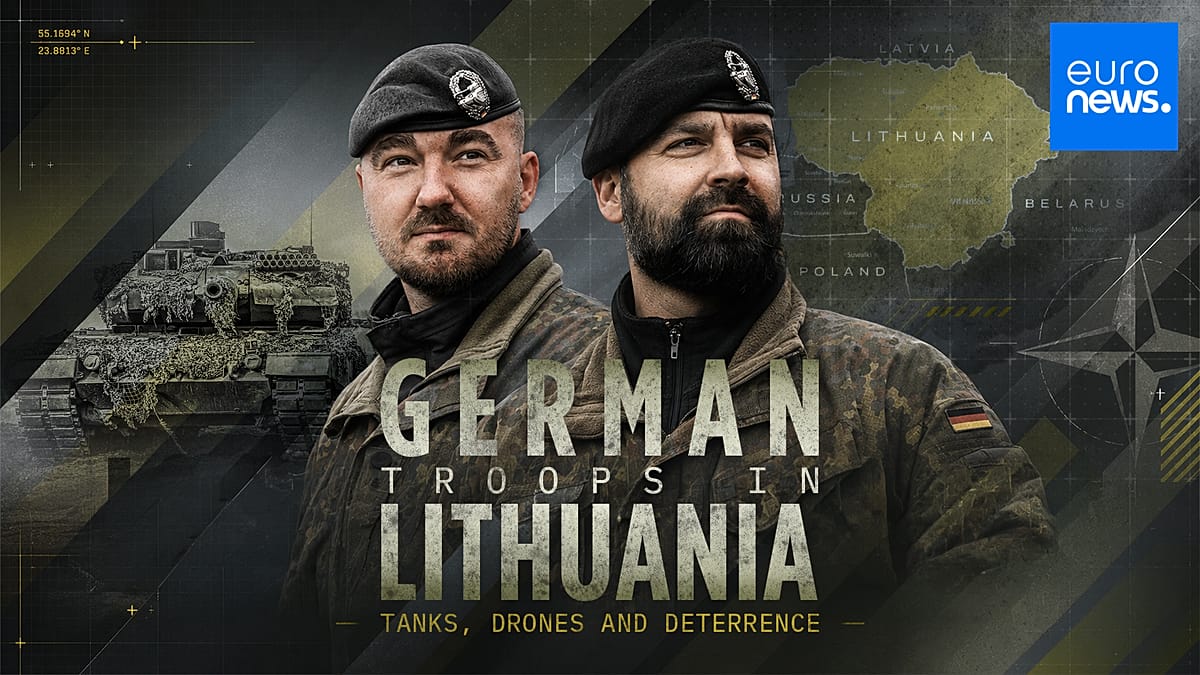
But who are the men and women who have chosen to leave Germany and help defend NATO’s eastern flank? Euronews accompanied two soldiers from Tank Battalion 203 in Augustdorf, which is due to relocate to Lithuania by the end of 2027.
Corporal Kevin, a driver known as “Rogi”, has signed up to serve in the brigade until the end of 2029. Tank commander Staff Sergeant Kevin has volunteered for six years in Lithuania.
Find out why Kevin and Rogi chose to serve in Lithuania in the special Euronews report: “German troops in Lithuania: tanks, drones and deterrence”.
German Combat Brigade: 4.800 troops to protect Lithuania
A plaque on Vilnius City Hall – currently hidden behind construction sheeting – carries a quote from German Chancellor Friedrich Merz: “Lithuania’s security is also our security. Protecting Vilnius means protecting Berlin.”
Germany has contributed troops to NATO’s multinational battlegroup in Lithuania since 2017 as part of the Alliance’s enhanced Forward Presence (eFP), established in response to the growing threat from Russia. But the deployment was based on a rotational model, with troops and equipment regularly replaced rather than permanently stationed in the country.
Following Russia’s full-scale invasion of Ukraine, Lithuania pushed for a stronger and more permanent NATO presence. In June 2022, then-Chancellor Olaf Scholz pledged that Germany would lead a brigade in the country. “I promised our friends in Lithuania that Germany would lead a robust Bundeswehr brigade, with a presence on the ground in Lithuania and the ability to be reinforced immediately with troops from Germany in the event of a crisis,” Scholz told the Bundestag. “That is solidarity between friends and allies in action.”
‘It is our mission to provide protection for the eastern flank’
Initially, Germany had not planned to permanently station a fully manned brigade in Lithuania. Only the brigade headquarters was to be based in the country, while combat troops would continue to deploy from Germany for exercises or in the event of a crisis, broadly following the existing rotational model.
According to the German Armed Forces Association, that approach changed in the summer of 2023. The shift came after Wagner chief Yevgeny Prigozhin’s failed rebellion against Russia’s military leadership and the subsequent relocation of large numbers of Wagner fighters to neighbouring Belarus. The German government said the Wagner mutiny and the movement of mercenaries to Belarus were not the sole reasons for the decision to establish a permanent presence. Berlin acknowledged, however, that the developments had added “further momentum” to the debate.
Germany ultimately changed course. During a visit to troops in Lithuania, Defence Minister Boris Pistorius and Germany’s Chief of Defence, General Carsten Breuer, announced that, for the first time in the Bundeswehr’s history, a combat-ready brigade would be permanently stationed outside Germany. Pistorius reiterated the commitment in the autumn of 2023: “It is our mission to play a key role in defending NATO’s eastern flank.”
The plan is to staff the brigade with volunteers. But there are already signs that relying on volunteers alone may not be enough.
‘I want soldiers by my side who believe in the mission’
According to the battalion’s commander, Lieutenant Colonel Oliver Kaufmann, Tank Battalion 203 has “a very high proportion of volunteers”. Speaking to Euronews, Kaufmann said the figures currently being reported needed to be put into context.
“I can speak for my battalion, and the vast majority of soldiers are prepared to go to Lithuania voluntarily. And that is exactly what I want: I want soldiers by my side who believe in the mission and who are ready to take on this important responsibility together as part of the Tank Battalion 203 team,” Kaufmann told Euronews.
According to the Bild newspaper, around 60% of the planned brigade has so far been staffed by volunteers, leaving a shortfall of roughly 2,000 troops. Among the forces already stationed in Lithuania, staffing levels stand at 92 %. These include primarily the multinational battlegroup, which has been deployed there since 2017.
Tank Battalion 203 and Panzergrenadier Battalion 122 are not due to relocate to Lithuania until 2027. According to Bild’s reporting, those units are still around 40 % short of the personnel they need.
“They are all volunteers. Of course, there are occasional shortages, particularly among specialists, such as IT and logistics personnel, although it is not limited to those areas. It is no different from what we see back home. We are continuing to rely on volunteers and are offering their families the best possible conditions. Once we have exhausted all the options available to us, we will look at alternatives,” the minister said.
Euronews accompanied soldiers who volunteered to go to Lithuania
Pistorius added, however, that being posted elsewhere was “nothing unusual” for Bundeswehr soldiers, should relying on volunteers prove insufficient.
Euronews spent a week with different Bundeswehr units in Lithuania and heard mixed views on the issue. Some agreed with Pistorius, while others said they believed soldiers with families might be less willing to make the move. While soldiers will be able to fly regularly between Vilnius and Germany, “service in Lithuania will not fundamentally differ from normal military life in Germany”. That means exercises, guard duty, periods on standby and other military duties may also take place at weekends.
Beyond the political decisions and debates over troop numbers and deterrence are the soldiers who will ultimately carry out the mission.
Euronews followed two members of the brigade to find out why they volunteered to serve in Lithuania, what they expect from their new mission and what a permanent posting will mean for them personally.
Watch the full Euronews report, “German troops in Lithuania: tanks, drones and deterrence”, to find out more.