




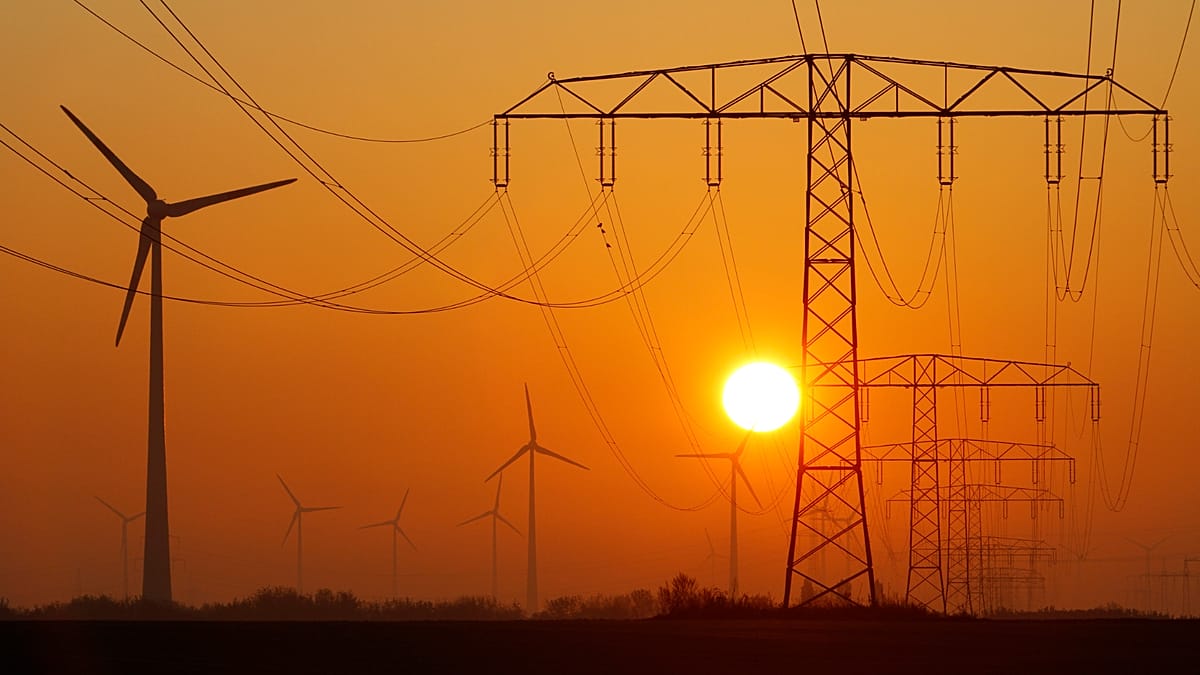
Germany is pushing back against a European Commission plan to tax electricity at a lower rate than natural gas, arguing that Brussels is seeking to use electricity-market legislation to impose rules that should instead be addressed through EU tax law, according to a letter seen by Euronews.
ADVERTISEMENT


ADVERTISEMENT
Berlin argues that the Commission is seeking to introduce significant tax provisions through a legal instrument that could be adopted by qualified majority, rather than the unanimity traditionally required for EU tax measures, as Brussels races to electrify its industry, transport and energy sectors amid high electricity prices.
“I have significant doubts that (the proposal) … can be adopted by a qualified majority. (It) is contrary to the unanimity requirement in tax law (…) it makes substantial tax-related provisions and directly interferes with national tax and budgetary sovereignty,” reads the letter signed by Bastian Fleig, Director General at the German’s Ministry of Finance.
The matter is particularly sensitive as the EU is pushing to accelerate electrification, having recently set a 46% target by 2040 in a bid to ditch imported fossil fuels. The EU has paid over €22 billion in the 48 days following the war in the Middle East without having bought any new energy, the Energy Commissioner Dan Jørgensen said.
Uncertainty over the future of the Strait of Hormuz, the critical waterway, is giving Brussels further impetus to pursue electrification and reduce the bloc’s reliance on imported fossil fuels.
But electricity is still significantly more expensive than fossil gas across the EU, often charged three to five times more than gas, making it harder for households and businesses to switch to clean technologies.
Legal loopholes
Against this backdrop, Brussels wants electricity to become a more attractive alternative to fossil fuels, while Germany warns that this objective should not be used to reopen an agreement EU countries reached during negotiations over the Energy Tax Directive.
That earlier compromise deliberately gave governments room to determine how electricity should be taxed, with electricity removed from the Commission’s proposed environmental ranking of energy carriers. Germany says the new proposal would effectively bring that ranking back through the back door.
The German objection signals a potential clash between the Commission’s drive to make electrification financially attractive and member states’ determination to retain control over taxation, reflecting a political significance bigger than electricity bills.
However, Germany defends that the goal of transformation and electrification is shared. Its objection is only to the Commission’s intention to use electricity market regulation as the vehicle for achieving it, according to the letter.
“We all share the goal of transformation and electrification. (…) I do not share the approach of the European Commission,” reads the letter.
For Berlin, the solution is to scrap its proposal to tax gas higher than electricity as part of the electricity market design law and to negotiate electricity taxation under the proper EU law, the Energy Tax Directive.
Tom Lewis, energy policy coordinator at the NGO Climate Action Network Europe, said Germany should support the Commission’s proposal to reform energy taxation to help close the price gap between electricity and gas.
“Today, a German household pays on average over three times more per unit of electricity than it would for gas, making much-needed electrification, like installing heat pumps, less attractive than polluting gas boilers,” Lewis told Euronews.
In the EU, Finland and Sweden are the notable exceptions that tax gas higher than electricity.
Saverio Papa, head of energy at the European Heat Pump Association, said that both energy taxation and network charges are key factors contributing to high electricity-to-gas price ratios in Europe.
According to Commission figures, grid charges and taxes combined often outweigh the price of the electricity consumed. Network charges accounted for 27% of household electricity bills and 21% of business bills, while national taxes and levies added another 24% for households and 16% for firms.
The EU co-legislators, the European Parliament and the Council, are set to kick-start negotiations on the sensitive file after the summer break, under the Irish EU Presidency.