



Published on
Lithuania’s Prime Minister Olga Ruginienė has rejected Hungarian Premier Viktor Orbán’s claims that Ukraine is deliberately blocking Russian oil from reaching Hungary via the damaged Druzhba pipeline, calling the accusation “nonsense”.
ADVERTISEMENT


ADVERTISEMENT
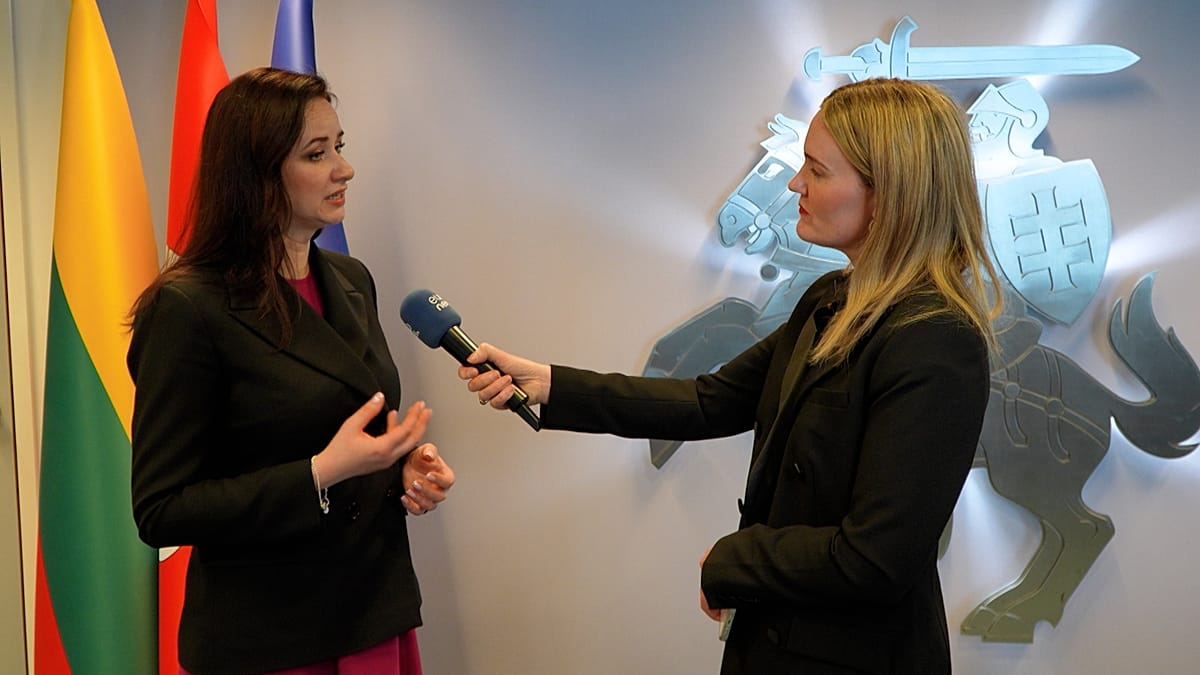
“When you’re fighting for security, not just for Lithuania, but for whole Europe, to hear such words and decisions, it’s nonsense,” Ruginienė told Euronews’ Europe Today show.
Hungary is blocking the EU’s 20th sanctions package against Russia and preventing Brussels from delivering a €90 billion loan to Ukraine, demanding Kyiv restore oil flows through the pipeline.
Kyiv claims that a section of the pipeline in western Ukraine was hit by a Russian drone as part of Moscow’s relentless air raid campaign against Ukrainian infrastructure this winter.
Russia’s continuous drone and missile strikes have cut heating, water and electricity to millions of homes as well as hospitals, schools and other civilian infrastructures amid harsh winter temperatures.
Both Hungary and Slovakia were given opt-outs from Western sanctions against Russian oil.
Hungary is using its veto power in the 27-member bloc to hold up the passage of the EU’s 20th sanctions package and to prevent Brussels from delivering a €90-billion lifeline loan to Ukraine.
“It is unacceptable,” said Ruginienė, urging the EU to speak with one unified voice in the face of Russia’s ongoing war.
She said all of Europe was vulnerable to the Kremlin’s aggression, warning that Hungary is mistaken if it believes Russian President Vladimir Putin would not target it as well as the rest of the EU.
Ruginienė said she “didn’t understand” Orban’s belief that “the war will not come to Hungary.” “We as Lithuania, we have big experience about Soviet Union times. We know how you feel when Russia comes to your land,” she said.
As a frontline state on the border with Russia, the prime minister said Lithuania is still under “daily attack” as part of Russia and Belarus’ hybrid efforts to destabilise the rest of Europe.
For the last several months, large air balloons carrying contraband cigarettes have been crossing into Lithuanian airspace from nearby Belarus as part of so-called grey zone attempts to create havoc across the state.
The balloons frequently enter Lithuanian airspace, forcing authorities to close the main airport at Vilnius for sometimes days at a time.
“For us on the border, we’re faced off every day with threats, different kinds of threats from balloons and other things,” Ruginienė said.
“When you’re fighting for security, it’s not just for Lithuania, but for the whole of Europe,” she added.


