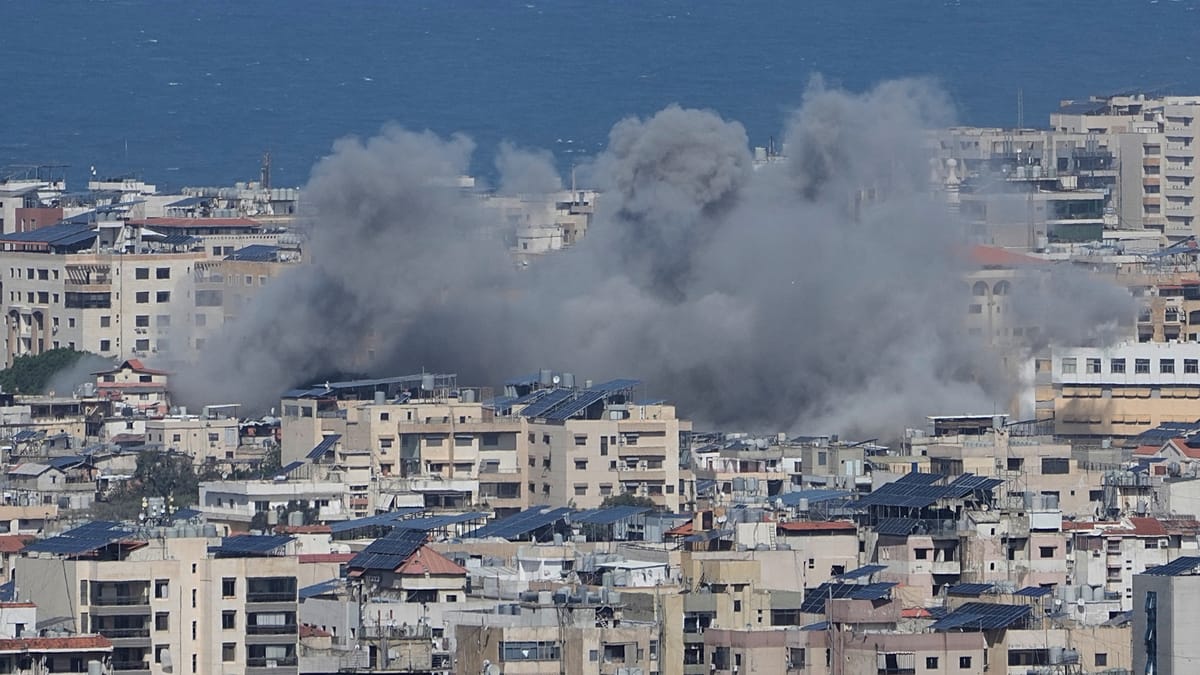


Russia’s full-scale invasion of Ukraine, combined with constant pressure from the US have left the European Union with the single choice of addressing its defence and security capacity.
The stakes are high, as here is no end in sight to the war in Ukraine. At the same time, trust is low because Europe appears vulnerable, and both militarily and diplomatically unprepared.
Europe’s main imperative is protecting itself while supporting Ukraine. EU leaders agreed last December on a new €90 billion loan for Ukraine, while European Commission President Ursula von der Leyen announced new defence initiatives in October, presenting them as steps to strengthen Europe’s deterrence against Russia and other adversaries by 2030.
Adding to the tension, Vladimir Putin said on 2 December that Russia is ready to fight if necessary and would leave “no one to negotiate with.”
NATO Secretary General, Mark Rutte, said “we are Russia’s next target” and warned of a possible attack on the alliance within the next five years.
The US national security strategy hammered Europe and its policy agenda, labelling it a weak ally. Germany’s defence minister, Boris Pistorius, echoed warnings from military historians last November saying that “we already had our last summer of peace.”
The core concern is clear: Europeans now believe that a Russian attack on NATO or neighbouring countries is increasingly likely, fuelling a powerful sense of urgency for action.
Are Europeans ready for war?
n a recent Euronews poll asking, “Would you fight for the EU’s borders?”, the answers reveal widespread hesitation about the prospect of war.
Of the 9,950 people who responded, three out of four — or 75% —said they would not be ready to take up arms. Nineteen per cent said they would be willing to fight, while 8% remained unsure, reflecting uncertainty about both personal readiness and whether their country is prepared for a potential conflict.
A YouGov survey confirmed that Russian aggression is seen as one of Europe’s biggest threats, by 51% in Poland, 57% in Lithuania, and 62% in Denmark. The same poll showed “armed conflicts” as the third-largest concern among the Europeans surveyed.
However, although European leaders share these concerns, it is primarily Baltic countries — Lithuania, Estonia, and Latvia — that have stepped up to take the lead. These states have reason to do so: they sit on NATO and the EU’s eastern edge and share more than 1,000 kilometres of border with Russia and Belarus.
Lithuania has begun setting up so-called “drone walls. Working with Latvia, both countries are restoring swamps in their territories to create natural defences. They have also launched national awareness campaigns, resilience exercises and televised drills to help people mentally prepare for a possible conflict.
Last year, Lithuania’s Interior Ministry provided maps with links to shelter locations and emergency hotline numbers. Latvia added a mandatory national defence course to its public education curriculum.
Poland built barriers along its borders with Belarus and introduced security education courses in most public schools, some of which include firearm training for children as young as 14.
“In primary schools, the requirements include theoretical preparation on the safe handling of weapons,” Poland’s education ministry explained in an email to Euronews.
Finland and Estonia sent brochures to households with instructions on what to do if war comes, echoing measures taken during the Cold War. The brochures explain what to pack, how to recognise sirens and alerts, and what steps to take during evacuations or power outages.
Sweden launched a national initiative in 2025 to mail updated “If Crisis or War Comes” brochures to every household, reviving its Cold War-era public safety playbook. All three countries have also integrated defence in their education curricula, with Estonia introducing a special national defence course for high schools in 2023.
In parallel, there has been a visible uptick in civilians across Europe asking questions about wartime readiness online. The trends suggest worry: in countries geographically close to Russia, such as Finland, Estonia, Poland, Lithuania and Sweden, Google data shows a spike in searches over the past five years in searches such as “what to pack for war or evacuation?” and “where are bomb shelters near me?”, with a notable uptick in 2025.
What is Brussels doing?
Call it panic or call it caution, but national governments are not the only ones moving to increase defence capabilities. At the EU level, several initiatives are under way to improve the bloc’s capacity for a “just in case” scenario that now seems more plausible than ever.
Defence budgets across Europe have risen, reaching more than €300 billion in 2024. Meanwhile, last July’s proposal for the EU’s 2028-2034 Multiannual Financial Framework (MFF), announced by Commission President Ursula von der Leyen, allocates an additional €131 billion to aerospace and defence — five times more than its predecessor.
The ‘Readiness 2030’ plan, endorsed by all 27 member states, is the first — and perhaps most crucial — strategic roadmap to strengthen defence in the European Union.
Its goal is to close capability gaps and accelerate military response by enabling the movement of troops and equipment across EU borders within three days during peacetime and within six hours during emergencies. This would be achieved by dismantling fragmented permit systems that currently cause significant delays, and by establishing a ‘Military Schengen’ framework.
The EU is creating a network of military mobility corridors, including reinforced road, rail, and port routes designed to handle heavy armour and logistics traffic. Around 500 critical infrastructure points have been identified for upgrades, such as bridges and tunnels that need to support vehicles weighing more than 60 tonnes.
The plan also aims to standardise military equipment and logistics procedures across EU armed forces, which currently rely on incompatible systems.
The estimated cost of these upgrades is €70 and 100 billion, with funding coming from national budgets and EU programs such as the Connecting Europe Facility. To support this effort, the European Commission has developed new financial tools.
One of these tools is ReArm Europe, introduced in 2025. It is a central coordination platform to accelerate defence readiness and industrial capacity. Given the fragmented nature of Europe’s defence landscape, ReArm Europe is designed to align national defence investments, reduce bottlenecks, streamline decision-making, speed up procurement, ensure system compatibility, and avoid duplication.
Two additional mechanisms are included under the ReArm Europe umbrella: EDIP, the European Defence Industry Programme, and SAFE, the Strategic Armament Financing Envelope.
These provide direct financial support. EDIP offers €1.5 billion in co-financing for joint research, development, and production of defence systems, but only for projects involving at least three EU countries, or two plus Ukraine. SAFE, meanwhile, is a €150 billion EU-level loan facility that allows member states to jointly finance large-scale weapons purchases more quickly and at lower cost.
In a nutshell, these initiatives aim to encourage countries to pool resources and collectively borrow to scale up production, negotiate better terms, and ensure that new systems are interoperable.
Why does the US want to make Europe great again?
The Trump administration’s security strategy, published on December 4th, triggered significant friction with Europe. The document described the EU as a weakened partner and emphasised an “America First” approach, echoing previous disputes about NATO allies’ spending in US President Donald Trump’s first term.
Since 1945, the US has built a network of universities, think tanks, research institutions, and defence agencies designed to link strategy and policymaking. Europe’s strategic planning, in contrast, remains divided by national interests, underfunded, and less closely connected to political decision-making.
Washington expects Europe to assume most of NATO’s conventional defence responsibilities, including intelligence and missile systems, by 2027, a deadline some European officials consider unrealistic. At the 2025 NATO Summit in The Hague, allies agreed to invest 5% of GDP annually in defence by 2035. European countries are currently contributing at lower levels.
Questions, therefore, remain about whether Europe can continue to act as an equal partner to the US. The US National Security Strategy criticised Europe’s migration policies, birthrates, free-speech rules, and its approach to supporting Ukraine.
The same document called for an end to the war in Ukraine and reflected Washington’s intention to normalise relations with Russia, or “reestablish strategic stability” with Moscow.
Although Russia is not explicitly called a future ally, the Trump administration does not treat Russia as an adversary either.
What happens in Europe, stays in Europe?
European officials, such as EU Commissioner Valdis Dombrovskis, were quick to respond. Dombrovskis told Euronews’ Europe Today, that he disagreed with the document’s assessment and that the EU needs to “show more assertiveness”.
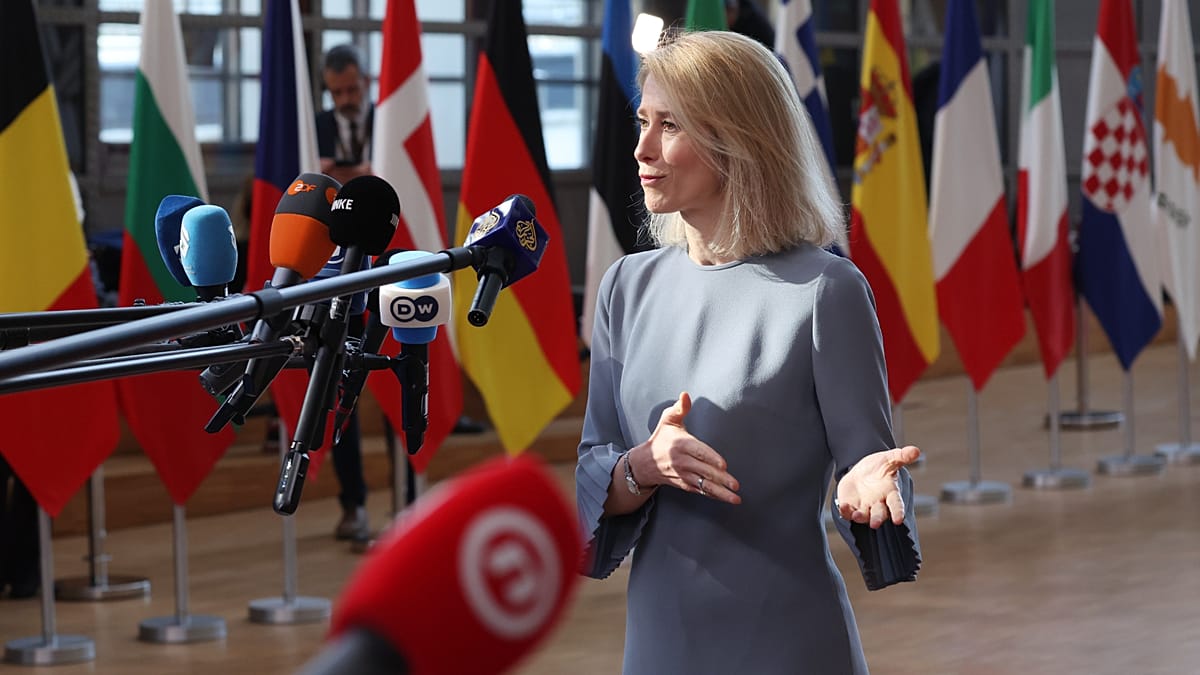
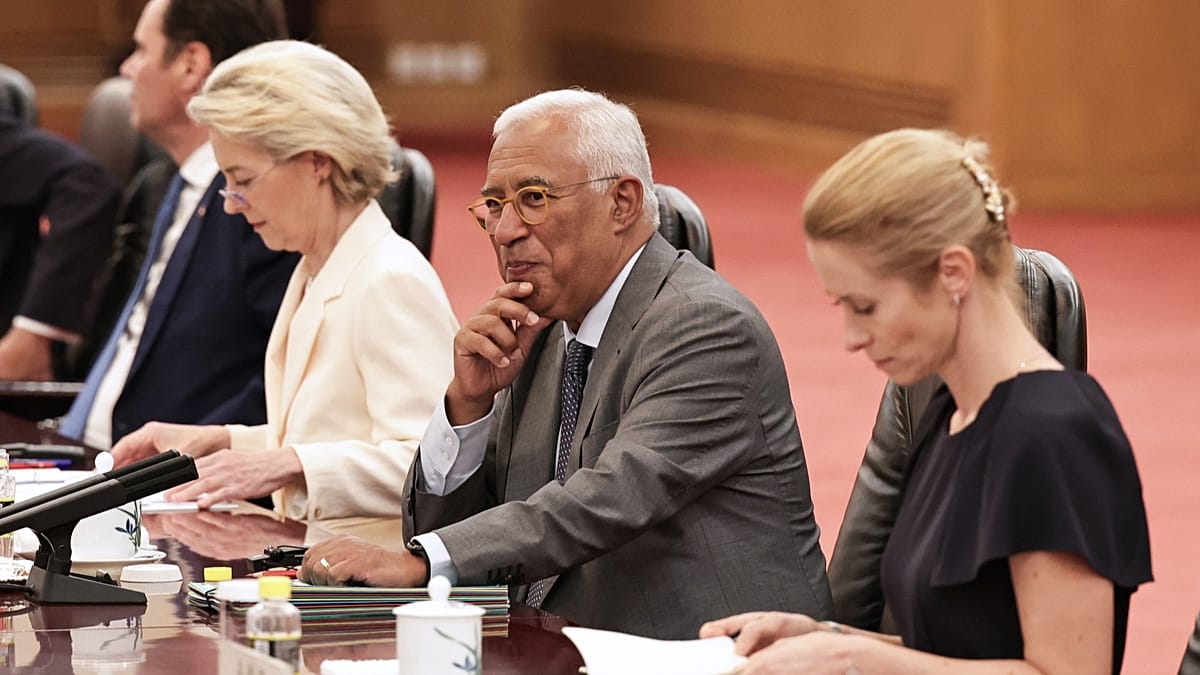
In the same tone, Council President António Costa and foreign policy chief Kaja Kallas dismissed US warnings about Europe’s supposed decline. They rejected any suggestion that Washington should interfere in the bloc’s internal political choices.
They insisted that allies do not interfere in each other’s democratic decisions. When asked about the backlash, Trump said that Washington simply wants to “keep Europe, Europe.”
This exchange highlighted the growing transatlantic divide over their approaches to Russia’s war in Ukraine.
A race against time
Europe is rearming. Still, experts warn that political urgency alone will not suffice. Séamus Boland, president of the European Economic and Social Committee, told Euronews’ Brussels, My Love podcast: “We’re the easiest target to attack. A dictatorship loves to attack Europe because they don’t have to live by the same standards we do.”
Beyond budgets and political declarations, structural bottlenecks continue to constrain Europe’s defence push, challenges that cannot be resolved overnight. As Thomas Regnier, spokesperson for Tech Sovereignty, Defence, Space, Research & Innovation, noted, early findings from the EU Defence Industrial Readiness Survey confirm what both governments and industry have long experienced.
“Regulatory and procedural bottlenecks are among the most immediate obstacles to timely defence cooperation and industrial ramp-up,” Regnier said.
In response, the Commission is fast-tracking changes. It first introduced a “mini-omnibus” regulation to make EU defence and dual-use funding more flexible, before releasing a broader package in June. The aim, Regnier said, is to cut production delays before demand exceeds supply.
“This phased approach ensures the Commission is not just listening, but acting,” he added.
Yet regulation is only part of the problem. Europe’s defence industry is globally competitive but remains fragmented along national lines. Decades of underinvestment and limited scale continue to restrict production growth.
“EU firms are competitive but face structural weaknesses and a fragmented market,” Regnier said. He argued that deeper coordination is essential to fund, develop, produce and maintain Europe’s defence capabilities and infrastructure.
This is where EU-level tools such as SAFE are meant to make a difference: the programme is designed to speed up joint procurement and reduce dependence on non-European suppliers.
Under its rules, most defence products must be sourced largely from within the EU, the EEA, or Ukraine, ensuring what Regnier described as Europe’s “independent use” of its own defence equipment.
Early signs suggest strong demand. Preliminary SAFE plans include 691 projects, nearly two-thirds of which focus on joint procurement. Member states have requested almost €50 billion for air and missile defence, ammunition, and missiles, with billions more sought for drones, anti-drone systems, and maritime capabilities. Up to €22.5 billion in pre-financing could be released as early as March 2026.
Timelines are tight. Europe must modernise its defence industry, support Ukraine, and respond to security warnings from NATO and Washington. As Regnier put it, success depends on increased cooperation, closing capability gaps and sustaining timely support for Ukraine.
In a security environment defined by urgency rather than certainty, Europe’s challenge is no longer whether to act, but whether it can act quickly enough.