


Published on
The dispute between Italy and Germany over the sharing of responsibility for migrants is becoming increasingly heated.
ADVERTISEMENT


ADVERTISEMENT
The Italian Interior Ministry has now released new figures on private rescue vessels and is demanding financial compensation from Germany.
Since Italian Prime Minister Giorgia Meloni took office in October 2022, German aid organisations have, according to Rome’s figures, brought around 22,500 migrants to Italian ports.
In total, about 42,300 people have arrived in Italy on board private rescue ships during this period.
This means that, by Italy’s calculation, more than half of these arrivals are attributable to German aid organisations.
A further roughly 4,500 people reached Italy on ships operated by other European aid organisations, although their vessels were sailing under the German flag.
Rome therefore puts the German share at almost two-thirds of all migrant arrivals by private rescue vessels.
Italy’s Interior Minister Matteo Piantedosi has called for Germany to contribute financially.
Piantedosi has made it clear that Italy does not want to discuss taking back migrants from Germany who first entered the EU through Italy until the issue of financial responsibility has been resolved
Germany initially wants to transfer three people to Italy who first entered the EU there before later applying for asylum in Germany.
Rome has, however, indicated that it may not allow the migrants to enter the country and may instead send them straight back to Germany.
As a basic rule in the EU, anyone who enters the bloc via Italy and later applies for asylum in Germany can be transferred back to Italy for their application to be examined.
The new EU rules, in force since June, retain the principle that the country of first entry is responsible, while also allowing for exceptions and a solidarity mechanism.
According to the Italian Interior Ministry, Piantedosi and German Interior Minister Alexander Dobrindt (CSU) are continuing to work towards a joint solution.
However, Italy’s Deputy Prime Minister Matteo Salvini once again took aim at the private sea rescuers.
He called on the governments in Berlin and Madrid to “rein in” their aid organisations, arguing that they should no longer be allowed to bring “illegal immigrants” to the Italian coast.
NGOs warn of deadly Mediterranean route
The dispute between Rome and Berlin centres on a fundamental question of European migration policy.
Who bears responsibility for migrants who reach Europe across the Mediterranean – and who has to shoulder the cost of taking them in?
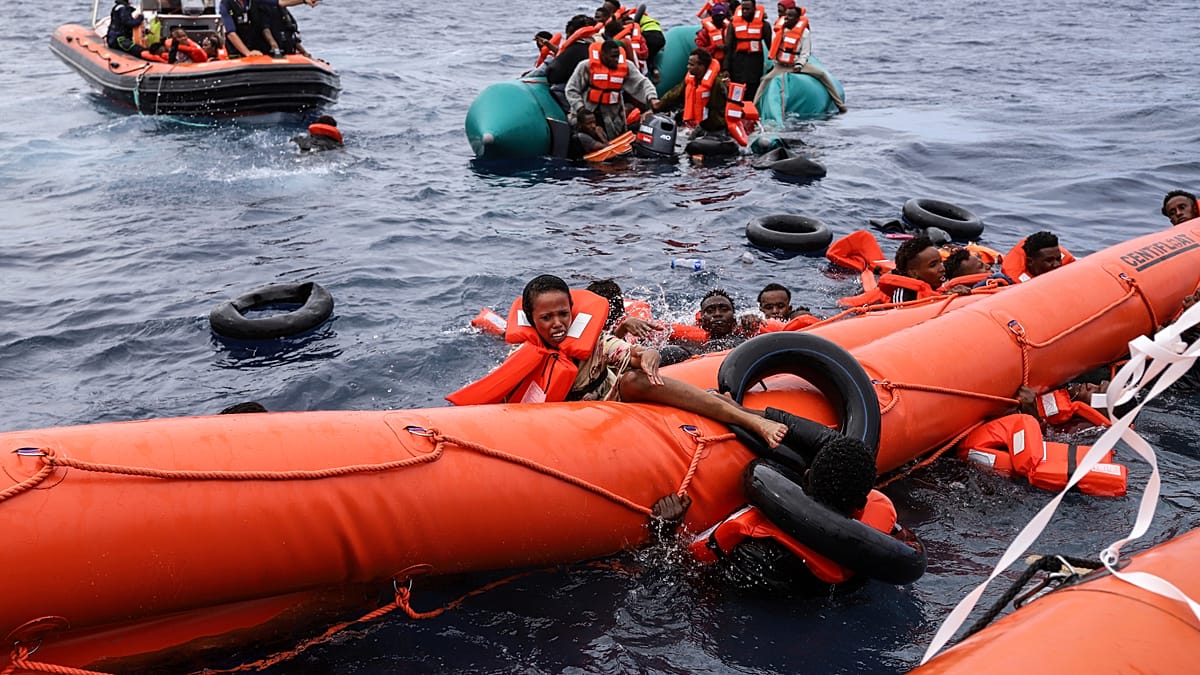
Aid organisations point to the dangers of the crossing. Only recently, the Italian organisation Emergency reported seven deaths on an overcrowded boat off the Libyan coast. According to the group, 57 people were rescued, two of them in a critical condition.
The German organisations Sea-Watch and Resqship also reported finding three bodies in the Mediterranean.
The central Mediterranean route remains one of the most dangerous migration routes in the world. According to the International Organization for Migration (IOM), at least 872 people have died or gone missing there so far this year. The figure refers to documented cases – and the true number is likely to be higher, as not all incidents are recorded.