
Hello from Brussels. I’m Mared Gwyn.
ADVERTISEMENT


ADVERTISEMENT
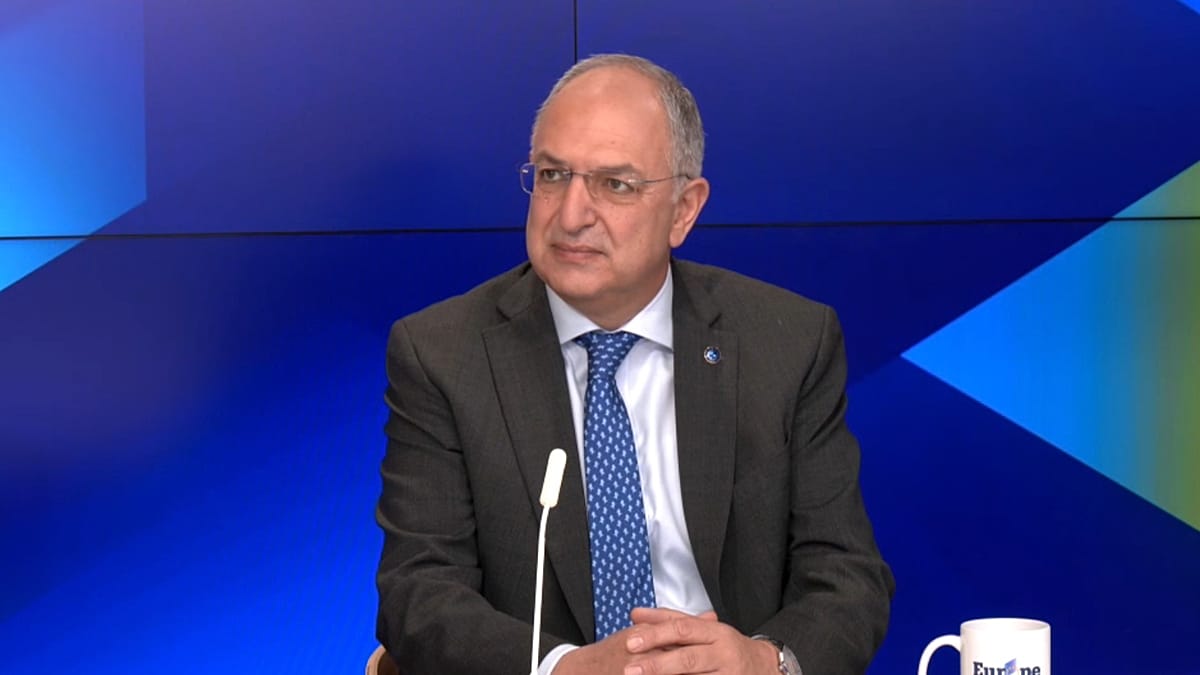
Just in: The European Commissioner for crisis management Hadja Lahbib has told Europe Today that the EU is “prepared for anything” as the war in the Middle East risks dragging the bloc in.
“We are committed and prepared. We held a first meeting on Sunday immediately after the first strikes,” Lahbib explained.
“And when it comes to the humanitarian crisis, we are ready with stockpiles, with warehouses, with sleeping bags, with tents,” she added, saying also that the EU is monitoring “nuclear risks.” Watch.
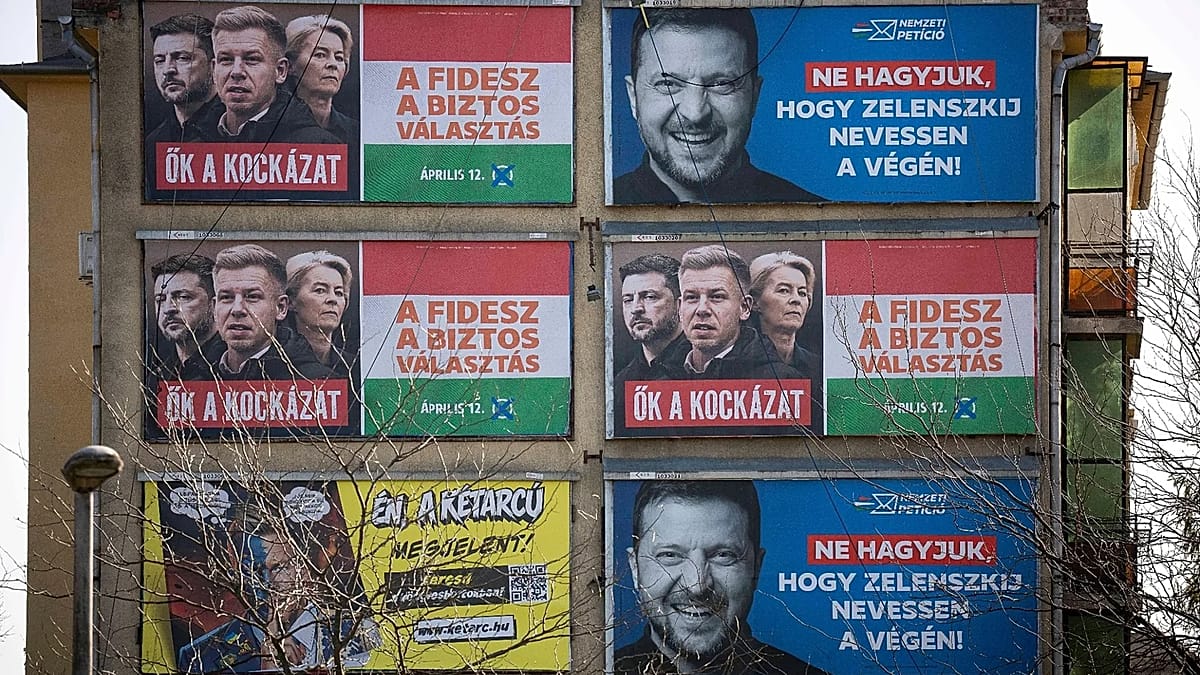
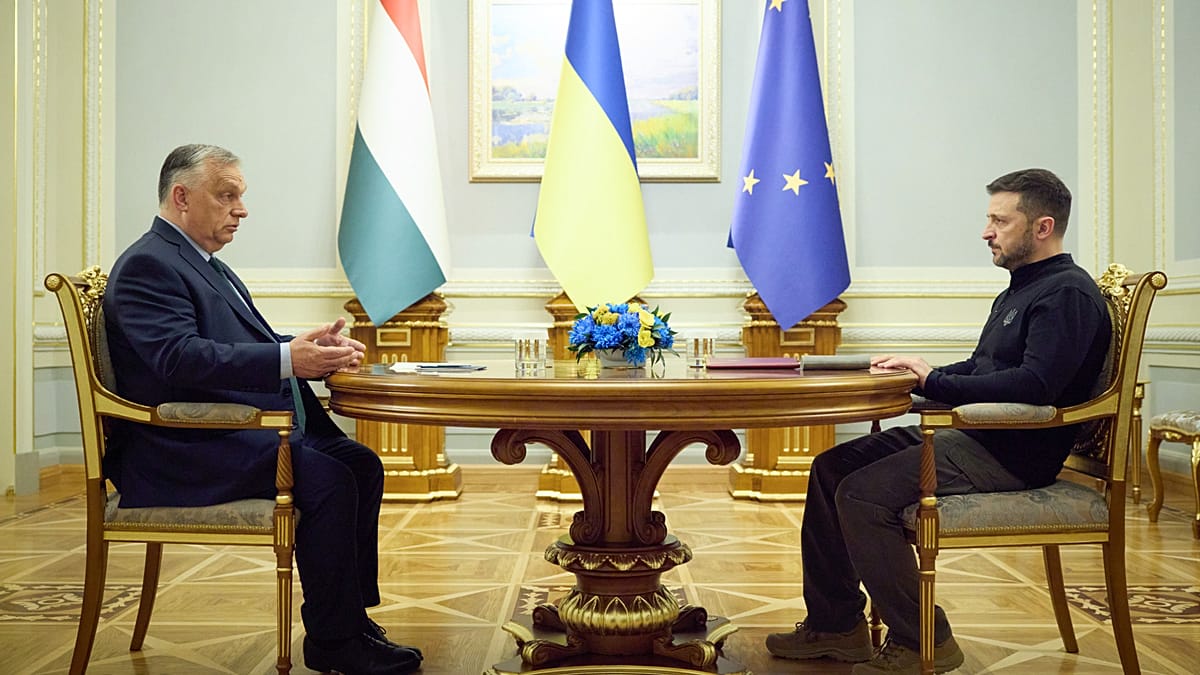
But we lead this morning with the dispute between Hungarian Prime Minister Viktor Orbán and Ukrainian President Volodymyr Zelenskyy over the transit of Russian oil, which spiralled to new heights on Thursday, with both leaders exchanging sharp-worded threats.
Orbán vowed to “break” what he described as “the Ukrainian oil blockade” on the transit of Russian crude “by force” in a social media video, as he doubled down on his insistence that the flow of oil to his landlocked country via the Druzhba pipeline be restored.
Reminder: Both Orbán and his Slovakian counterpart Robert Fico are vetoing fresh EU sanctions on Russia over what they say is Ukraine’s failure to repair the Soviet-era Druzhba pipeline that was damaged in a strike in late January, and which was carrying Russian crude to both EU countries. Orbán is also blocking a €90 billion EU loan to Kyiv agreed in December.
Zelenskyy later hit back, saying at a press conference in Kyiv: “Hopefully, no one in the EU will block the €90 billion tranche to arm Ukrainian soldiers. Otherwise, we’ll give our troops that person’s phone number and let them speak to him in their own language.”
His comments have prompted outrage in Budapest, with foreign minister Péter Szijjártó describing them as a death threat.
The standoff has even prompted opposition leader Péter Magyar, Orbán’s main challenger ahead of the April Hungarian elections, to stand in solidarity with his political rival. “The Ukrainian president threatened Prime Minister Viktor Orbán. No foreign head of state can threaten anyone, not a single Hungarian,” Magyar said at an election rally.
Our Hungarian correspondent Sándor Zsiros writes that the timing of the standoff, as Hungary gears up for elections, could have major repercussions in the country’s politics. Orbán has made his opposition to Ukraine’s EU accession bid and the tense relations between Budapest and Kyiv key cornerstones of his bid for re-election. His opponent Magyar of the pro-EU TIsza party has so far been leading him in the polls.
Slovakia’s Robert Fico weighed in on the feud late on Thursday, suggesting other EU member states could also block the €90 billion loan for Ukraine if Zelenskyy “continues like this” and urging EU leaders to “distance themselves” from what he described as Zelenskyy’s “outrageous blackmailing statements.”
Zelenskyy has also doubled down on his refusal to fix the pipeline, claiming EU leaders shared his position.
“I will be frank: my position, which is shared with European leaders, is that I would not repair the pipeline,” Zelenskyy said.
Yet the European Commission says that repairing the pipeline is one of the main possible resolutions to the feud, with President Ursula von der Leyen recently urging Kyiv in public to “accelerate” repair works.
Brussels is treading a fine line, as it aims to sustain its support for Kyiv as it continues to withstand Russian aggression, while avoiding any perceived wading into the ongoing Hungarian election campaign.
Late on Thursday evening, Ukrainian Foreign Minister Andrii Sybiha accusedBudapest of taking “seven Ukrainian citizens hostage”, referring to an alleged incident in which seven Ukrainian employees of state-owned Oschadbank transiting between Austria and Ukraine were detained.
As the dispute over the pipeline rages on without a solution, EU countries have rebuffed the Commission’s idea of granting “reversed” membership to Ukraine as part of the ongoing peace negotiations. The radical reform, which was never put on paper but floated informally, was considered a high risk to the integrity of the merit-based accession process.
The debate, however, is not yet over. Brussels is still searching for viable options that can strike the right balance between Ukraine’s political aspirations and the bloc’s credibility and stability. Jorge Liboreiro and Maia de la Baume have the full story.
War in the Middle East rages on, with Ukraine to provide support to US on drone interception
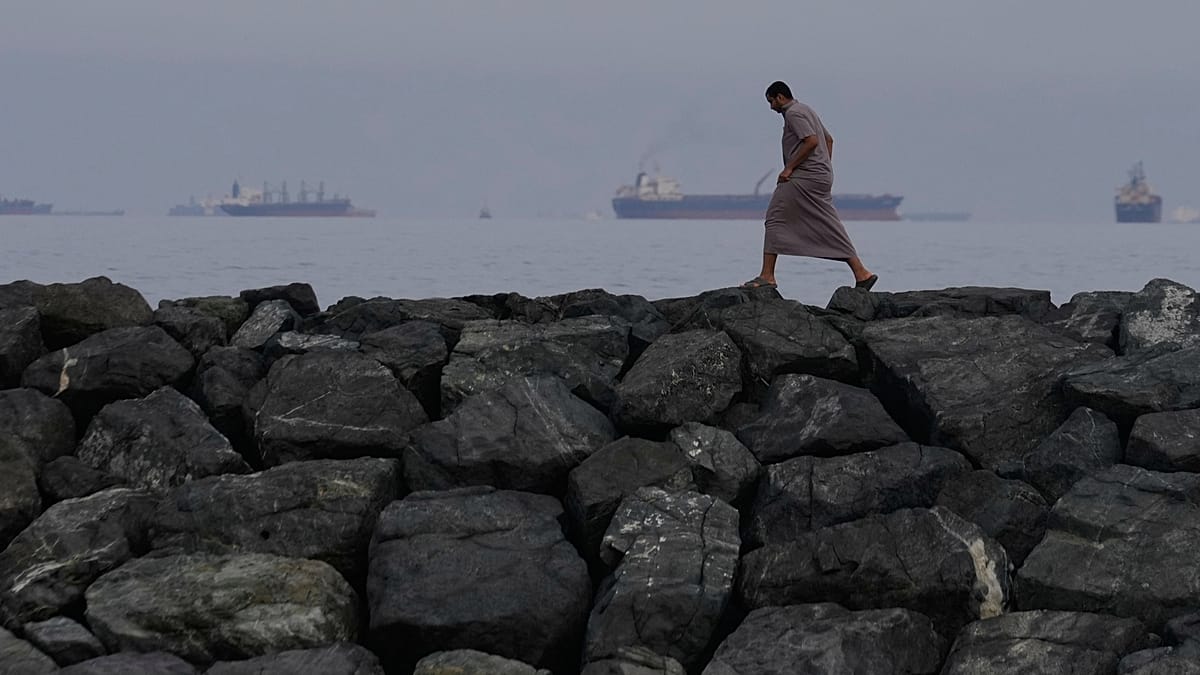
The war in the Middle East continues to escalate this morning, with more explosions in the Iranian capital of Tehran, while Persian Gulf states including Kuwait, Qatar and Saudi Arabia said they had intercepted drones and ballistic missiles fired towards them.
The Israeli military has also begun attacks on southern suburbs of Lebanon’s capital, Beirut, after issuing evacuation orders affecting around half a million people on Thursday. Reuters also reports that Hezbollah has ordered Israeli residents living within 5km of the border with Lebanon to evacuate.
Meanwhile, the US has granted India a 30-day waiver to buy Russian oil, as the escalating conflict threatens the country’s energy supply. India had agreed to halt its Russian oil purchases when it cut a trade deal with the US in early February, in a move Trump had said would help end the war in Ukraine.
Ukrainian President Volodymyr Zelenskyy also confirmed on Thursday that his country would provide support to the US and its allies on intercepting Iran-made drones, which have been used by Russia in its war of aggression.
Zelenskyy said he had responded to a request from Washington “to provide the necessary means and ensure the presence of Ukrainian specialists who can guarantee the necessary security”.
We’ll have all the latest on the conflict in our rolling coverage throughout the day.
‘No signs’ of Middle East refugee surge but EU better prepared than 2015, Swedish minister says
There are “no signs” of an imminent surge of refugees fleeing conflict in the Middle East to Europe, but past experiences show that “things can change very quickly”, Sweden’s Migration Minister Johan Forssell has told Euronews.
“We cannot have what we had ten years ago. We cannot have another refugee crisis,” Forssell said, speaking following a gathering of EU interior ministers in Brussels on Thursday.
“We are still struggling with many of the challenges and problems that we saw back in 2015,” Forssell added, referring to the year which saw more than a million people flee to Europe driven by conflict in Syria, Afghanistan and Iraq.
During Thursday’s meeting of EU interior ministers, Forssell also presented a Swedish-led initiative to facilitate the expulsion of refugees convicted of serious sexual crimes from EU states, by changing the way that the 1951 Refugee Convention is applied.
“A majority of refugees and migrants contribute positively to our communities (…) However, a small number commit serious crimes that could threaten support for domestic protection space and asylum systems, hence negatively affect law-abiding refugees and migrants, which in turn risks undermining the very foundation of our societies,” a Swedish non-paper presented to EU ministers, and seen by Euronews, reads.
“What I think is outrageous, and I think most people agree with me, is the fact that someone who has committed rape, sentenced to four years in prison, it’s insane that he is not sentenced to expulsion,” he said.
Watch the full interview.
More from our newsrooms
Fact check: Did French border guards mock influencers returning from Dubai amid Iran war? Social media posts have shown French border guards stationed in airport arrivals with signs that appear to read, “to all the influencers and other people in tax havens such as Dubai, the tax authorities wish you a smooth return to France”. But is this real? Estelle Nilsson-Julien fact-checks.
Aliyev vows attacks on Azerbaijan ‘will face our Iron Fist’ after Iran drone strike. Azerbaijan’s President accused Tehran of committing an “act of terror” after Iranian drones fell in Nakhchivan, injuring four civilians and damaging an airport building, opening the prospect of the Iran war consequences widening further towards the South Caucasus. More.
We’re also keeping an eye on
- European Commission President Ursula von der Leyen receives the Executive Director of the International Energy Agency (IEA), Fatih Birol
That’s it from us. We’ll be back on Monday. Remember to sign up to receive Europe Today in your inbox every weekday morning at 08.30.