
Good morning, Brussels. Angela Skujins here on newsletter duties. Roughly 24-hours ago we saw two lightning rod elections – one in Kosovo and one in Armenia — with candidates bristling against Russian influence and communities weighing whether to get closer to the European Union.
ADVERTISEMENT


ADVERTISEMENT
This newsletter is all about the bloc’s battle of wills amid campaigns of foreign interference.
Barbs at the ballot box. Near complete results from Kosovo’s snap election show the country’s incumbent Prime Minister Albin Kurti’s party on track to secure the most votes (43%). The social democratic, pro-EU party, Vetëvendosje, has not drummed up enough support to govern alone, however, and will most likely need to form a coalition.
Despite the results, it remains unclear whether this will bring an end to a political impasse for the small Balkan country seeking to move closer to the EU and North Atlantic Treaty Organisation (NATO).
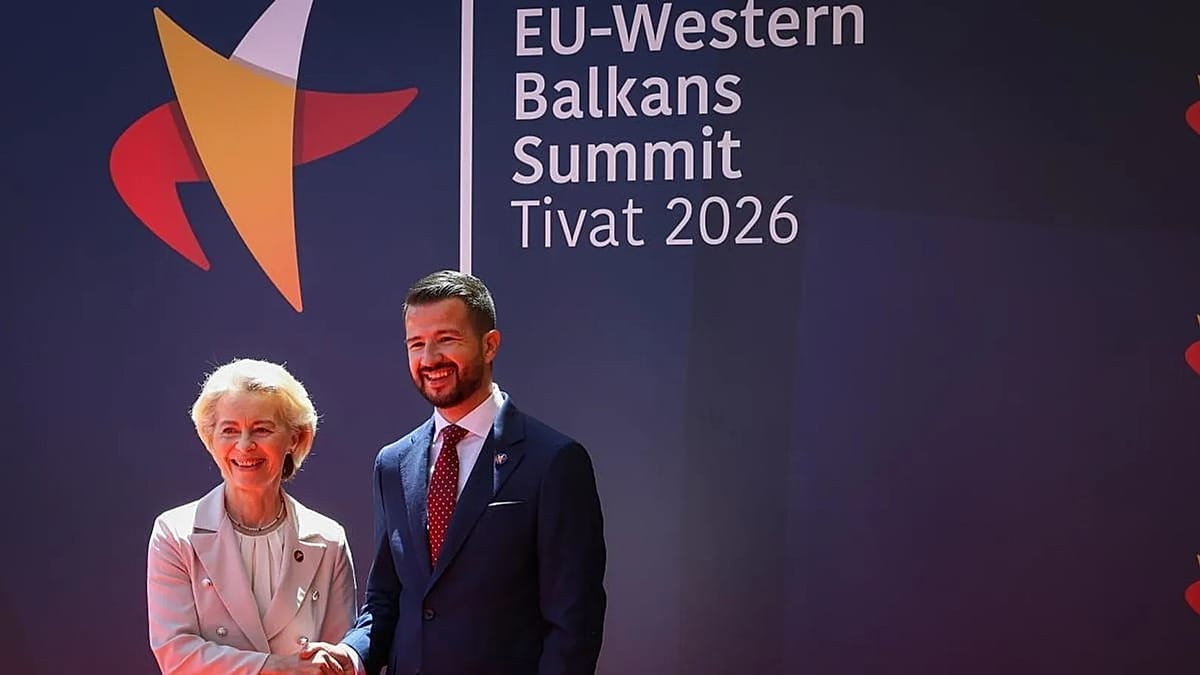
On a whistle-stop trip to the Western Balkans last week, European Council President António Costa urged Kosovo and Serbia, a country seen by some for having pro-Russian proclivities, to normalise ties between each other. This would benefit both bids to join the 27-member bloc.
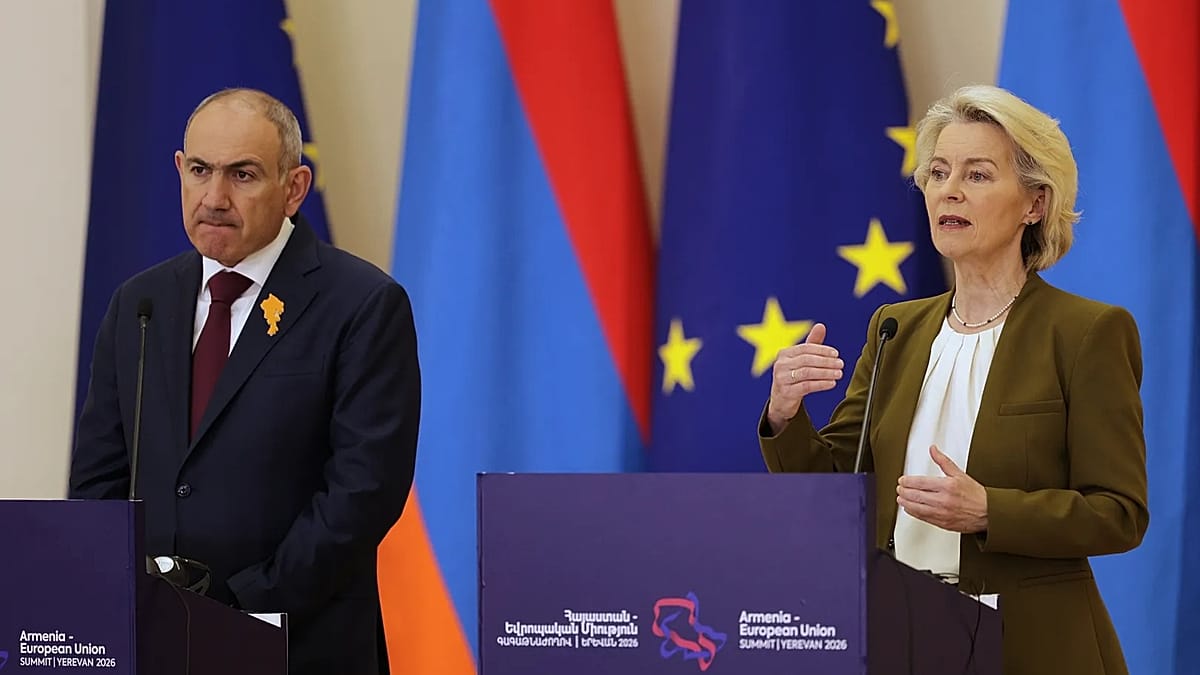
Further east, another consequential election is underway. At the time of writing, Armenian Prime Minister Nikol Pashinyan and his governing pro-European Civil Contract party have secured above 50% of national parliamentary votes counted, according to poll aggregator Europe Elects.
“The European Union is our main partner in democratic reform implementation, and we will continue that path,” Pashinyan said, while casting his ballot earlier on Sunday.
The comments come as Russia applied significant pressure on the country in the run-up to the election. Armenian products were targeted by a barrage of Russian import restrictions, with the Kremlin also threatening to suspend its gas deal with Armenia.
Then came the thinly-veiled threats: Russian President Vladimir Putin and his officials compared Armenia’s path to that already taken by Ukraine, which was invaded by Russia.
Security bid. Ukraine has made its desire to join the EU clear: it lodged its application in 2022 following Russia’s full-scale invasion as an attempt to shore-up its defences. Despite its ambitions, the years-long negotiations have progressed at a glacial pace due to a public veto by former Hungarian Prime Minister Viktor Orbán.
But the tempo has quickened in recent days due to Hungary’s new leader, Péter Magyar, instructing his ambassador to drop Budapest’s veto in Brussels. This has culminated in the expected opening of Ukraine’s first cluster, with Costa confident Kyiv will also close them at speed.
European Commissioner for Enlargement Marta Kos is in the Ukrainian capital on Monday to trumpet good news. Ukraine will receive €2.8 billion under the EU’s Ukraine Facility “in recognition of its reform progress,” she said in comments provided to Euronews.
“The closer Ukraine moves towards the EU, the more desperate Russia becomes. And with that desperation come more threats, more missiles and more attacks.”
In recent days, long-range Ukraine drone strikes have managed to hit major Russian cities, such as Putin’s hometown, Saint Petersburg. A large column of smoke dominated Saint Petersburg’s skyline on the opening day of the St. Petersburg International Economic Forum, sending a symbolic message to Putin and his allies in attendance.
But Moscow launched 13 attacks against the war-torn country on Saturday alone, including a Shahed drone strike on a critical piece of energy infrastructure near the decommissioned Chernobyl Nuclear Power Plant.
Mobilising money. This is why support for Ukraine sits firmly at the top of an informal defence meeting in Lefkosia, Cyprus on Monday. EU-backing should materialise by mobilising more EU cash, namely European Peace Facility funds, to support Ukraine on the battlefield.
Very much like the dramatic events in recent days surrounding accession, there is an expectation that Hungary will formally drop its years-long veto so that the bloc can release its €6.6 billion defence envelope.
On his way into the talks, European Commissioner for Defence and Space Andrius Kubilius said the money should be dispersed so Ukraine can prevail. “That is how peace can be brought,” he told reporters.
Also on the agenda is cracking down harder on Russia’s shadow fleet — oil tankers bringing in energy profits for Moscow while circumventing EU sanctions — and the “European Security Strategy”, which is expected to touch on the EU’s mutual defence clause, Article 42.7.
Last month, European ambassadors wargamed a variety of scenarios regarding how and when to trigger Article 42.7. One EU source speaking to Euronews on condition of anonymity said that the exercise went well, “but like dating, the more you do, the better you are.”
Von der Leyen warned about China. Europe didn’t listen. Will it now?
It’s been more than three years since Ursula von der Leyen delivered her landmark speech introducing the strategy of “de-risking” to deal with China. The address was notable for her assertive, matter-of-fact tone, which immediately established the European Commission president as a prominent voice in hawkish circles.
“We can expect to see a clear path and push to make China less dependent on the world and the world more dependent on China,” von der Leyen said.
Analysts warmly greeted the speech, but governments largely brushed off her stark warnings and pushed back against her ideas to beef up export controls, fearing Brussels intrusion in the realm of national security. Now, after yet another year of eye-watering deficit in EU-China trade, her speech is coming back for overdue validation.
In recent months, leaders like France’s Emmanuel Macron and Belgium’s Bart De Wever have hardened their stance on Beijing and called for stronger protective measures before the damage to the European economy becomes irreversible.
Companies are struggling, and fears of de-industrialisation are palpable. The shift has caught the Commission’s attention: the executive is assessing ways to deploy existing trade tools and design new ones to act faster.
For von der Leyen, the conditions represent an invaluable opportunity to redeem her 2023 speech. But she’s facing the same obstacle as she did back then: political disunity. Member states remain sharply divided on how to deal with China. Even if they agree on the diagnosis, the threat of painful retaliation holds them back and weakens the collective response.
Will von der Leyen manage to convince the 27 to close ranks? Jorge Liboreiro brings us the analysis.
More from our newsrooms
Pentagon raises counterintelligence alert regarding Israel, reports say
T he US’ main defence body, the Pentagon, has elevated its counterintelligence alert concerning Israel to the highest level, according to several US media reports. The move comes as tensions between Washington and Tel Aviv have increased over the war with Iran and other regional security issues. For more, read this story by Greta Ruffino.
Cannes winner Jafar Panahi faces prison and travel ban from Iran
The lawyer of acclaimed filmmaker Jafar Panahi announced on Sunday that a Tehran Revolutionary Court has upheld an in-absentia verdict against the prominent director, which comes with a potential prison sentence and travel ban. Alain Chandelier and Sertac Aktan have the latest.
UEFA extends competition ban on Russian teams and clubs for 2026/27 season
UEFA has revised its list of eligible teams, confirming the continued exclusion of Russian representatives from its competitions. Clubs and national teams will miss out on European tournaments, the Nations League, futsal champions and other UEFA events. Mihhail Salenkov has more.
We’re also keeping an eye on
- European Commission President Ursula von der Leyen delivers a speech at the conference ‘Advancing Brain Cancer Research: From policy action to scientific breakthroughs’ at the European Parliament in Brussels, Belgium at 4pm.
- European Parliament President Roberta Metsola meets with President of the Republic of Kenya William Ruto in Brussels, Belgium.
- European Commissioner for the Economy Valdis Dombrovskis visits a project funded by Recovery and Resilience Facility money in Helsinki, Finland.
- European Commissioner for Equality Hadja Lahbib visits Addis Ababa, Ethiopia.
That’s it for today. Jorge Liboreiro contributed to this newsletter.