
Welcome back. When I launched this newsletter, I promised you zeitgeist, so here’s the zeitgeist — I am filing this at ungodly hours, from a flat in Tivat, on the coast of Montenegro, on five hours’ sleep, praying for no typos and my keyboard on fire. But oh boy how I love this job.
ADVERTISEMENT


ADVERTISEMENT
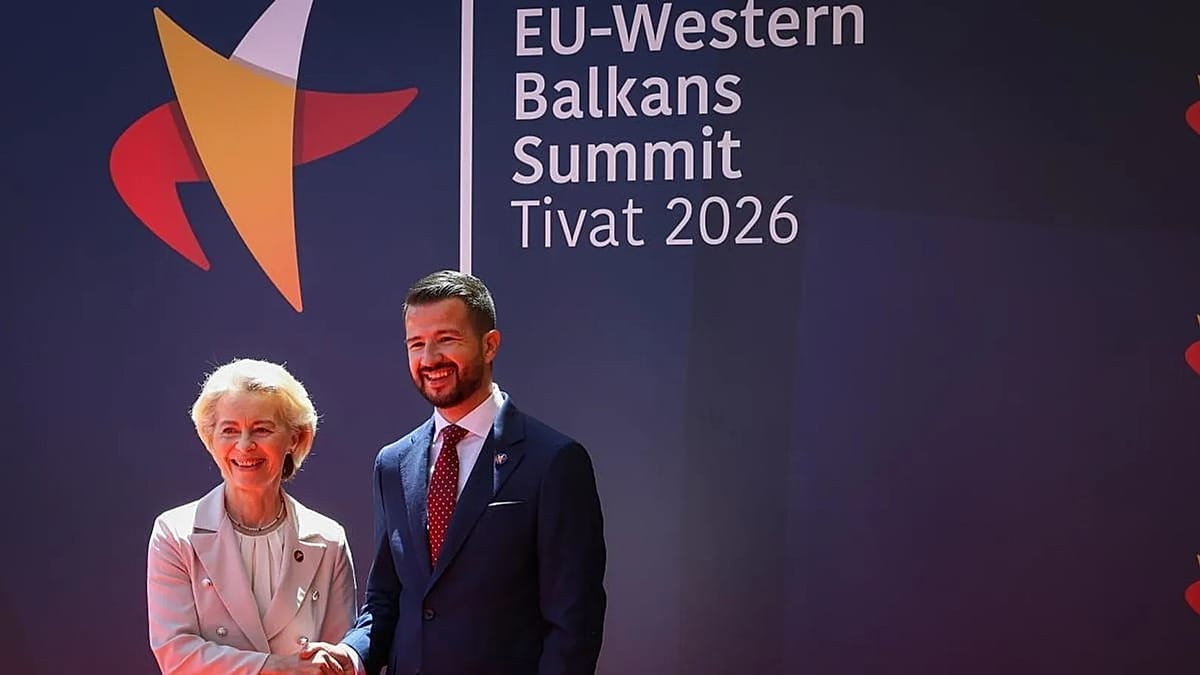
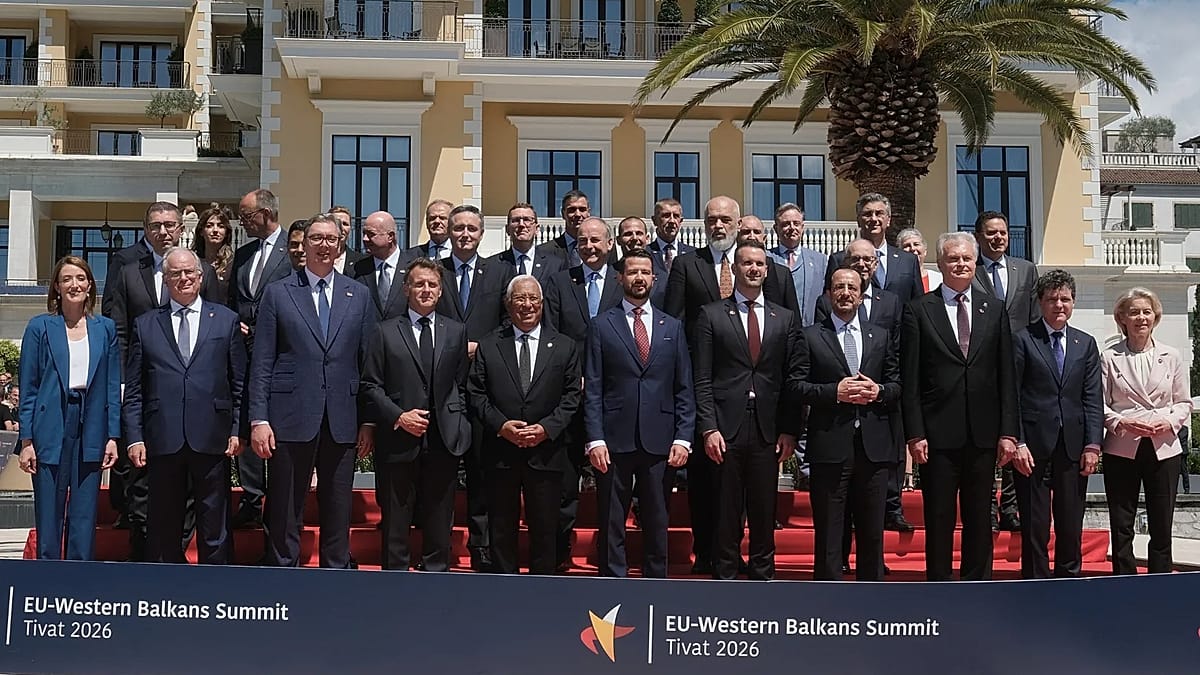
This week, we were deployed alongside my producer Paul and my cameraman Pierre to Porto Montenegro for the EU-Western Balkans summit. To kick off, we sat down with António Costa on the eve of the gathering. The European Council chief told me there is real momentum for enlarging the European Union, which is a big statement to make in the Balkans, where accession has been associated for a good two decades with lost promises and missed deadlines.
But he has a point.
Hungary’s decision to lift its veto on Ukraine – and by extension Moldova – to formally open accession negotiations ahead of the Western Balkans summit has revitalised the process and lifted the mood in Brussels.
For the Council chief, the decision signals a new entente cordiale among Europeans, and the upcoming EU summit in June will be used to show just that. It is also a sweet victory for Costa after he proclaimed that no one – in a clear reference to Viktor Orbán – would blackmail the Council under his watch. After all, his crediblity depends on that.
Still, questions remain. Many of the details of the deal struck between Budapest and Kyiv over the rights of the Hungarian minority in Ukraine – a sensitive issue for both sides – remain unclear. Péter Magyar has also indicated that he will maintain a hard line on his neighbour’s accession, rejecting any fast-track and doubling down on a referendum on membership. Here is a must-read on how the saga unfolded by my colleagues Jorge, Luca, Sandor and Sasha.
Ukraine is now expected to open the first set of negotiations this month, but diplomats in Tivat also told me that the remaining five clusters (in plain English, more sets of reforms) could drag beyond July, which is what the Commission wants, and a period of three additional months seems more realistic. Still, Costa told me that, given the amount of work done in parallel, Ukraine should also be in a position to close them swiftly, which is really what matters.
Going back to the Balkans, Montenegro is firmly on track to join in 2028. And it makes sense — the addition of a new member state that is pro-European, already in NATO, and relatively small, and so easy to manage, would signal enlargement is alive without too many complications for the 27.
For the rest, Costa told me joining the EU is “merit-based and will always be merit-based” but also conceded that the process needs to be simplified. His tone in our interview echoed a proposal put forward by France and Germany calling for a “more structured gradual integration” for aspiring countries.
The idea is simple, think of it as building blocks — the more you reform, the more EU perks candidates can unlock, including more access to the single market, which is the money-maker. On the sidelines, Edi Rama of Albania told me enlargement needs a “political boom” beyond technicalities.
Interestingly, Rama alongside Serbian President Aleksandar Vučić penned an op-ed earlier this year that went under the radar, a mistake in my view, in which they suggested they could give up full membership rights for a quick seat at the table. When I asked if his op-ed may have served as inspiration for Macron and Merz, he told me his plan was better. Classic Rama.
The Albanian prime minister was also busy dealing with the fallout of a planned luxury resort linked to the Kushner-Trump clan on the Adriatic. The project set on Sazan island – which seemingly triggered a spiritual moment for Ivanka Trump – has led Albanians to the streets in protest. Rama told me he hears the concerns, but pointed to a darker plot fuelled by antisemitism, “hostile” external forces and an army of bots. “We are under a hybrid attack,” he told me.
Protesters in Tirana insist what’s really under attack is the natural habitat of Albania’s coastline by the Kushner’s fancy project. You can read our piece here.
Returning to Vučić, he did show up at the summit after much speculation that he would skip it after a week of tensions with Montenegro, celebrating the 20th anniversary of “the restoration of its independence” from Serbia, and prior Yugoslavia. Vučić suggested that his intelligence services had advised him against going to Tivat, citing a high-level security threat.
Montenegro’s Prime Minister Milojko Spajić told me in a sit-down interview that he was proud of his police and intelligence services for keeping “all leaders” safe. The place, I can tell you, was high on security, with a helicopter hovering above the fancy hotel where the summit took place, much to the dismay of our sound guys. Oh, and guess who didn’t show up? Meloni and Magyar.
Staying on Serbia, the exasperation is growing.
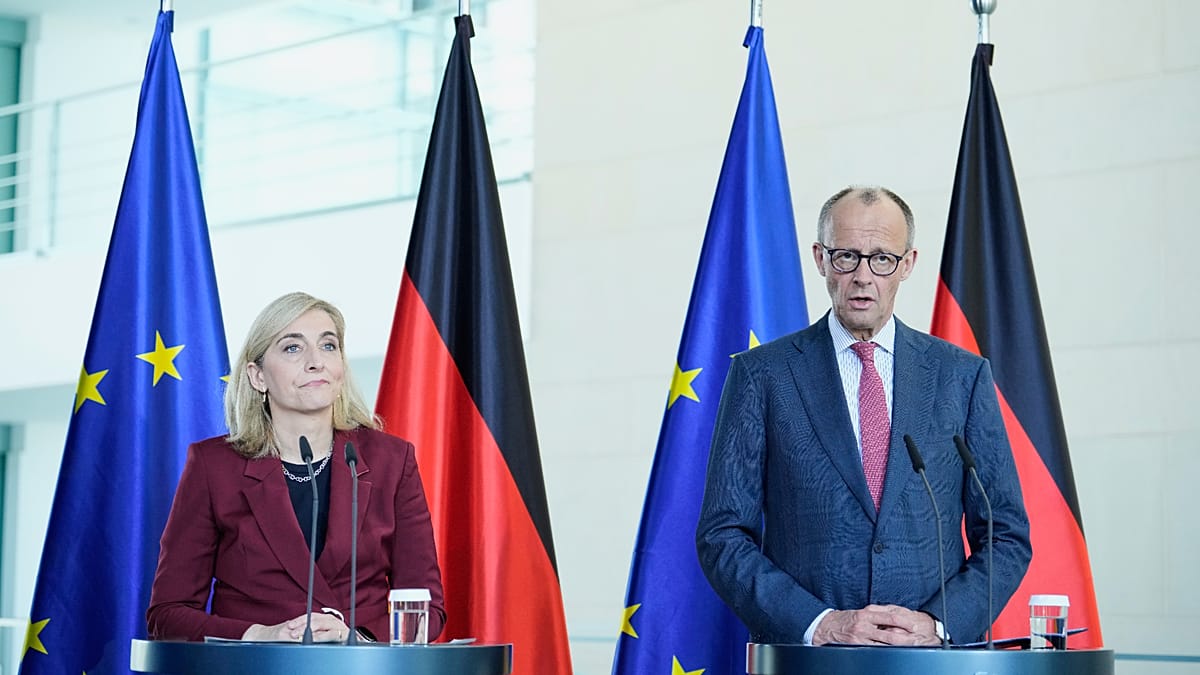
Chancellor Merz told reporters after the meeting that Vučić’s three-way on the EU, China and Russia, is simply not possible. “Serbia must clearly define where this country sees its future,” he said, and perhaps they will when the election due this year finally gets a date.
“Serbia knows what it has to do, if they do, we move forward. If not, we stay blocked,” Costa told me, noting the country has not opened a single new cluster since 2021 over what the Commission calls serious backsliding in fundamental issues like judicial independence and media freedom.
The Commission is hopeful that the Vučić government will undo a judiciary overhaul approved at the start of the year, and sees it as a real test of goodwill if they do. Serbia, like it or not, given its size and geography, is instrumental to maintaining stability in a complex neighbourhood. As one diplomat told me, you simply cannot ignore them — it’s too risky.
My takeaway?
There is real momentum, forced by rough geopolitics, with Montenegro offering everyone a win. “It’s the cookie of the Balkans,” its prime minister told me — if you like one, you want more. But the next round of enlargement will not be like the previous; it cannot be — the rules of the game will have to change.
No further proof than the final press conference in Tivat, where attention centred on planned talks in London between Germany, France and the UK on Sunday, with Zelenskyy set to join them. The Europeans have finally figured out they have to do the heavy lifting alone. The war has changed everything for the EU, and it will have a knock-on effect on how to enlarge the union.
PS, at the airport I picked up a pack of Parliaments and a copy of VOGUE Adria — I can’t read a word, but Slavoj Žižek was on the cover. Welcome to the Balkans!
On tech, the EU and boy genius Luca put to the test
The European Union loves to make an announcement, a new set of proposals, a new act, a new Independence Day for a union stuck between an imperial Trump and Xi Jinping’s China. This week, it was time for tech sovereignty, which frankly in 2026, really means national sovereignty. But, will it move the needle?
Lucky for us, we have the best reporter in town on this subject, Luca Bertuzzi, the man who broke every single story that actually mattered on the AI Act. Luca is also my first hire at Euronews, and frankly the guy I really wanted to join the team. Here’s an edited version of our Q&A.
Luca, first, take the jargon out and tell us: what was in the package?
In short, the Commission presented its long-awaited plan to boost domestic technologies in areas that form the backbone of the digital economy: cloud services, advanced chips, and AI. It contains several elements.
The most significant one, if you ask me, is the Cloud and AI Development Act, which aims to boost cloud infrastructure in Europe, specifically to boost a new generation of AI technologies.
The proposal divides sovereignty into four progressive levels, from non-risky to super sensitive to the point that public contracts should go to European cloud providers first. Think defence.
The Chips Act 2 is also consequential, because the Commission is trying to stimulate demand for European-made chips and to force key industries like automotive to diversify away from heavily subsidised Chinese suppliers.
It’s all about the chips.
Indeed. But not just — there is also an open source strategy. Here the idea is that, since Europe does not have large companies capable of competing with Big Tech with an integrated offer, open source may be the most viable path forward.
What about the timing, why present it now?
This has been a long time coming.
EU decision-makers have been aware for the past two decades that Europe has been growing too dependent on foreign technology. But only with the hastening of geopolitical tensions has the issue become too big to ignore.
As Mark Leonard, director of the European Council on Foreign Relations, puts it, we live in the “Age of Unpeace,” and the United States and China have grown assertive in weaponising dependencies into a strategic vulnerabilities.
Now, Brussels is finally getting serious about reducing Europe’s dependence on foreign technology. This package is a first step — but only a first step, and one that risks drawing retaliation from Washington and Beijing. And that’s a problem because Europe’s core industries — automotive, pharmaceuticals, industrial machinery — are still largely built on last-century technologies.
So, how will this go down in Trump world?
Trump’s role in this discussion can hardly be overstated.
In fact, the discussions around the need to develop technological sovereignty and strategic autonomy became mainstream in EU policy circles only after the first Trump administration…
Meaning?
Before, these concepts were largely confined to French defence circles — specifically the argument, rooted in nuclear doctrine, that Europe needed independent capabilities because the Americans could not be relied upon forever. After Trump threatened to seize Greenland by force, this political agenda gained fresh momentum.
So, Macron was right?
There is a feeling among the European political elite that, yes, his push for strategic autonomy was right all along. It’s a vindication for Macron, but it’s also something of a cruel victory lap because, just as Europe begins to catch on, his time in office is basically coming to an end.
What about China?
China is of course the other big variable in this equation, and the Commission has been quietly working on targeting Chinese subsidised products and hostile takeovers via anti-dumping and investment screening investigations.
The EU is also pushing for supply chain diversification in sensitive areas like ICT equipment, trying to push out Huawei equipment from critical infrastructure, and away from single sourcing from Chinese manufacturing. Think of the Nexperia case, for example.
But Brussels is also wary that its rules are slow to apply, whilst China is quick to adapt. Product-specific investigations take too long, and can be circumvented. The idea is to develop a more holistic approach, provided capitals like Berlin and Madrid allow it. That really remains to be seen.
So, what is actually at stake for the EU?
Quite a lot.
The EU’s economy is losing ground against other major powers, and experts largely attribute that to Europe missing the first wave of the digital economy. In his report, Draghi said that seizing the AI revolution is Europe’s last chance to rejoin the international tech race and revive its economic competitiveness.
It’s not all bad. Europe still holds one powerful card: it’s one of the largest and most lucrative markets in the world. Neither the US nor China can afford to simply walk away from it. But that’s not enough.
If Europe wants to remain an economic powerhouse, it cannot afford to remain a technological backwater. To move the dial, Brussels will need a bold and pragmatic tech policy — one that, in my view, will have a short-term economic cost, but serious long-term benefits. This is a first step, but no quick fix.
Luca, alla grande. Thanks for the briefing.
WHAT CAUGHT MY EYE THIS WEEK BEYOND EUROPE
The tiger from Colombia. Following the footsteps of Javier Milei and Nayib Bukele, a new force in the Latin American right is emerging in the Andean country. Last Sunday, Abelardo de la Espriella won the first round of Colombia’s presidential elections against his left-wing rival, Iván Cepeda, with a lead of close to one million votes. The two will now head off to a runoff vote on June 21.
De la Espriella is, to put it mildly, an interesting character.
He campaigns under the nickname El Tigre, or the tiger, calls his supporters la manada meaning the pack, extending a well-documented fetish with large-scale mammals in the Latin American new right.
Taking cues from Bukele of El Salvador, with whom he shares a physical resemblance, De la Espriella promises to run Colombia with an iron hand, cracking down on crime, putting God and family (he has four children) at the centre of society, cutting taxes for companies and ending what he describes as an oppressive state machine fuelled by years of casta and socialism.
He wears expensive suits, has a mansion in Miami – the pinnacle of success for the Latin American elite – and is self-financing his campaign as an independent. On his election billboards, he is pictured with his left hand on his chest, and a military salute with his right one, promising to stand firme con la patria, or firmly with the motherland. The phrase is catchy and he does not hesitate to yell it at maximum decibels at any given moment on his social media, which of course, just as it was for Milei, social media is central to the entire operation.
If he wins the second round, Colombia will shift to what looks on paper not just a harder right – in fact this means little in the continent – but an extension of bukelismo. Just a few months ago, I sat down with the vice president of El Salvador, Félix Ulloa, for an interview on Euronews. He told me Bukele had not just turned what was once the most violent country in the world into an “oasis of peace” – those are his words – but redefined the political codes of the region.
And he may be right – and it’s not without consequences.
Bukele cracked down on crime, there is absolutely no question about it and the numbers speak for themselves. But El Salvador has also centralised power around him, modified the constitution to end term limits, and turned mass incarcerations into state policy. When I asked Ulloa if El Salvador had sacrificed its democratic safeguards in the name of security, he denied my suggestions of militarisation of state power.
El Salvador under Bukele is far from being a standard democracy – in fact you could argue bukelismo is not compatible with one – but El Salvador was not a democracy either when daily shootings terrorised whole neighbourhoods.
A victory for De la Espriella would also cement a tilt to the right in Latin America, with only Brazil and Mexico led by left-wing leaders among the regional powers of the continent. The shift is relevant as it would put Lula da Silva of Brazil and Claudia Sheinbaum of Mexico in a minority camp.
The timing is also interesting because the US has stepped up pressure on Mexican drug cartels and the castrista regime in Cuba. For the Mexican government, the idea that the Trump administration would deploy US forces and conduct military-style operations along its southern border is a major concern as it goes straight to the question of Mexican sovereignty. No Mexican president can afford to look weak on a matter that is fundamental to Mexican nationhood.
The EU should take note of these important developments.
I have long argued that Brussels and the capitals made a strategic mistake by neglecting a continent that should be a close partner. It makes sense on every front – politically, economically and even from a security perspective – if you look at de-risking and diversifying the supply chain of key industries.
In recent years, Brussels has sought to make amends, reinvigorating the EU-CELAC, signing off the EU-Mercosur trade agreement and stepping up comprehensive partnerships with, among others, Mexico.
The EU’s relation with Latin America has also been reinvigorated by the Trump effect as the US president hammers his Donroe Doctrine – just ask Nicolás Maduro, who is still locked up in a New York maximum-security prison pending trial – openly pushing for quasi-puppet governments in the region.
Trump’s tariffs have also revived a necessity to diversify from its powerful neighbour, even though access to the US market conditions most South American economies. And yet, the new face of Latin American leadership shares more in terms of substance and style with Trump than Ursula von der Leyen’s union of values. It would be wise to pay attention to El Tigre.
BEFORE YOU GO
- Sunday, Armenians head to the polls with Prime Minister Nikol Pashinyan vying for re-election in a test of his pro-West, peace-settlement mandate. Also, Kosovo holds parliamentary election, third vote in less than two years.
- Monday, Pope Leo XIV begins one-week apostolic visit to Spain, with stops in Madrid, Barcelona and the Canary Islands; meets King Felipe VI.
- Tuesday, Nordic and Baltic countries meeting for security summit.
- Wednesday, EU-South Korea bilateral summit takes place in Brussels.
- Thursday, Eurogroup meeting of economy and finance ministers in Luxembourg. Session continues in ECOFIN format on Friday.
- Friday, Pope Leo wraps Spanish tour with visit to migrant centre in Tenerife, in the Canary Islands, and holds final mass of apostolic visit.
Thank you for reading Off The Record. I’ll be back next Saturday with more — make sure to subscribe here so you never miss the next issue.
Maria Tadeo
Editor-in-Chief, EU News