



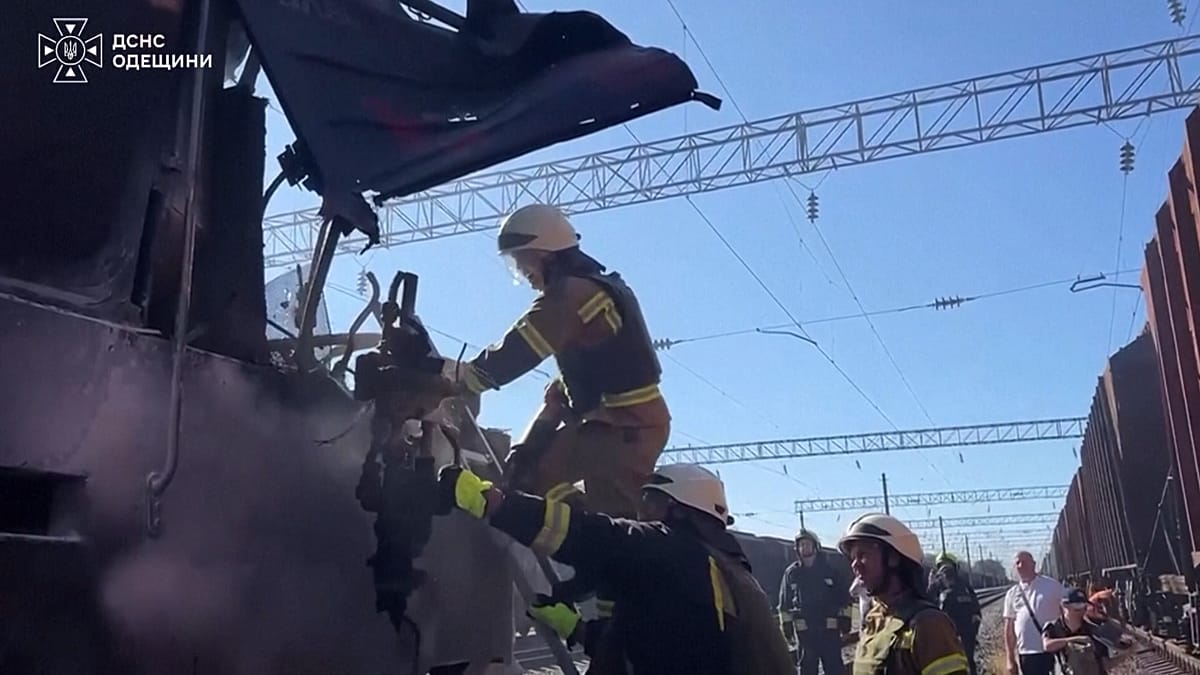
A Russian drone struck a passenger train in Ukraine’s Odesa region on Thursday, killing two people.
ADVERTISEMENT


ADVERTISEMENT
The victims of the attack were two crew members, the train machinist and his assistant, the CEO of Ukrainian Railways Oleksandr Pertsovskyi said in a post on Facebook.
None of the passengers were harmed.
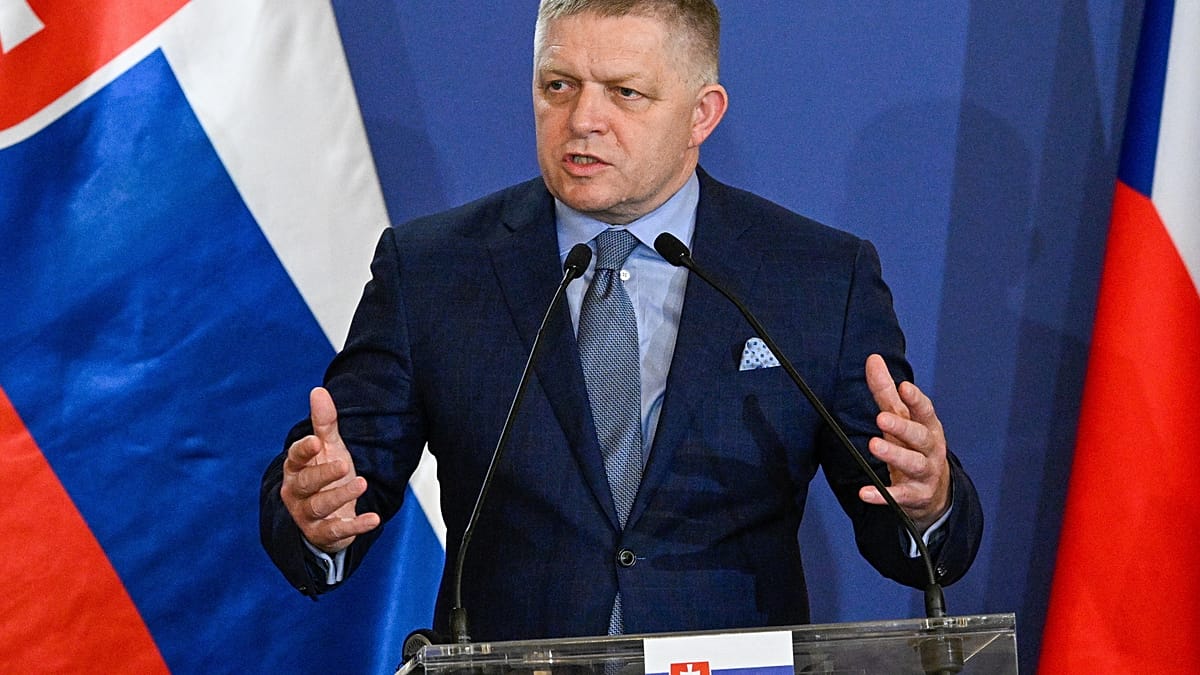
“Today in the Odesa region, the Russians once again destroyed an ordinary passenger train locomotive with a jet-powered drone. There were 340 people on the train,” Ukrainian President Volodymyr Zelenskyy wrote on X.
“Whoever was operating that drone certainly could not have been unaware that the target was entirely civilian,” he added.
It is not the first time Russia has targeted a passenger train, which Kyiv says is part of an effort to disrupt logistics while increasingly targeting civilian infrastructure.
Russia also targeted port infrastructure in the Izmail district of the Odesa region, local media reported. In total, Russia launched 133 drones at Ukraine overnight into Thursday, targeting 15 locations across the country.
Civilian deaths in Ukraine highest in July since May 2022, UN finds
A recent report by the United Nations revealed civilian deaths in Ukraine hit a record-high in July, the highest since May 2022, the first months of Russia’s full-scale invasion of Ukraine.
“At least 437 civilians were killed and 2,610 injured in Ukraine in July, a 30 percent increase compared with the previous month and a 70 percent increase compared with July 2025,” the UN Human Rights Monitoring Mission said in a statement on Thursday.
“The number of those killed is the highest recorded since May 2022,” it added.
The UN said it verified 16,874 civilian deaths since the start of Russia’s invasion, although notes that the toll is likely higher since it cannot confirm casualties in Russian-occupied parts of Ukraine.
Kyiv, in particular, has frequently come under fire. At least 54 civilians were killed in the Ukrainian capital during the month of July, the UN said, calling it “one of the hardest hit cities”.
Both sides have significantly escalated their long-range attacks this year, causing a spike in civilian deaths, according to the UN.
Ukraine, on its end, has also also ramped up its campaign against Russia’s critical and military infrastructure in recent months.
Near-daily barrages targeting Russian oil facilities with long-range drones in recent months have caused fuel shortages, reduced Russia’s refining capacity, and unsettled the Russian public.
On Thursday, a fire broke out at the Gazprom Neftohim Salavat oil refinery, one of the country’s largest, in Russia’s Bashkortostan Ukrainian media reported.
A fire was also reported at a Wildberries hub nearby. Wildberries, Russia’s largest online retailer, is a critical piece of Moscow’s wartime economy.
Ukraine military aid surged in June, boosted by new EU fund
Russia’s use of ballistic missiles has proven difficult for Ukraine to intercept, prompting Zelenskyy to call on allies to provide more air defence systems after warning that the country is facing a critical shortage.
Despite long-term shortages, military aid to Ukraine reached its highest level in June since the United States halted funding in February 2025, driven largely by new EU funding, according to data released by the Kiel Institute.
It found that in June, Kyiv was allocated €7.2 billion, the third-biggest monthly military funding boost from donors since the start of Russia’s full-scale invasion in February 2022.
The EU’s €90 billion loan was introduced to support Ukraine’s budgetary and defence needs in 2026 and 2027.
On top of the loan support, Germany allocated €700 million, Denmark €600 million, and the Netherlands €500 million euros to support Ukraine’s military.