

Migration is taking center stage again in the European Union, as Brussels returns to work after a summer marked by the major crisis of recent years.
ADVERTISEMENT


ADVERTISEMENT
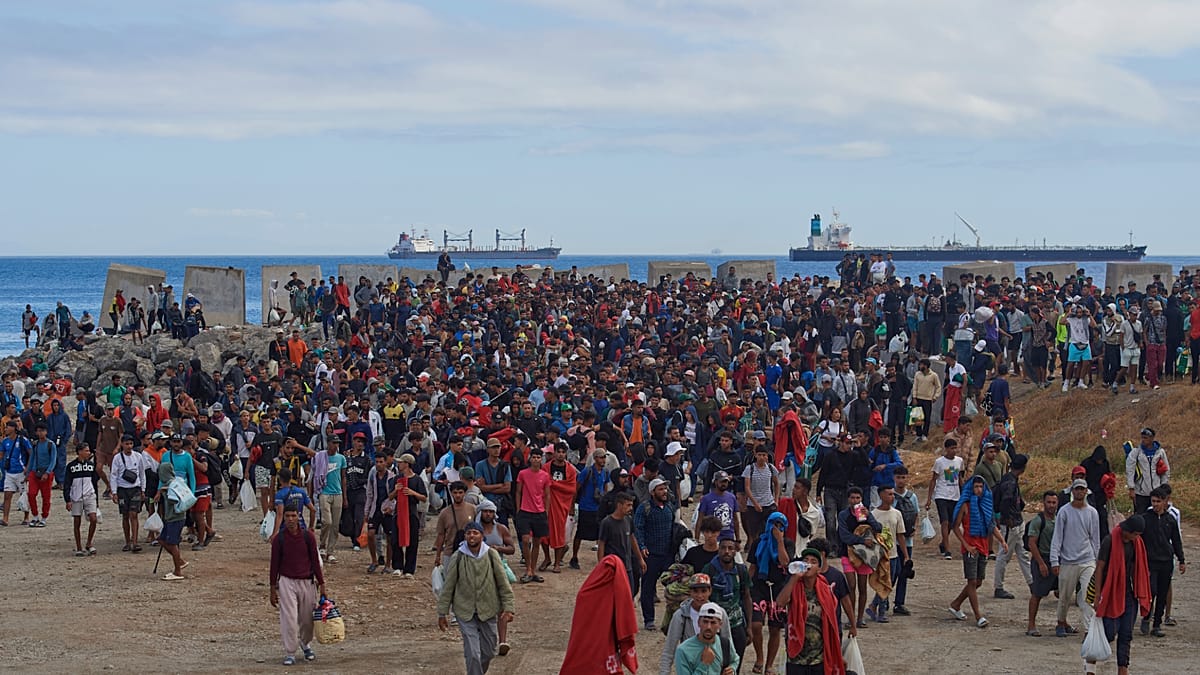
Over 70,000 irregular migrants entered the Spanish exclave of Ceuta in a single day on 30 July, more than all other irregular entries across all European borders so far in 2026, sparking a political crisis in Spain and putting other member states on alert.
The Ceuta crisis increased pressure on the EU to implement its strategy to tighten the rules for asylum seekers and speed up returns, but it also highlighted the shortcomings of the new migration rules as they face their first real stress test.
EU leaders are expected to debate the topic in October at the European Council in Brussels, the culmination of a season of heated discussions through formal and informal meetings of interior ministers and ambassadors.
Schengen in trouble
The first impact of the domino effect was on free movement within the EU.
After the Ceuta crisis, Italy reintroduced air and maritime border controls with Spain for a month, while other countries such as Denmark and Finland called for Spain to be temporarily suspended from the Schengen area, where citizens and residents have been able to move since 1985 without border checks.
Spain answered with a mirror retaliatory measure towards Italy, even copy-pasting the wording of the official notification, reintroducing border checks until 7 September. At the end of the month, both countries decided to extend the suspension for further 15 days.
And the Italian government is not the only one concerned that Schengen rules could indirectly benefit irregular movement.
In an extraordinary online meeting in Brussels in early August, EU interior ministers initiated a discussion over the future of free movement. Twenty-two governments stated that any “necessary measures” will be taken into account “to safeguard public order and address risks arising from secondary movements [of migrants]”, envisaging a wider reinforcement or reintroduction of border controls.
“The Schengen system has become one of the main victims of the internal political dynamics and concerns by member states around migration,” Davide Colombi, researcher on migration at Brussels-based think tank CEPS, told Euronews.
EU member states may unilaterally reintroduce temporary, ad hoc border checks at their borders for a period of up to six months — renewable up to two years — on security grounds.
Currently, nine EU countries — Germany, Spain, Italy, Denmark, Austria, the Netherlands, Poland, France and Sweden — plus Norway have temporarily reintroduced border controls, citing concerns over irregular migration or terrorism threats.
Member states started to retain their own border controls in 2015, with the so-called European refugee crisis, as the removal of internal checks within the EU is widely considered to be closely intertwined with the surveillance of external borders.
“Migration will have broad repercussions on internal movements. For the moment, the Commission is choosing diplomatic ways rather than enforcing EU law and challenging the reintroduction of border checks,” Colombi said.
Where is the solidarity?
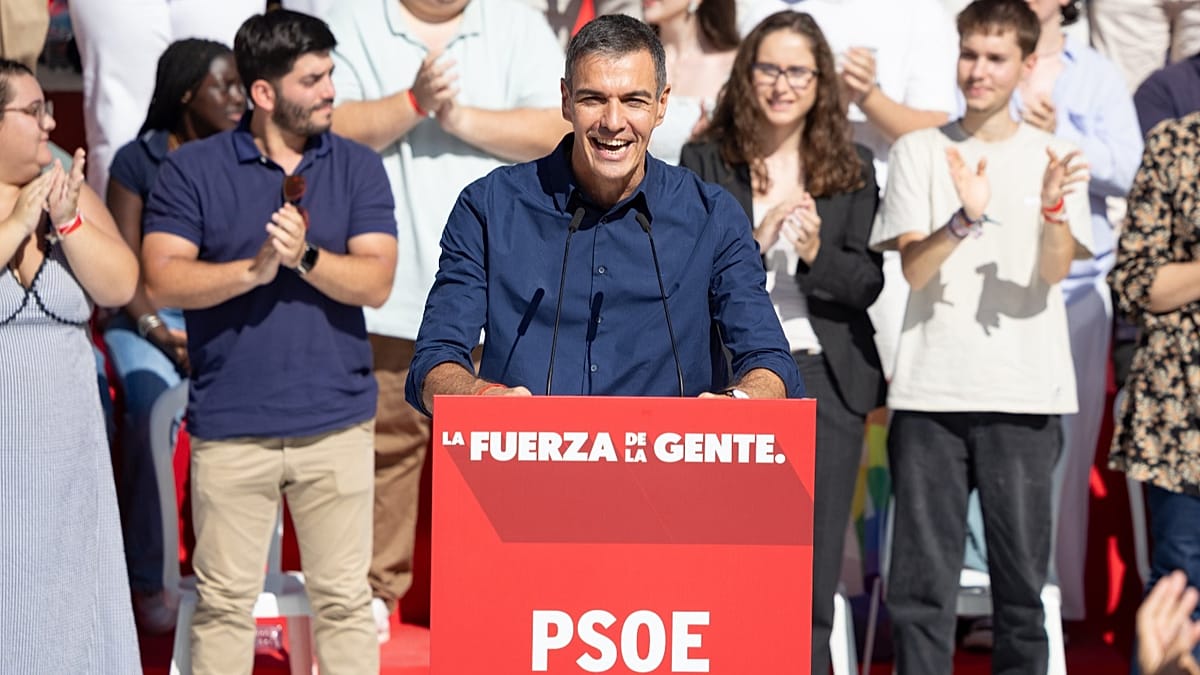
Far from expressing solidarity, other EU countries accused Pedro Sánchez’s government, in the aftermath of the mass entry, of failing to sufficiently protect Europe’s external borders.
Solidarity is — on paper — one of the pillars of the new EU migration rules, which entered into force on 12 June.
The EU Migration and Asylum Pact entails a mandatory mechanism to assist the EU’s frontline members, through a “solidarity pool” that defines the help countries need to offer each other for the following year. Member states have to choose among relocating a number of asylum seekers to their territory, paying a financial contribution, or financing personnel and other operational costs.
Redistribution of migrants across Europe is the most contentious point, as governments have little appetite for it and have managed to significantly reduce the numbers in the pool for 2026, asking for exemptions.
Relocations only apply to asylum seekers and people who have already been granted protection, therefore excluding most of the irregular Moroccan migrants who entered Ceuta in July, who have been or are set to be returned to their country of origin.
However, Spain is among the countries considered “under migratory pressure” because of last year’s arrivals and will benefit from help this year. A total of 8,878 migrants who have applied for asylum in Spain, Italy, Greece, Cyprus and Malta will be taken in by other countries.
On the other hand, those countries will send back to frontline states the so-called “secondary movement” migrants — people who have entered the EU through a certain member state and then managed to move irregularly to another, asking for asylum there. According to EU rules, the first-entry country still has the responsibility to assess the request.
The first cracks are beginning to appear in the new solidarity system, as seven countries asked Italy to take back migrants and the Italian government invoked further compensation — which is not foreseen by EU rules — for migrants rescued at sea by NGO ships and disembarked on Italian shores.
A bilateral meeting between Italian Interior Minister Matteo Piantedosi and German Interior Minister Alexander Dobrindt in early September will kick off the debate on solidarity, which is set to continue at the Home Affairs Council at the beginning of October.
The crucial point will be the definition of the solidarity pool for 2027, which could see Italy and Spain on the same side, asking for more contributions from other countries after a summer of diplomatic spats between Rome and Madrid.
The uncertain future of return hubs
A key part of the EU strategy on migration concerns the return of irregular migrants, through a new regulation finalised last June and considered the strictest ever.
It introduces the possibility for member states to send people to a country with which they have no direct or indirect connection, provided that there is a bilateral agreement to set up deportation centres in the non-EU country.
These “return hubs” can be either places of transit, where a person is placed while waiting to be returned to their country of origin, or locations where a person is expected to stay with no guarantee of onward returns.
Some European governments are actively looking for partner countries, focusing on Asia and central Africa, intending to have the first partnership agreed by the end of the year, a diplomat told Euronews.
Germany, Austria, Denmark, Greece and the Netherlands are working together on this project and are reportedly in talks with Uganda and Rwanda. Immigration ministers from the five countries are due to take stock of progress at a meeting in Copenhagen on 4 September.
The five-country working group could pave the way for a new model at EU level, despite criticism from civil society, operational difficulties and possible legal challenges.
“So far, it’s not quite clear who is responsible for the migrants in a return hub, how long they can remain there and who monitors their conditions and provides effective remedies in case of human rights violations,” Colombi said, pointing out that the EU legislation is vague on purpose to give states a free hand.
“I think there will be legal cases against the hubs once they are implemented on the ground, with a risk of a complete dismissal by the Court, as it happened with the UK-Rwanda migration scheme,” he said.