




Spain’s parliament on Friday rejected two housing decree-laws promoted by the government of Prime Minister Pedro Sánchez, pushed forward in the wake of Maricarmen’s eviction.
ADVERTISEMENT


ADVERTISEMENT
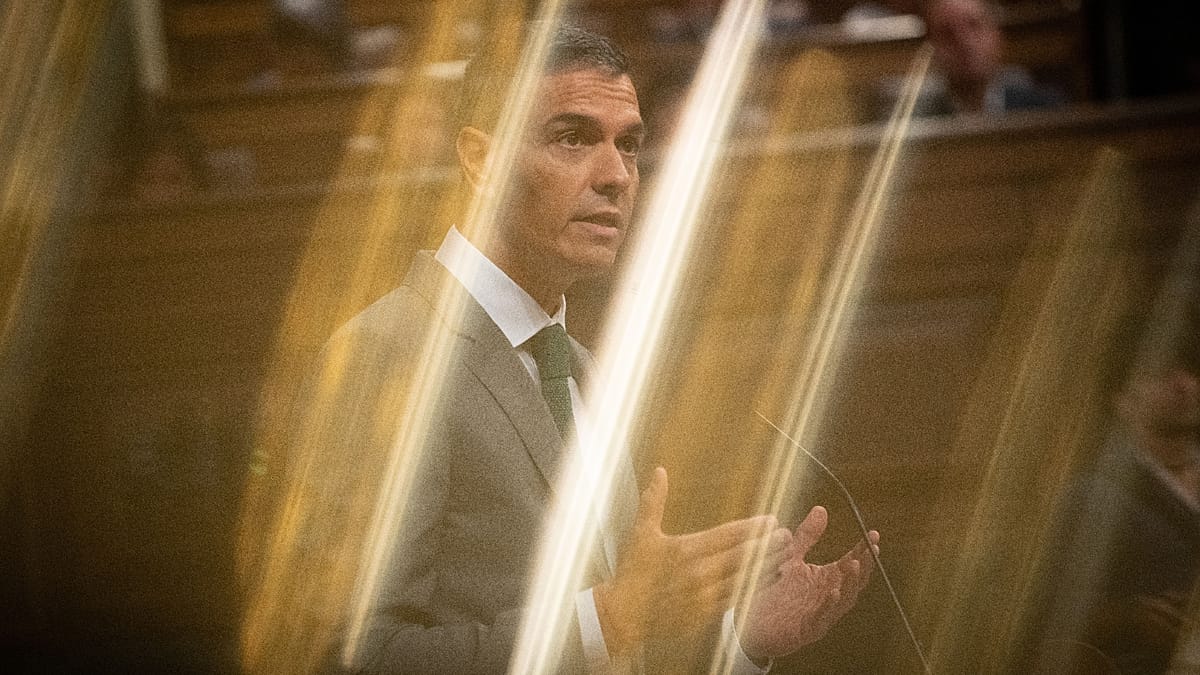
These rejections, delivered in a voice vote, represent a parliamentary setback for the executive and came after a sitting marked by last-minute negotiations and uncertainty over the support of its parliamentary partners. Sánchez spoke for a few minutes before the vote to urge MPs to “do the right thing or history will judge you sooner than you think and more harshly than you can imagine.”
After the first of the decrees was rejected by 172 votes in favour and 178 against, a demonstration marched to Madrid’s central Puerta del Sol square, chanting “General strike!” The second decree was then also voted down.
The vote came after a morning of speeches in which the housing minister, Isabel Rodríguez, urged the different groups to back the measures, having explicitly asked Junts per Catalunya to vote in favour or abstain, after the pro-independence party announced on Thursday night that it would oppose both texts and submit its own proposal to the government. In the end, the PSOE refused to withdraw the two decrees, as the Catalan party had demanded.
Rodríguez told the chamber that one of the two decrees incorporated many of the proposals (source in Spanish) put forward by Junts. “Ninety per cent of what they handed to the prime minister is now set out in the Official State Gazette,” said the housing minister, who pledged to process the decrees as a bill so that “clarifications or technical corrections” requested by the groups could be incorporated later.
The minister also warned in her speech about the consequences of the vote and appealed to MPs’ sense of responsibility. “With this vote, we are deciding whether we do not want another eviction or are willing to face the next one,” Rodríguez said, while hundreds of people gathered outside the Congress of Deputies, Spain’s lower house of parliament, to demand a solution to the housing crisis gripping the country.
Diverging positions
The sitting began at 11:00, after Sánchez was greeted with an ovation from the Socialist benches on his arrival at Congress. During the debate, the groups stuck to the positions they had set out in the preceding hours, albeit with different nuances.
The PNV announced that it would support one of the decrees “with many doubts”. Its spokesperson, Maribel Vaquero, lamented that it had not been possible to reach the minimum agreement her party had called for. Coalición Canaria, for its part, confirmed its favourable vote on the first decree because it sees it as “a starting point”.
Podemos confirmed its four votes in favour of both texts, although its secretary-general, Ione Belarra, criticised the government for having “chopped up” the measures. “It’s just another excuse. People don’t want excuses, they want solutions,” she argued during the sitting.
EH Bildu also expressed its displeasure during the debate. Its MP Oskar Matute said he was “deeply angry” at the prospect of particular interests prevailing over the measures proposed to tackle the housing problem, brought into sharp focus by Maricarmen’s eviction and which culminated last weekend in a protest camp in the central Puerta del Sol square.
Opposition from PP and Vox, together with Junts’ rejection, had left the government facing particularly tight parliamentary arithmetic. The coalition executive needed to win support from different parties to get the initiatives through a chamber in which PSOE and Sumar do not have an absolute majority.
Possible early election
The vote on the housing decrees had also sparked, within the PSOE and the government, a debate about the possibility of bringing the elections forward if Congress rejected the initiatives.
La Moncloa insists that no decision has been taken, although government and PSOE figures had floated the possibility of Sánchez calling elections if the decrees were voted down. At the same time, other Socialist leaders have urged caution and argued that the consequences of any eventual call need to be carefully weighed.
The issue is therefore tied to the outcome of a vote the government has presented as a test of the chamber’s ability to reach agreements on one of the main problems facing Spanish society. Sánchez had already urged the parliamentary groups to show ‘a sense of perspective’ in backing the measures and argued that housing should be kept out of “partisan confrontations”.
While the sitting was under way, around a hundred people gathered outside Congress, mobilised by the Tenants’ Union. Protesters chanted slogans against PP, Vox and Junts and also held a banner critical of PSOE and Sumar. Police had deployed a large security operation around the chamber.