


Published on
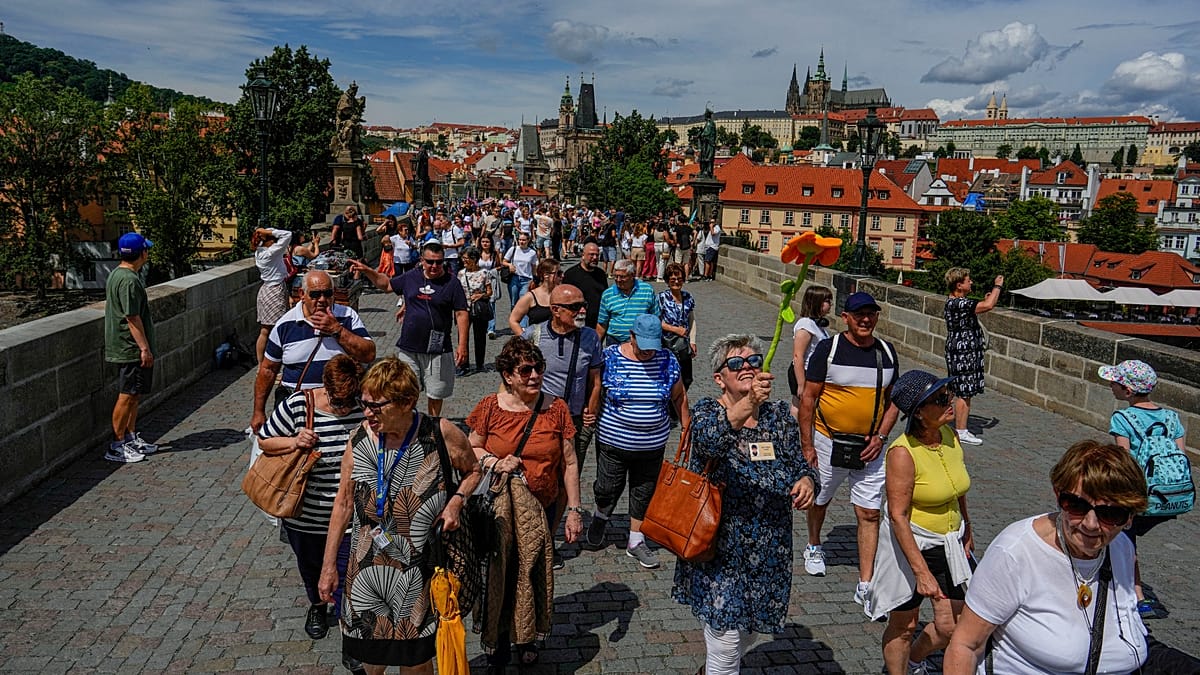
Standing eight hours per day in an archaeological site with no shade or leading a city tour in temperatures of at least 30C : in the midst of the touristic season and while Europe is facing record-breaking temperatures, several tourist guides warn they are on the frontline during heatwaves.
ADVERTISEMENT


ADVERTISEMENT
Last summer, Giovanna Maria Giammarino, a 56-year-old Italian guide died after collapsing while leading a visit of the Colosseum in Rome in scorching heat.
Following her death, the Italian tour guides’ associations Federagit and AGTA called for reforms such as updated summer protocols in the cultural tourism sector. But the issue still prevails, including beyond Italian borders.
Difficult cancellations
“This afternoon, we went to Pérouges, which is a small medieval town northeast of Lyon and it’s more than 40C in the sun, it’s quite complicated,” says Gabriel Quentin-Gerbault.
The French guide says, while self-employed tourist guides may ask their customers to cancel or postpone a visit because of the heat, it is often not an option for guides working for intermediaries since the visits are sometimes booked well in advance.
“Most of the time, we work for an agency, a tour operator, or a cruise-line. It can be very varied. And they are the ones who choose, very clearly. And most of the time it’s not canceled, but it happens,” Gabriel says.
Instead of cancelling a visit, some of his colleagues have for instance asked their employers to turn a bike tour into a bus tour, or to replace a walking tour of the city by a visit of an air-conditioned museum.
Gabriel says these changes are also in the interest of the visitors, as most of his customers are above 60 years old and some do not support the heat.
Extended opening hours
Meanwhile, while the UK is set to face its hottest summer on record, Themis Halvantzi-Stringer, head of training for the European Federation of Tourist Guide Associations, which represents around 60,000 professional tourist guides, says sites should extend their opening hours to allow early and late visits during the coolest part of the day.
“In Greece a lot of museums and open-air sites open very early in the morning and they remain open until 8, 9 o’clock in the evening. So people can visit at times which are more comfortable rather than in the midday sun,” the tourist guide, who is based in London says.
Themis also encourages museums and sites to build covers for groups to wait in the shade while queuing to enter or when stopping for explanations.
Other solutions include distributing water bottles, increasing the number of public water fountains and installing misters to cool visitors down.
While heatwaves are set to become more intense and more frequent due to climate change, visitors could also favor a trip in May or September rather than at the height of summer.
“We will have to rethink our consumption patterns, Gabriel says, and this also applies to tourism.”