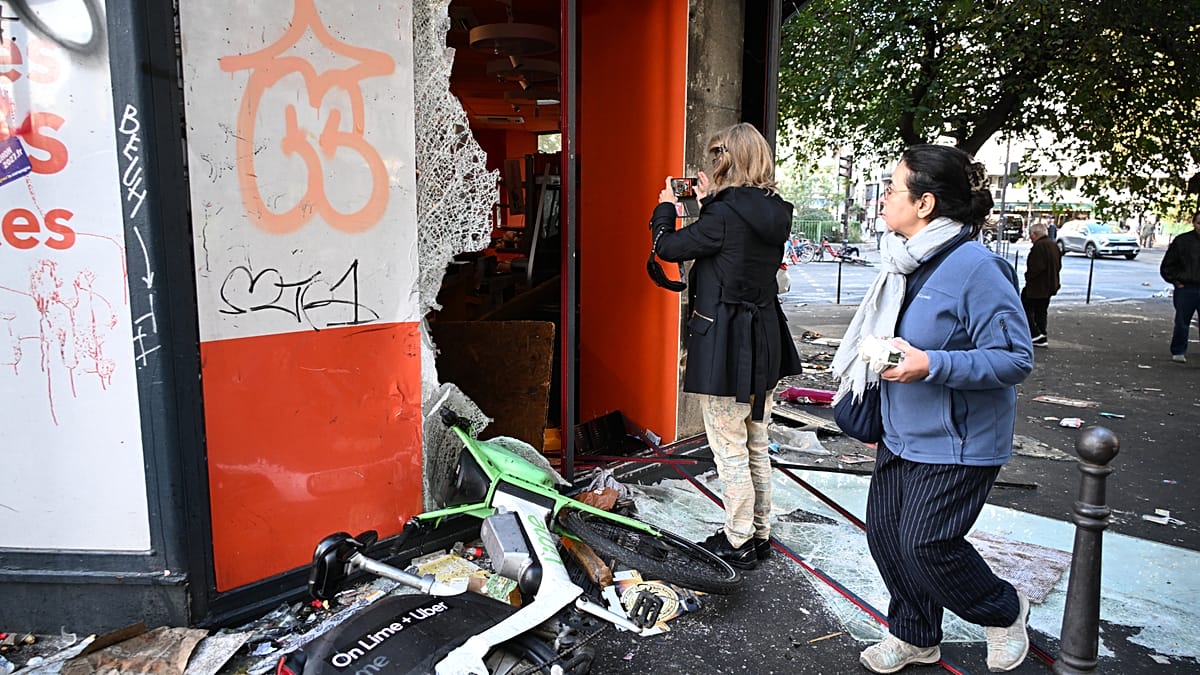

Euronews’ Sasha Vakulina was on the ground in central Kyiv when a Russian drone strike attempted to hit Ukraine’s National Academy of Sciences for a second time.
ADVERTISEMENT


ADVERTISEMENT
Run for cover: After Monday afternoon’s attack, which killed one and injured six, Sasha and her crew were filming the scene when emergency workers ran for shelter. Air defences intercepted a second incoming attack, and the crew captured the dramatic moment on camera.
Kyiv’s State Emergency Service told her the initial strike was a direct hit by a jet-powered drone on the three-storey National Academy of Sciences building. Euronews footage appears to capture the attempted double-tap strike, with a second attack targeting the emergency crew of the first. More.
The incident is one of many for those living in Ukraine. For civilians, it underscores the need for Europe to continue stepping up its support for the nation, particularly as Russia grinds its full-scale invasion into a fifth year.
Mind the gap: Brussels is today hosting a meeting of the Ukraine Donor Platform, with representatives of allied nations and financial institutions coming together to mobilise assistance for the war-weary country, Jorge Liboreiro reports.
The gathering takes on a special meaning amid a painful budget crunch that has left Kyiv with a $20 billion hole in its Ministry of Defence, and a day after foreign and defence ministers gathered in Brussels to discuss supporting Ukraine’s military. (The initial number of $27 billion has been reduced through austerity measures.)
Pressure piling: For the past month, the European Commission and the International Monetary Fund have been locked in intense talks with the Ukrainian government to pin down the precise extent of the deficit and design possible solutions. So far, no solution has emerged, and the $20 billion gap remains uncovered. Kyiv has warned that $9 billion in much-needed drone deliveries could be at risk.
“We want to bring together international partners ready to discuss how we can bridge the budgetary gap,” a Commission spokesperson said ahead of the meeting.
The Commission will be represented by Marta Kos, in charge of enlargement, who recently urged Ukrainian authorities to speed up the reforms that are linked to the bloc’s financial assistance.
If the legislation doesn’t move through in time, payments will be delayed, further worsening the situation. Ukraine will be represented by Finance Minister Sergii Marchenko. Earlier this month, Marchenko told us that his country faces the tightest budget since the start of Russia’s war.
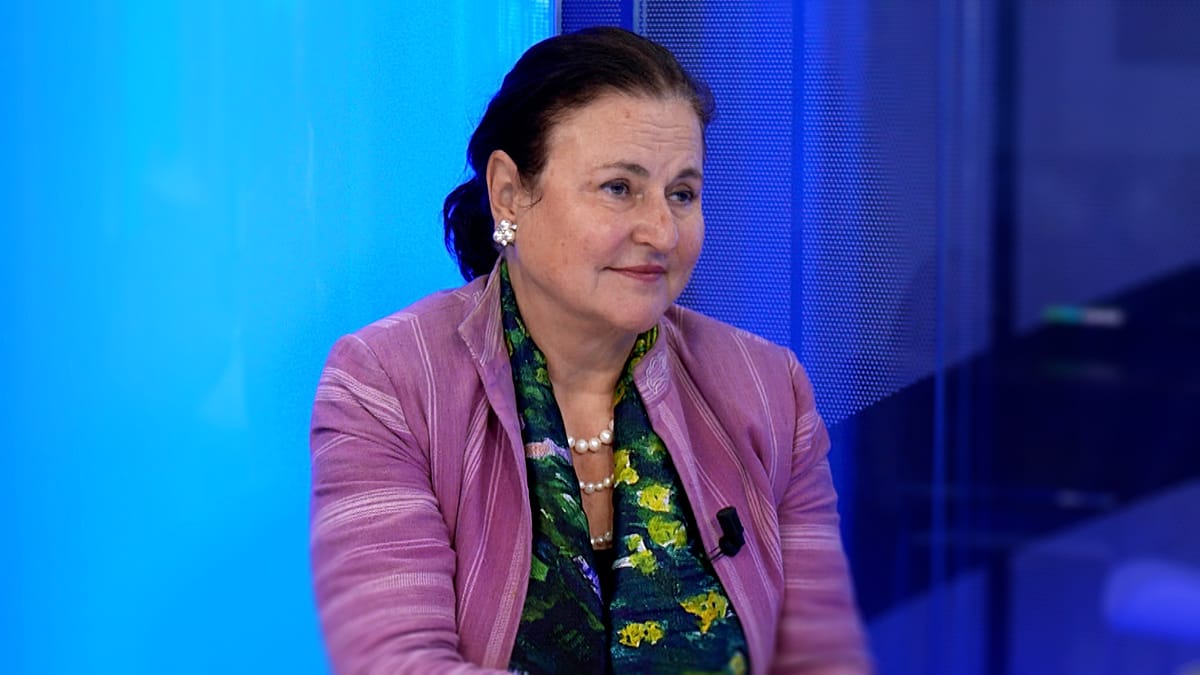
Kyiv warns over grain crisis: Meanwhile, the blockade of Ukraine’s Black Sea export routes is becoming “critical”, with potentially far-reaching implications for global food prices, Ukraine’s Minister for Agrarian Policy and Food, Taras Vysotskyi, told Europe Today.
Global costs: “We can already see that on average, grain prices have increased by 25 percent,” Minister Vysotskyi said. “If you multiply it by the overall grain and food consumption out of grain, within a year, it could mean up to $60 billion in additional costs (for) consumers throughout the world.” Watch.
Russia has recently intensified strikes on Ukrainian Black Sea vessels and infrastructure, on which Kyiv relies for the export of around 90% of its agricultural commodities. Attacks on storage facilities within Ukraine have also intensified.
Speaking just ahead of talks with agri ministers in Brussels, Vysotskyi said that Kyiv is making “some progress” in ensuring Ukrainian harvests reach the market, including through so-called “solidarity lanes” established by the EU to provide alternative transport corridors.
Kyiv ‘open’ to deal: Asked about the prospect of a negotiated deal brokered with Russia through Ukraine’s international partners, Minister Vysotskyi said: “We are ready to create the safety conditions in the Black Sea for all of the civil goods, including Ukrainian agricultural commodities. We are open to it.”
While acknowledging ongoing negotiations with partners, Vysotskyi explained that Ukraine can “never trust” Russia’s commitment to a potential moratorium.
“The reality is that we can never trust what’s going to happen tomorrow., or after any kind of memorandum or deal is done,” the minister said.
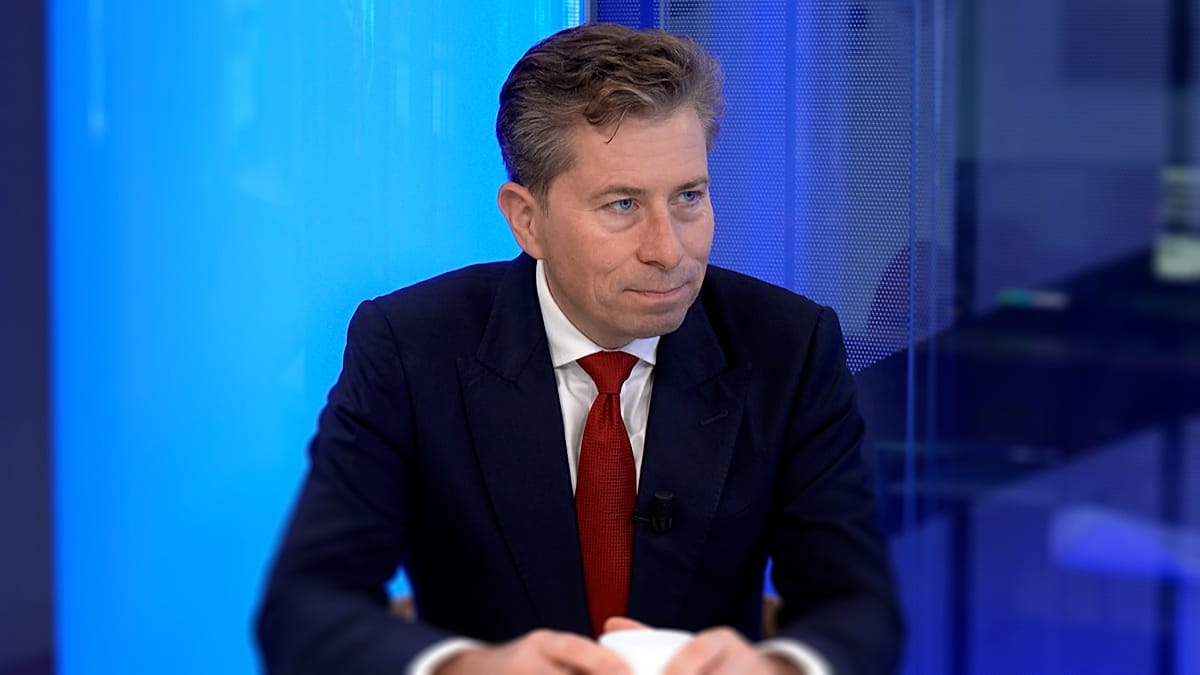
Tobias Cremer, German Member of the European Parliament (S&D), just told Europe Today that the progress of Russian President Vladimir Putin on the battlefield is “that of a snail”, prompting him to lash out through restricting grain exports and executing hybrid campaigns against European allies.
“This war that Putin conducts in Ukraine against Ukraine is not purely about Ukraine, and Putin has said that very very clearly,” he said.
“For him, this is a war against the European order of peace. It’s a war to undermine the unity of NATO, and it’s a war to undermine the way we are living in our free democracies.” Watch.
Vučić facing EU scrutiny: The European People’s Party (EPP) – the EU’s most powerful political group – is set to discuss the membership of Aleksandar Vučić’s Serbian Progressive Party (SNS), our correspondent Vincenzo Genovese reports.
It comes just after the Serbian President resigned to run for prime minister in the upcoming elections. SNS is currently under a scrutiny process, which could culminate in expulsion from the EPP, for Vučić’s handling of opposition protests last year and his ties to Russian President Vladimir Putin.
Serbia’s recent handling of the funeral of Bosnian Serb war criminal Ratko Mladić has also infuriated EU officials and parliamentarians, with many calling on the EPP to sanction SNS in response.
Euronews explains: Does the EU have enough gas for winter?
As Europe heads into winter with a thin gas cushion, prompting Brussels to warn that the bloc’s energy price crisis could become a supply problem, our energy reporter Marta Pacheco analyses just how urgent the situation is.
European Commission for Energy, Dan Jørgensen, has said there are currently no immediate risks to security of supply and that the current energy crisis is “very different” from that in 2022.
But in fact, EU storage levels are now lower than they were in 2022, averaging around 70%. Latvia (47.1%), the Netherlands (52.1%) and Germany (55.6%) are registering some of the lowest fill levels based on industry data from 13 September.
In contrast, by November 2022, EU gas storage levels averaged 94.9% and ended the year at 83.4%, according to the Commission.
Marta has the full read.
More from our newsrooms
Ukraine’s city of Oleshky faces starvation as Russia blocks all aid
Russia is shooting down food deliveries, confiscating supplies that reach the ground and blocking the evacuation of some 2,000 residents still trapped in the occupied Kherson town of Oleshky, as Serguei Doubine reports.
Spain’s housing crisis: key points after protests over Maricarmen
Images of María del Carmen Abascal, known as Maricarmen, being removed from her home in Madrid have become the latest symbol of Spain’s housing access crisis. The case triggered protests that quickly spread beyond Madrid. Christina Thykjaer breaks it down.
EPP backs suspension of asylum rights in response to ‘hybrid attacks’
The biggest political outfit in the European Parliament, the Group of the European People’s Party, wants to allow migrants to be returned to their home nation without their asylum claims undergoing individual assessments in special cases. Namely, “hybrid attacks” carried out by third countries targeting an EU border. Vincenzo Genovese has more on the proposal.
We’re also keeping an eye on
- EU energy ministers gather for an informal summit in Dublin, Ireland
- EU agriculture and fisheries ministers continue talks in Brussels
- Belarus’ opposition leader Sviatlana Tsikhanouskaya speaks at the EU Parliamentary Democracy Forum in Brussels
- A European Parliament building in Brussels to be renamed today the former Parliament’s president David Sassoli. The official ceremony will take place from 15.00 to 15.45 CET with European Commission President Ursula von der Leyen, Italian Foreign Minister Antonio Tajani, and Former President of the European Commission Romano Prodi expected to attend.
That’s it for today. Jorge Liboreiro, Sasha Vakulina and Vincenzo Genovese contributed to this newsletter.