

Published on •Updated
The European Commission said on Wednesday that new US tariff threats linked to forced labour were “unjustified”, arguing that EU legislation is already robust enough to ban such products.
ADVERTISEMENT


ADVERTISEMENT
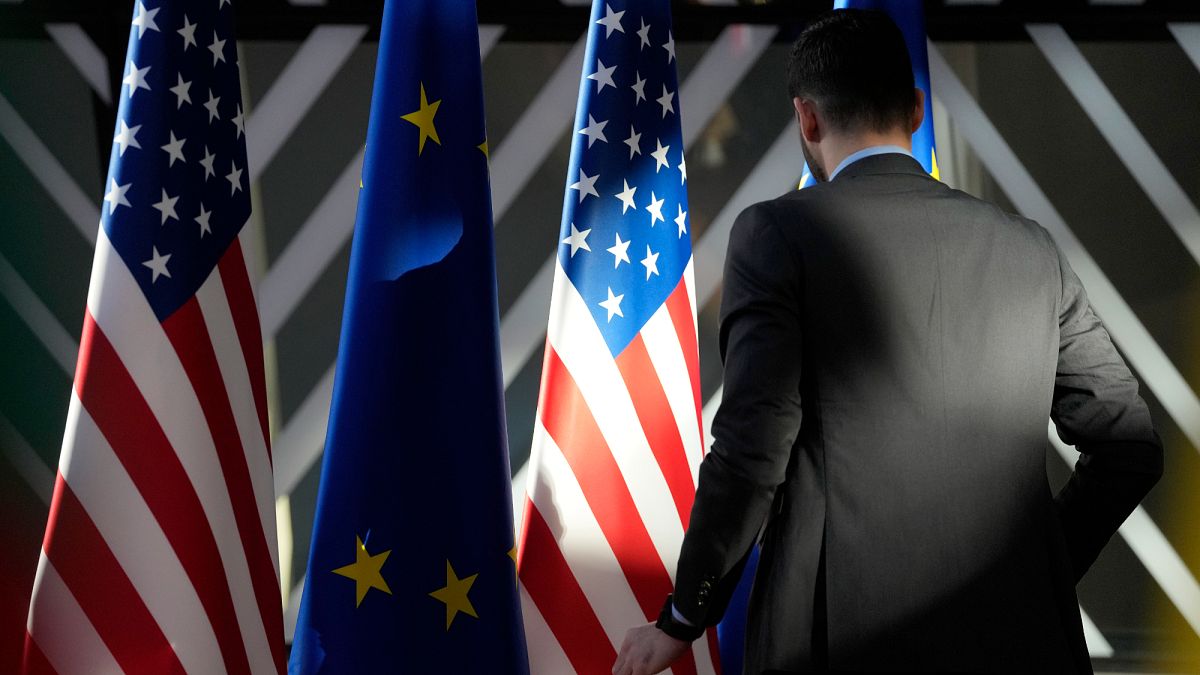
The move comes as the EU prepares to implement a contentious trade deal struck last summer between US President Donald Trump and European Commission President Ursula von der Leyen in Turnberry, Scotland.
The agreement, criticised by some MEPs as unbalanced, would leave a 15% US tariff on EU goods while the EU eliminates its own duties on US industrial products. EU lawmakers are due to vote on the deal on 16 June.
However, the US administration on Tuesday proposed new 10% tariffs on some trading partners, including the European Union, arguing that insufficient efforts to curb trade in goods produced using forced labour were harming US commercial interests.
The proposed 10% US tariffs would come on top of existing most-favoured-nation duties, pushing average tariff levels above the 15% ceiling set out in the EU-US deal.
“A deal is a deal”
Following the announcement of new tariffs, Olof Gill, the Commission’s deputy chief spokesperson said in a statement that “the Commission will carefully analyse the preliminary findings of the investigation” but that “the EU considers tariffs imposed on these grounds to be unjustified.”
The investigation was launched under Section 301 of the Trade Act of 1974, a legal tool that could give the administration an alternative basis for imposing tariffs, after the US Supreme Court ruled in February that Trump had overstepped his authority by using the International Emergency Economic Powers Act (IEEPA) to impose sweeping duties on trading partners.
German MEP Bernd Lange (S&D), the European Parliament’s chief negotiator on the implementation of the Turnberry agreement, wrote on X that after its “defeat before the Supreme Court”, the US administration was “desperately” looking for new legal grounds “to sustain its tariff policy.”
“Accusing EU of not doing enough against forced labour is absurd. The EU has adopted the world’s most stringent rules against products made with forced labour,” he said.
Under a regulation adopted in 2024, the EU bans the sale, import and export of products made with forced labour, with Gill describing the law as “one of the most ambitious instruments of its kind globally.”
“A deal is a deal,” he added, referring to the Turnberry agreement.
“On the EU side, we are on track to ensure implementation of our Joint Statement tariff commitments by the end of June. We expect the US to fully respect the terms of the Joint Statement.”