

DISY and AKEL are locked in a neck-and-neck battle for first place in Cyprus’s parliamentary elections.
ADVERTISEMENT


ADVERTISEMENT
According to the exit poll by public broadcaster RIK, the centre-right Democratic Rally (DISY) is projected to take between 22.5% and 25.5%, while the left-wing AKEL is on 21% to 24%.
The far-right ELAM is in third place at 10.5%-12.5%, and the centrist DIKO comes fourth at 8%-10%.
The 4% threshold for entering parliament is cleared by MEP Fidias Panayiotou’s ‘Direct Democracy’ and the newly established ALMA of former Auditor General Odysseas Michaelides.
EDEK and Volt are fighting it out for a representation in parliament. For the pan-European and federalist Volt party it would be a first in Cyprus.
Here are the detailed figures from the first vote estimate published by pollsters RIK:
DISY: 22.5 – 25.5 %
AKEL: 21 – 24 %
ELAM: 10.5 – 12.5 %
DIKO: 8 – 10 %
ALMA: 4.5 – 5.5 %
Direct Democracy: 5.5 – 7.5 %
Volt: 3 – 4 %
EDEK: 3 – 4 %
Movement of Ecologists – Citizens’ Cooperation: 2 – 3 %
DIPA: 2 – 3 %
Hunters’ Movement: 2 – 3 %
Other: 6 – 8 %
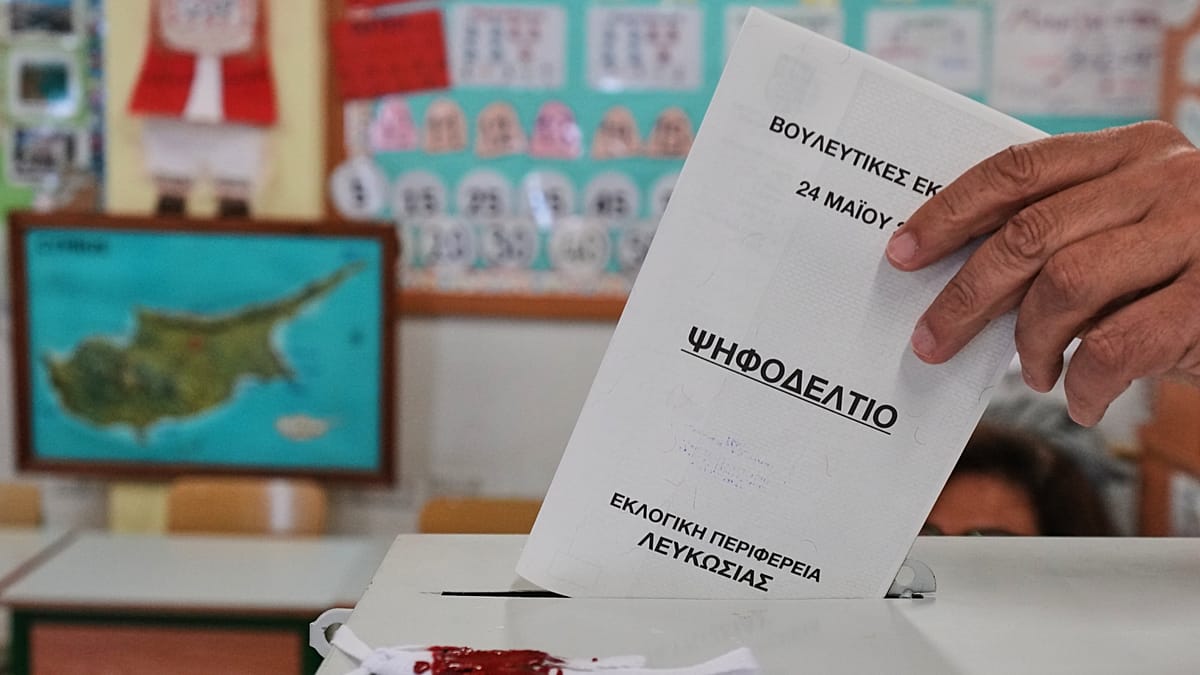
By 5 pm, 351,281 voters had cast their ballots, putting turnout at 61.2%. At the same point in the 2021 parliamentary elections, 56.7% of registered voters had turned out.
Parties and candidates
A total of 752 candidates are standing in this year’s election, 743 of them from more than 18 party formations and 9 as independents. The process will elect 56 of the 80 members of the House of Representatives.
Since 1963, the 24 seats allocated to Turkish Cypriots have been vacant, as they withdrew from the institutions of the Republic of Cyprus, and the House of Representatives has de facto consisted of 56 seats.
Alongside the traditional parties DISY, AKEL, DIKO, EDEK and DIPA, new political formations are also contesting the election, seeking to channel discontent with the current political system.
Particular interest centres on the presence of ALMA – Citizens for Cyprus, led by former Auditor General Odysseas Michaelides, Volt Cyprus, as well as MEP Fidias Panayiotou’s ‘Direct Democracy’. At the same time, ELAM appears strengthened, attempting to capitalise on public anger over high prices, migration and a broader sense of insecurity.
Why the parliamentary elections matter
Although Cyprus has a presidential system and the government does not depend directly on a parliamentary majority, the new House will play a crucial role in approving legislation, reforms and state budgets.
The outcome of the parliamentary elections is also expected to shape political alliances, the strength of President Christodoulides’s government and its ability to advance key policies on the economy, migration, social policy and energy.
The vote is likewise seen as a dress rehearsal for the 2028 presidential elections.
More than 568,000 registered voters are eligible to vote. Polling stations were set up at 1,217 locations in Cyprus and at 13 abroad, including five in Athens, three in Thessaloniki, four in London and one in Brussels.
The first results are expected about half an hour after the polls close.
Around 21:30, the vote shares and number of seats for each list should become clear. In the early hours after midnight, it will be known which candidates have been elected from each list.
Additional sources • ΡΙΚ