



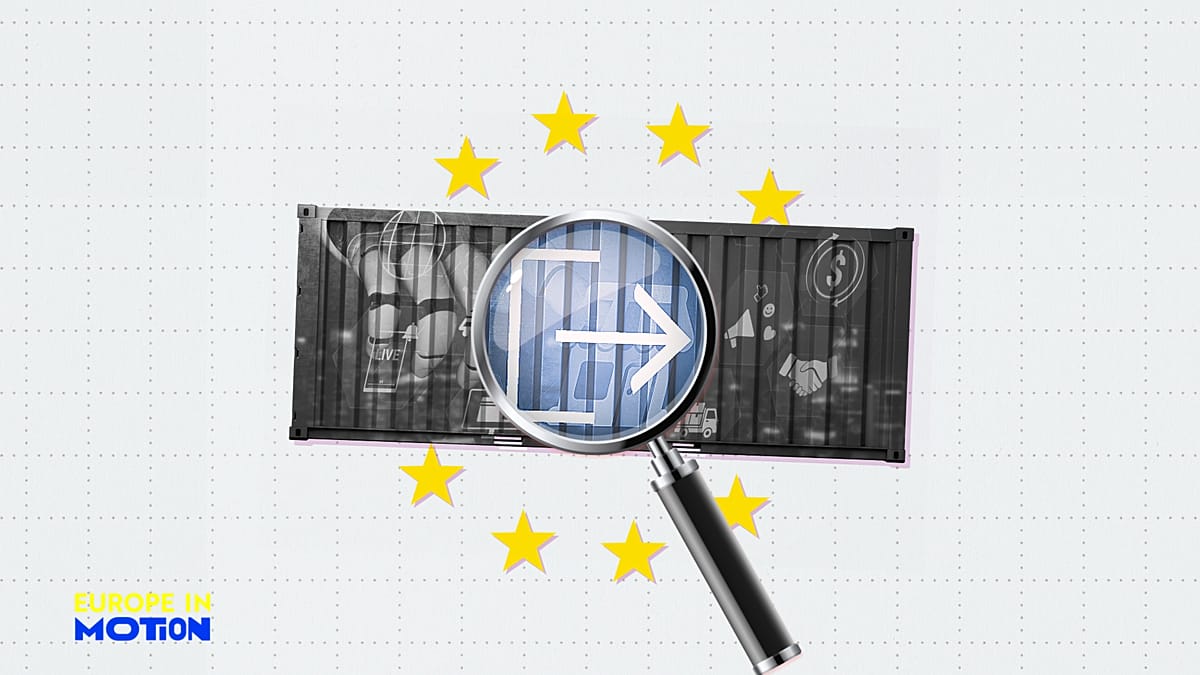
As Europe boosts its efforts toward tech sovereignty, the high-tech manufacturing sector could be a significant player in the EU’s efforts to distance itself from the likes of the US and China.
ADVERTISEMENT


ADVERTISEMENT
The EU sold €414 billion worth of high-tech products in 2024, according to the latest Eurostat figures.
This is up from €273 billion in 2014, representing an average annual increase of 4.3%.
Pharmaceuticals made up 29% of the 2024 total, followed by electronics and telecommunications at 23% and scientific instruments at around 21%.
The smallest category was armaments, with a 1.1% share of the sold production of high-tech products in the EU.
In 2024, more than half of the EU’s imports of high-tech products from non-EU countries came from China and the US combined.
On the other hand, almost a third of the EU exports of high-tech products went to the US at 31%, followed by China and the UK, both at 10%.
In addition, the EU had a large trade deficit with China (€92 billion) in 2024, while the only other partners with a trade deficit exceeding €10 billion were Taiwan (€19 billion) and Vietnam (€20 billion).
In contrast, the EU had a trade surplus above €10 billion with Turkey (€11 billion), the UK (€27 billion) and the US (€46 billion).
Last month, the European Commission introduced its tech sovereignty package to boost the bloc’s domestic tech sector, with a heavy focus on cloud infrastructure, AI services, open source and chips.
The draft law introduces four initiatives across each stage of the value chain, from chips to infrastructure to software, cloud, and AI.
The highest tier, covering sectors such as defence and healthcare, would effectively bar non-European companies from winning public contracts.
In 2023, the EU had more than 42,000 companies in the high-tech manufacturing sector, which represented 0.1% of the total number of companies in the EU.
The highest shares for high-tech manufacturers relative to the total business population were seen in Czechia, Slovakia and Germany.
Meanwhile, relative to the number of people employed in the total business population, the share for high-tech manufacturers was highest in Slovenia, Denmark, Ireland and Hungary.