
Published on •Updated
Allies are bracing themselves for a difficult second-day after US President Donald Trump restated his usual insults against NATO countries despite a historic surge in European and Canadian defence spending.
ADVERTISEMENT


ADVERTISEMENT
Not long after Trump landed yesterday afternoon, he revived his claim from earlier this year that Greenland, the semi-autonomous Arctic territory of Denmark, “should be controlled by the United States.”
He went on to criticise Denmark for underinvesting in defence of the island, saying Copenhagan “doesn’t spend money to really help Greenland”, implying it can’t defend the massive island against Russian or Chinese vessels he claims are operating in the region.
Arriving at the summit Wednesday morning, Danish Prime Minister Mette Frederiksen reiterated her country’s stance that “Greenland is of course not for sale”.
“We are a sovereign state and we need everyone to respect our territorial integrity,” she said.
Asked if Denmark would militarily defend Greenland if there was an attack, she answered: “we are ready to defend all of NATO, that includes our own territory.”
“Of course we will defend the Kingdom of Denmark,” said Frederiksen. “The Greenlanders do not want to be part of the United States. They have made that clear,” she said.
Numerous polls conducted among Greenlanders show an overwhelming resistance against being part of US territory.
NATO Secretary General Mark Rutte sidestepped the issue when asked by reporters, saying that “when it comes to Greenland and Denmark, we have a good process in place”.
Last January, when Trump’s threats to annex the territory hit a peak, Rutte ensured the matter was absent from official NATO business, instead resolving the matter via shuttle diplomacy between all sides.
It is thus highly unlikely the Greenland issue will appear on the formal agenda when leaders get down to formal business at around 11:15 at the North Atlantic Council (NAC), the principal decision-making body within NATO. Trump will be seated at the same table as Frederiksen.
“The approach will be not to mention the issue, and get through the end of the summit,” a source with knowledge of the situation told Euronews.
“I hope they cancel next year’s summit, two more years of this with Trump will be so damaging to NATO and security,” they said, lamenting that the alliance’s attempts to placate Trump are not working. “Trump only wants to pile on pressure, and he’s just getting even more outspoken.”
Ceasefire at risk
Trump also laid into allies over what he claims was their abandonment of the US in Iran when some such as Italy and Spain denied access to military bases in their countries.
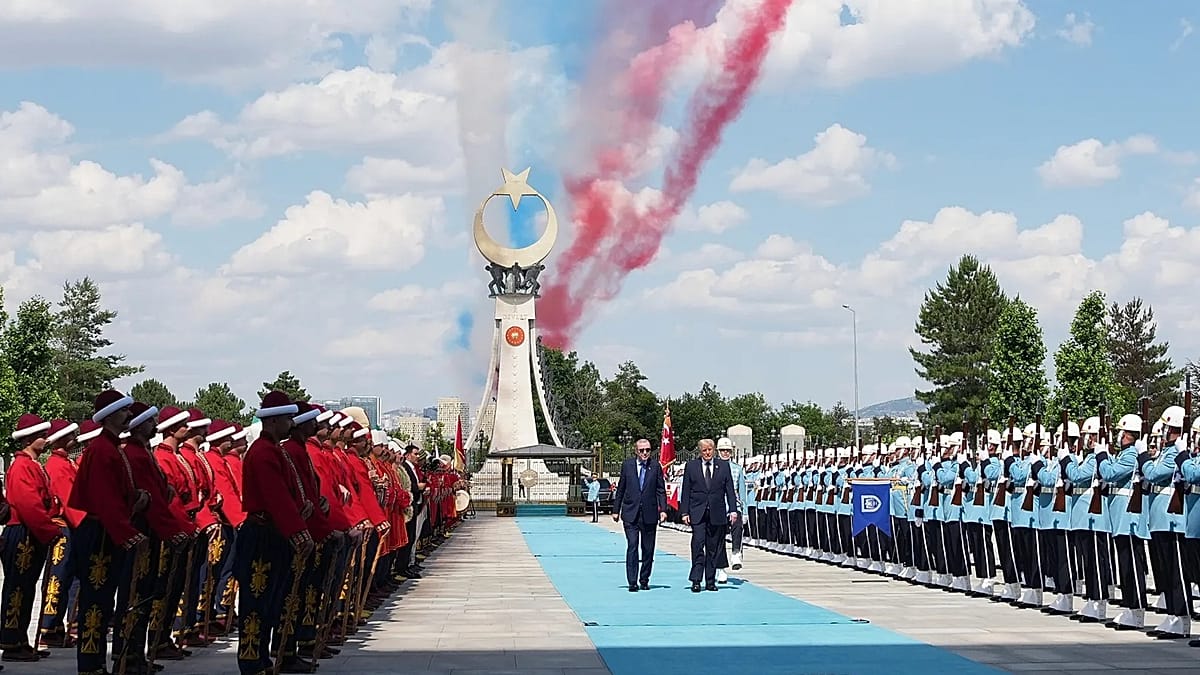
European states in the firing line insist they were under no obligation to get involved with the Iran war, but Trump doesn’t accept this. At a press conference with Turkish President Erdoğan, Trump told journalists he was “very disappointed” by the response of NATO allies.
To make matters worse, US forces also launched overnight strikes against Iran over the ongoing closure of the Strait of Hormuz.
“US Central Command forces have begun launching a series of powerful strikes against Iran to impose heavy costs for targeting and attacking commercial shipping,” the statement from the US military arm stated on X late on Tuesday night.
Iran immediately warned Washington it would “take whatever measures it deems necessary,” triggering concerns that the second day of the NATO summit will be overshadowed by the war in Iran, as opposed to NATO-related priorities such as Ukraine and defence of the European continent.
Speaking to journalists on his way into Wednesday’s meeting, Rutte said the US attacks were “absolutely necessary” and commended the US for “forcefully” reacting.