Geopolitics took centre stage at Euronews’ Enlargement Summit in Brussels on Tuesday, with leaders from candidate countries framing their ambition to join the European Union as a strategic decision to embrace prosperity and stability in a volatile world.
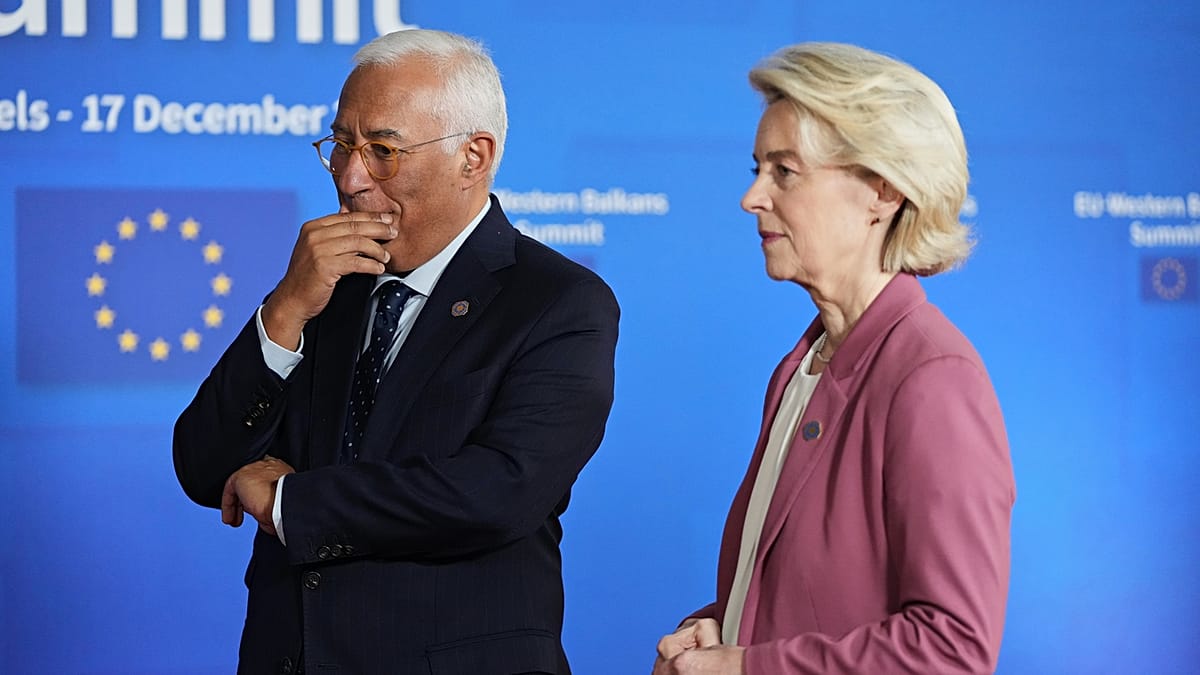
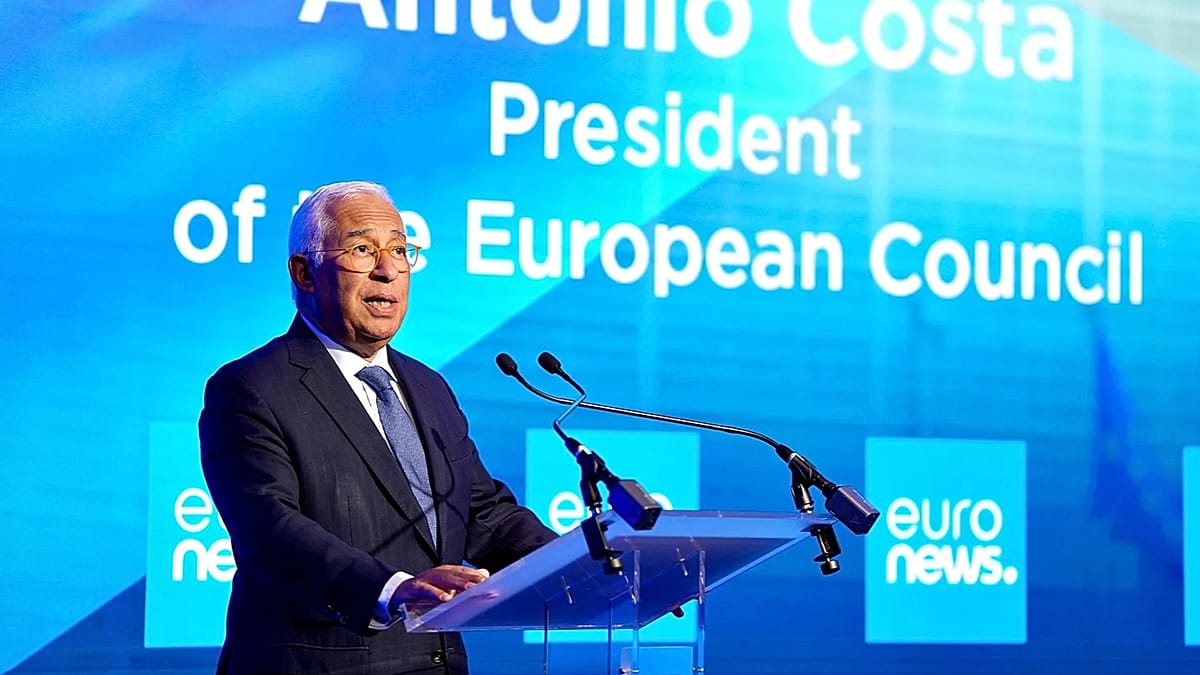
The tone was set from the outset by António Costa, the president of the European Council, who made an impassioned plea for a larger, safer and stronger bloc and described accession as the “best investment” in a common future.
“The European Union must also decide whether it can afford to lose more time, and if it is ready to evolve and adapt to the current geopolitical realities,” Costa said in his keynote address.
“It is my strong belief that Europe must not become a museum of past prosperity.”
The choice at stake – democracy versus autocracy – was best encapsulated by Ukrainian President Volodymyr Zelenskyy, who joined the summit by videolink from an undisclosed location on the frontline. Zelenskyy described accession as a “security guarantee” against Russia’s neo-imperialism.
“Ukraine has chosen to be an EU member through a similar feeling of life, freedom, democracy and humanity,” Zelenskyy said.
“And that is why we’re fighting today: for all of that, for our land, for our homes, for the rights and the freedoms of our state.”
Speaking after Zelenskyy, Moldovan President Maia Sandu, whose country is a prime target of the Kremlin’s hybrid interference, further upped the ante, calling on EU leaders to fulfil the promise of enlargement or otherwise pay a devastating price.
“You cannot allow that some countries are used by authoritarian regimes against the EU,” Sandu said in conversation with Maria Tadeo. “This is what is going to happen if there is not going to be a real perspective on the EU integration.”
For years, enlargement lay mostly dormant and overlooked, as member states devoted their energy to pressing challenges such as the financial crisis, unemployment, social inequality, the COVID-19 pandemic and Chinese competition.
But when Russian President Vladimir Putin decided on the full-scale invasion of Ukraine, the policy suddenly adopted a new dimension. The nearly simultaneous moves by Kyiv and Chișinău to file membership applications forced leaders to reconsider their traditional prejudices on accession. The benefits seemed to finally outweigh the risks.
“Unfortunately, a military aggression on European soil was needed to wake Brussels up,” said Albanian Prime Minister Edi Rama, speaking remotely to the summit.
“A new momentum has come, and I hope it will not fade away.”
‘The reunification of Europe’
Progress has been palpable over the past three years.
Ukraine, Moldova, Georgia and Bosnia and Herzegovina were all granted candidate status. North Macedonia and Albania formally opened negotiations with Brussels. And Montenegro marched ahead and solidified its position as a frontrunner.
The fresh impulse, however, has also exposed the frustration and exasperation that come with the ambition of joining the European family of nations.
Hungary’s unassailable veto on Ukraine’s accession has raised awkward questions about the bloc’s internal decision-making and the merits-based nature of the enlargement process. Despite Kyiv meeting all legal and technical requirements to open the first chapter of negotiations, the Hungarian opposition has single-handedly hit the brakes.
The deadlock has left Moldova in a state of collateral paralysis.
Meanwhile, North Macedonia’s aspirations remain blocked by Bulgaria, which has imposed demands related to history, national identity and language as a condition for permitting the candidate to move forward in the years-long procedure.
Macedonian Prime Minister Hristijan Mickoski did not hold back during Tuesday’s summit, slamming Bulgaria’s requests as “artificial disputes” akin to “bullying”.
“If somebody dares to bully someone else who wants to join the club, why the other should be silent?” Mickoski said on stage. “This is not normal.”
And yet, Mickoski stressed that “despite all those humiliations and disappointments”, his country was committed to its membership bid. Enlargement, he predicted, will eventually lead to the “reunification” of the continent.
Admittedly, vetoes are just one part of the story. Some candidates have been pushed down the waiting line because of their own decisions.
Serbia has earned stern rebukes from Brussels for backsliding on the rule of law, freedom of expression and the fight against corruption. Serbian President Aleksandar Vučić has also been criticised for signing a free trade deal with China, refusing to apply sanctions on Russia and attending Putin’s 9 May military parade in Moscow.
On stage, Vučić sought to strike a balancing act to defend his controversial policies.
“I’m not going to justify myself for talking with someone,” Vučić said.
“We have to consider all the remarks, all the demands from the European Union,” he went on, adding: “Serbia is very much committed to its EU path and will take it in a very serious and responsible way.”
In her intervention, European Commissioner for Enlargement Marta Kos drew a line, calling on Serbia to pick a side on the global stage.
“Being supportive of a Russian regime that is killing people in Ukraine, not accepting the sanctions that the EU is having against Russia – there are things that we cannot tolerate anymore,” Kos said at the summit.
“We all have to make geopolitical choices.”