Times Network New Zealand
  • Home
  • Local News
  • World
  • Business
  • Lifetyle
  • Entertainment
  • Technology
  • Travel
  • Food
  • Editor’s Choice
  • Press Release
What's On
EU rejects violence against protesters in Iran, backs ‘legitimate aspiration’ for change

EU rejects violence against protesters in Iran, backs ‘legitimate aspiration’ for change

January 10, 2026
EU member states back Mercosur deal, French MEPs vow fight in Parliament

EU member states back Mercosur deal, French MEPs vow fight in Parliament

January 10, 2026
Podcast: What does Maduro’s capture mean for the EU?

Podcast: What does Maduro’s capture mean for the EU?

January 10, 2026
Donald Trump intends to visit Hungary’s Orbán during key election campaign

Donald Trump intends to visit Hungary’s Orbán during key election campaign

January 9, 2026
EU troops might be needed to stop a US showdown in Greenland

EU troops might be needed to stop a US showdown in Greenland

January 9, 2026
Facebook X (Twitter) Instagram
Web Stories
Facebook X (Twitter) Instagram
Times Network New Zealand
Subscribe
  • Home
  • Local News
  • World
  • Business
  • Lifetyle
  • Entertainment
  • Technology
  • Travel
  • Food
  • Editor’s Choice
  • Press Release
Times Network New Zealand
Home » No, Portugal is not banning all Islamic practices
World

No, Portugal is not banning all Islamic practices

By Press RoomNovember 14, 20254 Mins Read
No, Portugal is not banning all Islamic practices
Share
Facebook Twitter LinkedIn Pinterest Email
No, Portugal is not banning all Islamic practices

Viral claims on social media allege that Portugal is banning all Islamic laws and practices, and that failing to comply will result in a €4,000 fine.

One widely shared X post, which has been seen more than 800,000 times and has garnered thousands of likes, alleged that more and more EU countries are set to follow suit.

A video relaying the same claims is attached to the post, stating that France, Italy, Sweden, Austria and Belgium are also going to implement the same measures.

However, the claim that Portugal — along with other EU countries — is introducing an outright ban on all Islamic practices is wrong.

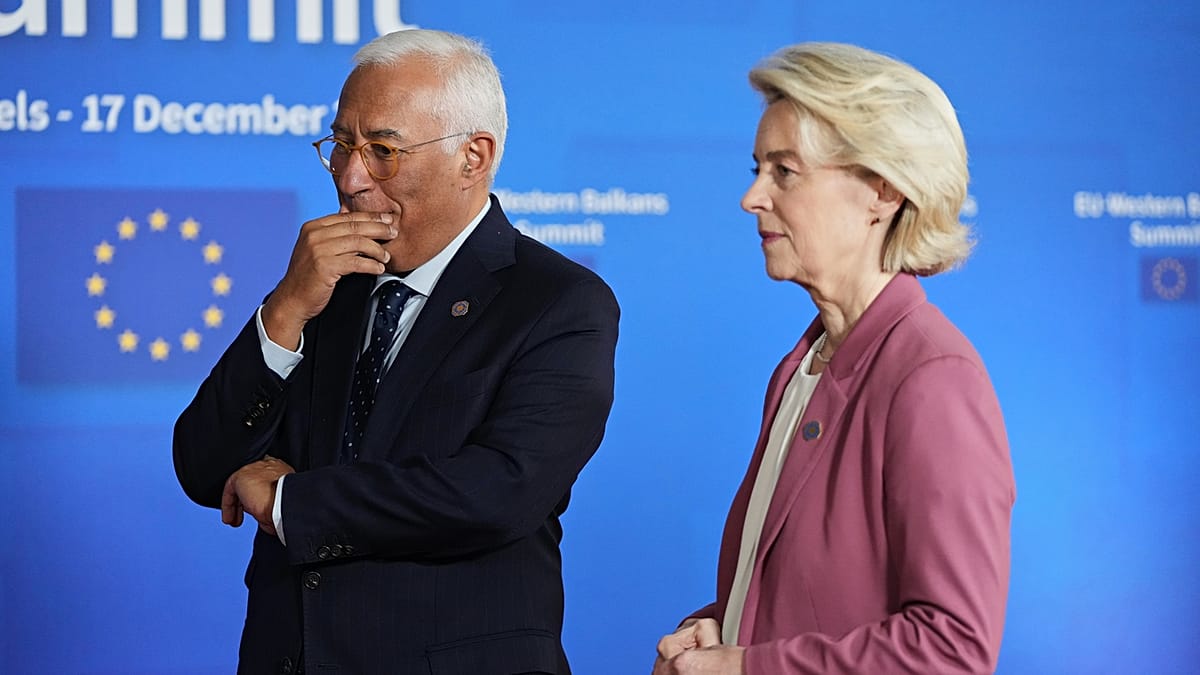
This allegation appears to be an exaggeration of a recent bill to ban the wearing of face veils in public places, which has almost entirely been greenlit.

In mid-October, the Portuguese parliament approved a bill banning face veils worn for “gender or religious” reasons in public, in a move which was criticised for targeting the face coverings worn by some Muslim women.

The legislation was proposed by the far-right Chega party and received support from the ruling centre-right PSD, the Liberal Initiative and the centre-right CDS-PP.

In the bill, Chega said that when people — especially women — hide their faces, they are subjected to “situations of exclusion and inferiority” and that such an act is incompatible with Portugal’s principles of “liberty, equality and human dignity”.

Left-wing opponents have responded by arguing that the policy was designed to target foreigners, and that while no one should be forced to wear a veil, it was wrong to single out those of a different faith.

What’s next for the bill?

Anyone flouting the new law could face fines of between €200 and €4,000, depending on the severity of the case. So, the online claims appear to be loosely based on the face veil ban, but have ultimately exaggerated and misconstrued the truth.

The law will now be debated in a parliamentary committee, where it could be amended, before returning to the plenary for a final vote.

President Marcelo Rebelo de Sousa also still needs to approve the law; otherwise, he could veto it or send it to the Constitutional Court for review.

When approached by The Cube, Euronews’ verification team, the Portuguese government said it “categorically denies” the allegations circulating on social media that the country is banning all Islamic practices or imposing widespread fines related to the Islamic religion.

“The proposal recently approved by Parliament, which is still under discussion in the parliamentary committee on Constitutional Affairs, Rights, Freedoms and Guarantees, refers exclusively to the prohibition of the use of clothing intended to conceal the face in public spaces, regardless of religion or reason,” said a spokesperson, highlighting the potential fines for non-compliance that could reach up to €4,000.

“Portugal is a democratic state governed by the rule of law, which fully guarantees the religious freedom enshrined in the Constitution and will continue to respect all religious communities,” the spokesperson said.

Once fully approved, Portugal will join the likes of Austria, France, Belgium and Denmark, who have already banned the burqa — with Chega citing these countries as a model when it presented the proposed ban.

Regardless, a burqa ban does not mean that any of them have banned Islam.

In 2011, a law came into force that made France the first European country to ban anyone from wearing a full-face veil in public. Belgium followed suit the same year, with Bulgaria (2016), Austria (2017) and Denmark (2018) after that.

The rate at which the law is actually enforced, though, differs among countries, as it is dependent on police resources.

Other countries, such as Italy, the Netherlands and Spain, have partial bans that are restricted to specific regions or public spaces, for instance inside schools and government buildings.

Nevertheless, none of these countries has banned Islam, with all of them being signatories to the European Convention on Human Rights, whose Article 9 states that everyone has the right to freedom of thought, conscience and religion.

At the EU level, the right to freedom of belief and religion is also enshrined in Article 10 of the EU Charter of Fundamental Rights.
Share. Facebook Twitter Pinterest LinkedIn Tumblr Email

Keep Reading

EU rejects violence against protesters in Iran, backs ‘legitimate aspiration’ for change

EU rejects violence against protesters in Iran, backs ‘legitimate aspiration’ for change

EU member states back Mercosur deal, French MEPs vow fight in Parliament

EU member states back Mercosur deal, French MEPs vow fight in Parliament

Podcast: What does Maduro’s capture mean for the EU?

Podcast: What does Maduro’s capture mean for the EU?

Donald Trump intends to visit Hungary’s Orbán during key election campaign

Donald Trump intends to visit Hungary’s Orbán during key election campaign

EU troops might be needed to stop a US showdown in Greenland

EU troops might be needed to stop a US showdown in Greenland

Analysis: From Venezuela to Greenland, the EU scrambles to find a voice and a plan

Analysis: From Venezuela to Greenland, the EU scrambles to find a voice and a plan

Paris to vote ‘No’ on Mercosur, risking major diplomatic setback for Macron

Paris to vote ‘No’ on Mercosur, risking major diplomatic setback for Macron

Belgium urges EU to use aid as bargaining chip to increase migrant returns

Belgium urges EU to use aid as bargaining chip to increase migrant returns

Belgium open to housing foreign prisoners in other countries, minister says

Belgium open to housing foreign prisoners in other countries, minister says

Editors Picks
EU member states back Mercosur deal, French MEPs vow fight in Parliament

EU member states back Mercosur deal, French MEPs vow fight in Parliament

January 10, 2026
Podcast: What does Maduro’s capture mean for the EU?

Podcast: What does Maduro’s capture mean for the EU?

January 10, 2026
Donald Trump intends to visit Hungary’s Orbán during key election campaign

Donald Trump intends to visit Hungary’s Orbán during key election campaign

January 9, 2026
EU troops might be needed to stop a US showdown in Greenland

EU troops might be needed to stop a US showdown in Greenland

January 9, 2026
Latest News
EU rejects violence against protesters in Iran, backs ‘legitimate aspiration’ for change

EU rejects violence against protesters in Iran, backs ‘legitimate aspiration’ for change

January 10, 2026
EU member states back Mercosur deal, French MEPs vow fight in Parliament

EU member states back Mercosur deal, French MEPs vow fight in Parliament

January 10, 2026
Podcast: What does Maduro’s capture mean for the EU?

Podcast: What does Maduro’s capture mean for the EU?

January 10, 2026
Facebook X (Twitter) Pinterest TikTok Instagram
© 2026 Times Network New Zealand. All Rights Reserved.
  • Privacy Policy
  • Terms
  • Advertise
  • Contact

Type above and press Enter to search. Press Esc to cancel.