
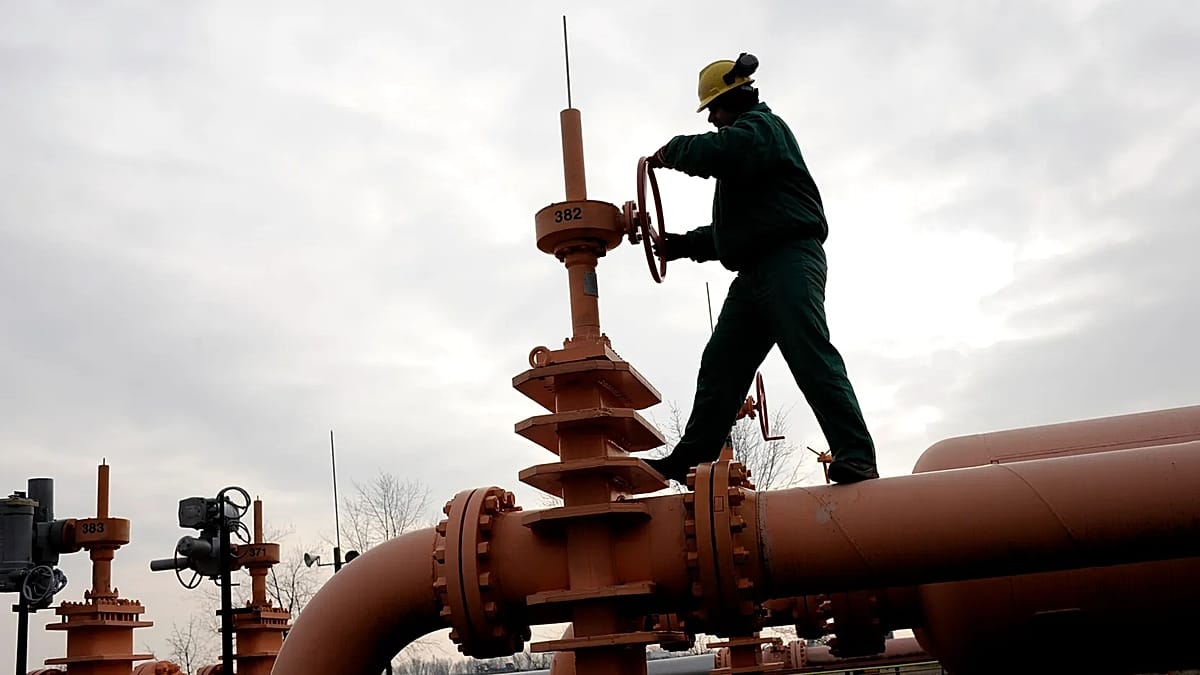
The European Union will ban Russian gas pipelines and liquefied natural gas (LNG) from entering the bloc by the end of 2026 and mid-2027 but with exceptions for Hungary and Slovakia, which will be allowed to tap Moscow’s gas in case of supply disruption, EU co-legislators agreed on Tuesday evening.
With the law in force, by the end of 2027, no more Russian LNG or pipeline gas should be entering the bloc. The EU co-legislators established that for short-term supply contracts concluded before 17 June 2025, the ban will apply from 25 April 2026 for LNG and 17 June 2026 for pipeline gas.
Long-term LNG import contracts will be allowed to run until 1 January 2027, in line with the 19th sanctions package.
For long-term contracts for pipeline gas imports, the prohibition will kick in on 30 September 2027. However, depending on the level of storage filling across member states, the ban can be pushed to 1 November 2027.
Breaking free from Russian energy imports has long been a priority for member states, gaining further impetus after Moscow invaded Ukraine in February 2022 and disrupted energy prices across the EU27 bloc.
Ever since, the EU has announced various measures to diversify energy suppliers and reduce reliance on Russia, culminating with a European Commission proposal for a full ban on Russian energy imports.
EU data reveals that the bloc’s dependence on Moscow for gas fell from 45% before the full-scale invasion of Ukraine to 13% in the first half of 2025. Yet despite the drastic cut, Russian gas imports still totalled €10 billion. Belgium, France, and Spain were among the member states still receiving Russian LNG via transhipments.
Parliament breaks the deadlock
While most EU countries backed the ban on Russian energy saying it would weaken Moscow’s ability to fund the war in Ukraine, landlocked countries raised concerns about the security of supply. They also argued that their countries would face higher energy prices than other member states, citing unfair competition within the bloc.
The Parliament was opposed to exemptions for landlocked countries, but it ultimately conceded them to the Council.
“I am very pleased and proud that we have been able to reach an agreement with the European Parliament so quickly. It shows that we are committed to strengthening our security and safeguarding our energy supply,” said Lars Aagaard, Denmark’s minister for climate and energy, on behalf of the current Danish Presidency.
Still, Hungary and Slovakia are planning to challenge the law once it’s adopted.
Hungarian Foreign Affairs Minister Péter Szijjártó said it’s impossible to apply the “diktat” from Brussels, calling the law a “fraud” and claiming it goes against EU treaties.
“Hungary is not alone, Slovakia is also being consulted to take action,” Szijjártó told a press briefing in Brussels.
The prime ministers of Hungary and Slovakia, Viktor Orbán and Robert Fico, have both taken a more sympathetic approach toward the Kremlin than other EU leaders.
Emergency clause tied to storage levels
After several rounds of political talks, the Parliament and EU governments agreed to include a suspension clause in the deal to ease concerns from landlocked countries in the event of disruptions to the energy supply.
However, such a clause can only be activated by the European Commission if a member state declares an emergency under the bloc’s gas security of supply law, which a member state may invoke if it has less than 90% of its gas reserves by November 1 in a given calendar year.
“Not even during the energy crisis did any EU country declare an emergency,” one EU diplomat told Euronews, expressing confidence in the plan to cut Russian imports in the long term.
“Although the conditions [in the suspension clause] are stricter than what we would see as a fully operational solution, it provides the necessary safety net,” a second EU diplomat told Euronews.
EU countries will now be required to develop national diversification plans with concrete actions and timelines to cease imports of Russian natural gas and oil by 1 March 2026.
The new law also bans imports through the Turkstream – a gas pipeline running through Turkey to southeastern Europe – although if companies can prove the imported gas has only been in transit through Russia or Belarus and was produced in another country, it will be allowed into the bloc.
End of an era
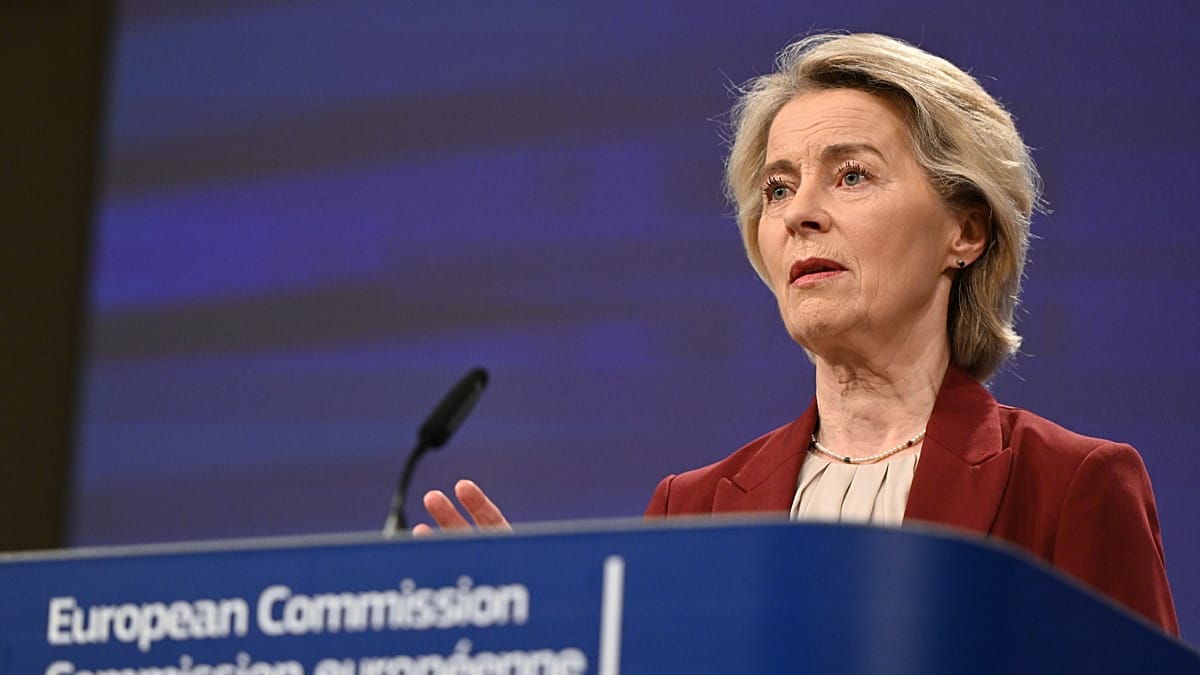
European Commission President Ursula von der Leyen said the agreement marked the “era of Europe’s full energy independence from Russia”.
“We are stopping these imports permanently. By depleting Putin’s war chest, we stand in solidarity with Ukraine and set our sights on new energy partnerships and opportunities for the sector,” said von der Leyen.
Energy Commissioner Dan Jørgensen rejected any retreat from the Russian energy ban.
“We will never go back to our dangerous dependence on Russia. We will never go back to volatile supplies and market manipulation. We will never go back to energy blackmail and economic exposure,” said Jørgensen.
Lawmaker Thomas Pellerin-Carlin (S&D/France), leading the legislative file in the Parliament, said the new law will prevent Russia from manipulating the energy market and jeopardise jobs in Europe.
“Europeans remember the increase in gas and electricity prices that we all experienced in 2021 and 2022. What has often been called an ‘energy crisis’ is actually a Russian gas shock,” said Pellerin-Carlin.
Energy ministers will vote on the agreed text on 15 December, and a plenary vote in the Parliament is expected the same week.