



Germany is drawing up plans to quickly ready its airspace if the country needs to defend itself, the air navigation service provider told Euronews, warning that airlines and airports remain too naive about the possibility of such an event.
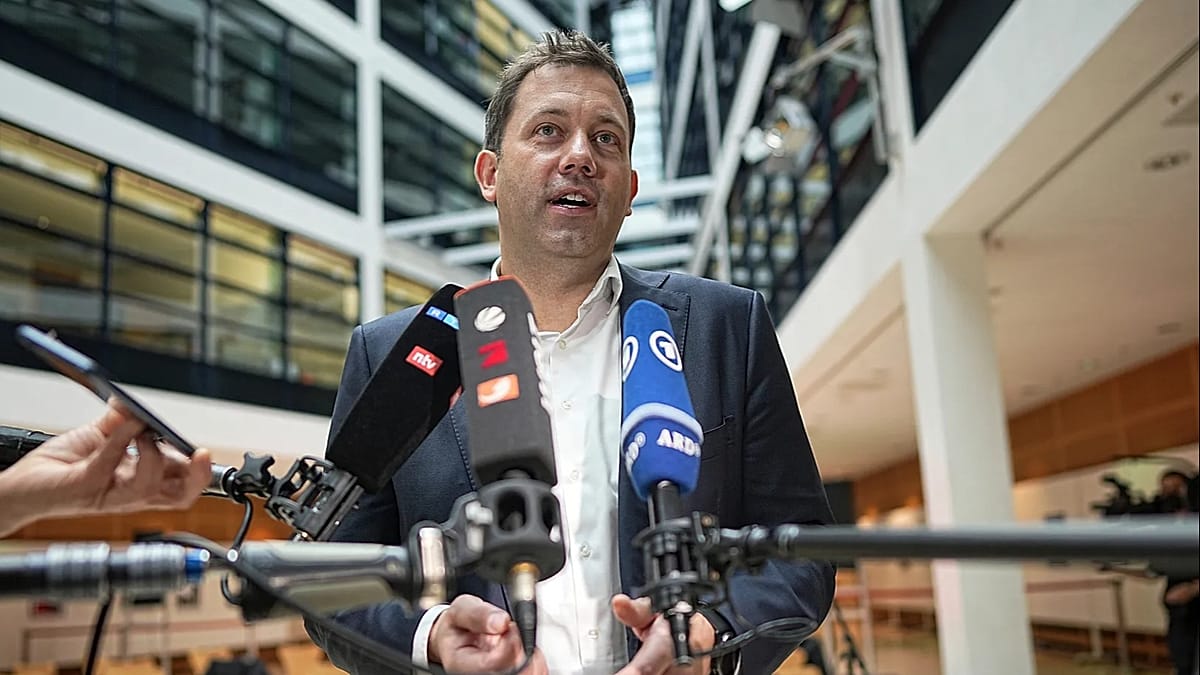
“We are working currently with the Ministry of Defence and the Ministry of Transport on a requirement catalogue to be prepared for a defence case,” Arndt Schoenemann, the chairman and chief executive officer of DFS Deutsche Flugsicherung, which oversees Germany’s airspace, told Euronews.
“There are three levels of defence. The first level is that there is only a threat. The second level is that we have a NATO Article 5 defence case, and the third case is the defence of the country.”
“For these three cases we are developing different requirements and we are obliged to fulfil them according to a clear master plan,” he added.
After decades of underinvestment, Germany is now massively ramping up its defence spending with the aim of becoming Europe’s strongest army.
Berlin’s decision was spurred by Russia’s full-scale invasion of Ukraine in 2022 and warnings by its own intelligence agency that Moscow could test NATO’s Article 5 with an attack on a member state before the end of the decade.
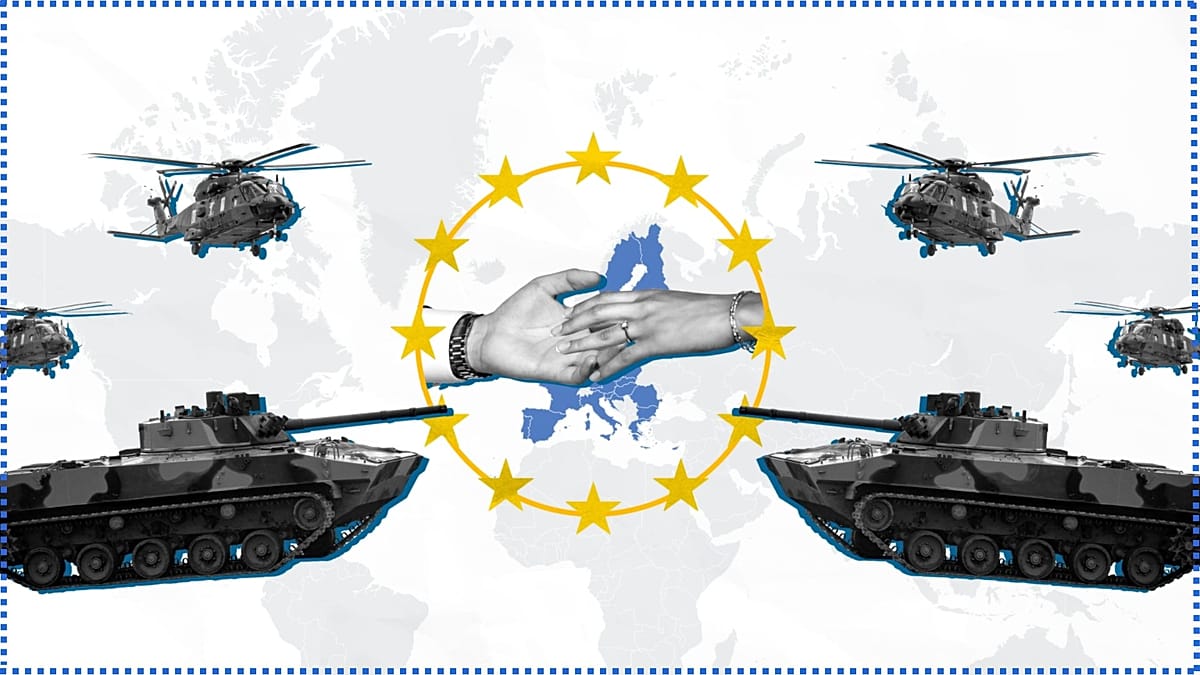
The military alliance has meanwhile adopted regional defence plans to ensure swift deployment of allied forces in the event of an attack, while the European Union has put forward multiple packages to boost the production and procurement of defence equipment and facilitate military mobility across the 27-country bloc.
‘Lack of awareness’
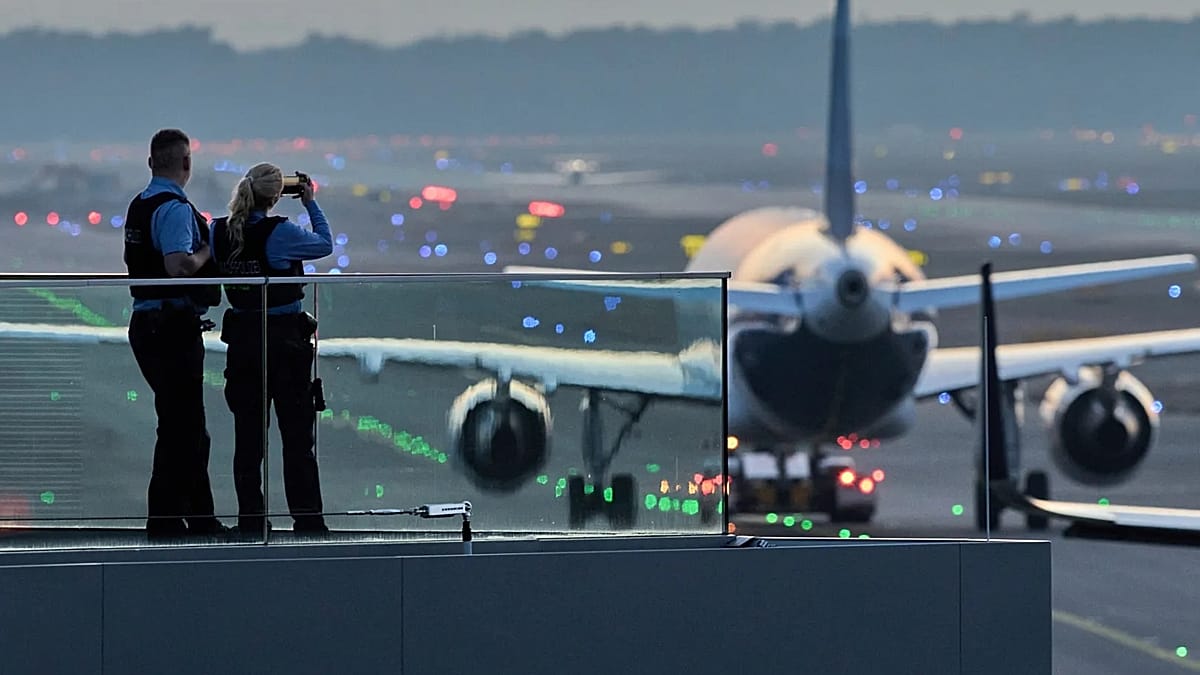
Germany has one of the busiest airspaces in the world, with around 3 million flights crossing into it in peak years – up to 10,000 every day. DFS, which is a state-owned company, manages the country’s entire airspace.
Yet one of the main challenges for the company, Schoenemann said, is that many civilian players and operators are unaware that airspace may need to be temporarily re-prioritised to accommodate military mobility.
“Airlines or civil airlines or airports are far away from thinking that we may enter into such a scenario where we have military activities in the country,” he said. “And this is something we need to work on, that they exactly know what’s going on in case the airspace will be closed and so on.”
DFS is currently providing information sessions to explain what measures would likely be taken.
The other challenge is financing the technology needed to ensure smooth operations.
“We are now renewing our radars in the next 10 years and, from my perspective, a part of that could also be co-financed by military mobility because it ensures that military traffic can safely happen,” Schoenemann said, referring to EU funds meant to boost defence preparedness before 2030.
The Commission has put forward a €150 billion defence loan scheme, SAFE, for member states to tap into to invest into priority areas including air defence and military mobility.
Meanwhile, it has proposed boosting the share for defence and space in the EU’s next seven-year budget starting in 2028, raising the total to over €130 billion with an additional €17 billion earmarked for military mobility projects – five-fold and ten-fold increases respectively.
Drone sightings
Another geopolitical development impacting DFS’s activities is the rise in hybrid attacks, especially drone incursions.
More than 190 drone sightings had been reported near German airports by late October this year, outpacing the 143 incidents recorded over the whole of 2024.
Munich Airport was forced to temporarily halt operations twice in two days in early October because of drone sightings, and Berlin Brandenburg Airport had to suspend flights for two hours later that same month after a witness reported spotting a drone.
DFS has developed a platform that enables people to look up where they can safely fly their drones across Germany, and is now working on a partnership to bring unmanned traffic under the aegis of air traffic management.
“The problem of non-cooperative drones is that they have modified software and hardware in place, and you cannot make them visible with such normal off-the-shelf systems,” Schoenemann said.
“We need to bring together network services, we need to bring together the airspace picture… and we need to bring together defence capabilities including jamming or also other ways of defending against drones.”
However, he dismissed any suggestion of shooting down drones near airports, which he said could endanger flights being kept in a holding pattern while awaiting clearance to land.