

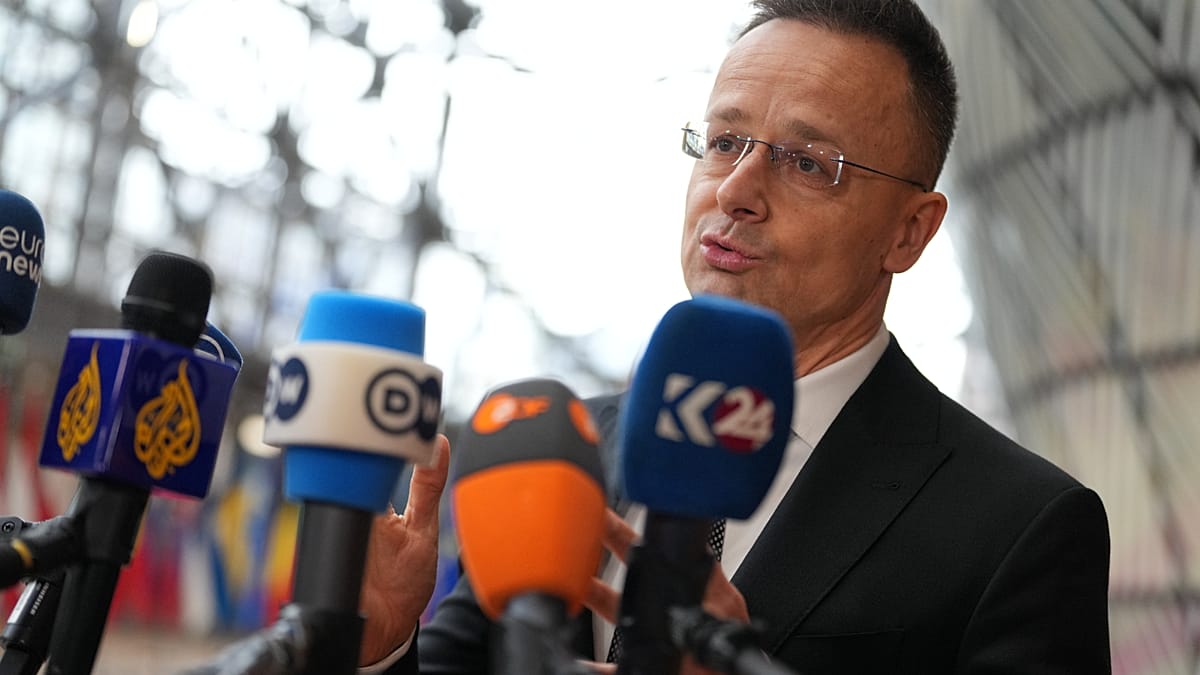
Hungarian Foreign Minister Péter Szijjártó strolled into Brussels on the defense, demanding journalists be serious as his country threatened to double veto an emergency loan for Ukraine and a fresh sanctions package against Russia over what he denounced was a coordinated sabotage from Kyiv, Brussels and the Hungarian opposition.
ADVERTISEMENT

ADVERTISEMENT
Inside the room, he doubled down.
According to diplomats with knowledge of a contentious meeting of foreign ministers held February 23, on the eve of the fourth anniversary of Russia’s war on Ukraine, Szijjártó insisted Ukraine was playing games, disrupting transit of cheap Russian oil through a major pipeline connecting Russia to Hungary for political reasons.
The spat goes back to an incident dating back to late January impacting the Druzhba pipeline. The European Union and Ukraine argue that the pipeline was hit by a Russian drone and was damaged in the aftermath, decreasing normal transit.
Ukraine, which is facing a rough winter as its own energy infrastructure has been severely compromised too, says the situation on the ground is complex as a result of Russia’s constant pounding.
That message was stressed by Ukraine’s foreign minister Andrii Sybiha, who joined the meeting via conference call, and said multiple efforts to fix it had been made.
To break the impasse, Luxembourg’s foreign minister Xavier Bettel suggested inspectors from Hungary and Slovakia,also a buyer of Russian oil, could be deployed on site to examinethe damaged structure, according to a person familiar.
Sybiha responded he would need to ask for authorisation and would revert directly to Hungary and Slovakia.
Szijjártó told a press conference hours later that his Ukrainian counterpart had “mumbled in confusion” calling it a “total exposure.” Ukraine denies the accusations.
As the Ukrainian foreign minister disconnected from the meeting, Szijjártó took the floor one more time, accusing his Ukrainian counterpart of lying, according to people familiar with the content of the discussion, arguing that the blast impacted a nearby container, not the pipeline.
Ukraine insists a Russian drone strike is the source of the damage. Ukrainian President Volodymyr Zelenskiy said on Tuesday satellite images confirm it.
Back in Brussels, the Hungarian minister also snapped at Kaja Kallas, the European Union’s chief diplomat and chair of the meeting, for not giving him the floor to reply directly to his Ukrainian counterpart.
He insisted the issue is political, not technical, and Hungary would not revert its veto until the Druzhba flows resume. For European ministers looking to seal the package of measures it became clear that the meeting would end without a deal.
Adding to the imbroglio, Slovakia joined Hungary in condemning Ukraine while avoiding any mention of Russia throughout the exchanges, according to diplomats briefed. Hours later, Slovakia announced it would cut emergency power supplies for Ukraine in retaliation.
Meanwhile, the EU’s effort to prop up Ukraine’s finances and punish Russia for its four-year long invasion rests in limbo. For member states supportive of Kyiv, Budapest crossed a line, and the EU must reform how it makes decisions or become trapped in a vicious circle of vetoes.
Abusing veto powers and quest for unanimity
One diplomat told Euronews the episode will inevitably revive talk about qualified majority when it comes to foreign policy decision, as well as Article 7 of the EU treaties which allows for the suspension of voting rights from a member state.
In response to the blockade of a €90 billion loan, Council President António Costa, who convenes the 27 leaders, said in a letter addressed to Prime Minister Viktor Orbán that his country risks breaching the principle of sincere cooperation that binds all member states. That principle suggests all EU countries must work together in good faith.
Back in December, EU leaders agreed to issue an emergency loan backed by 24 member states, excluding Hungary, Slovakia and the Czech Republic, who were exempted from all financial obligations related to the loan.
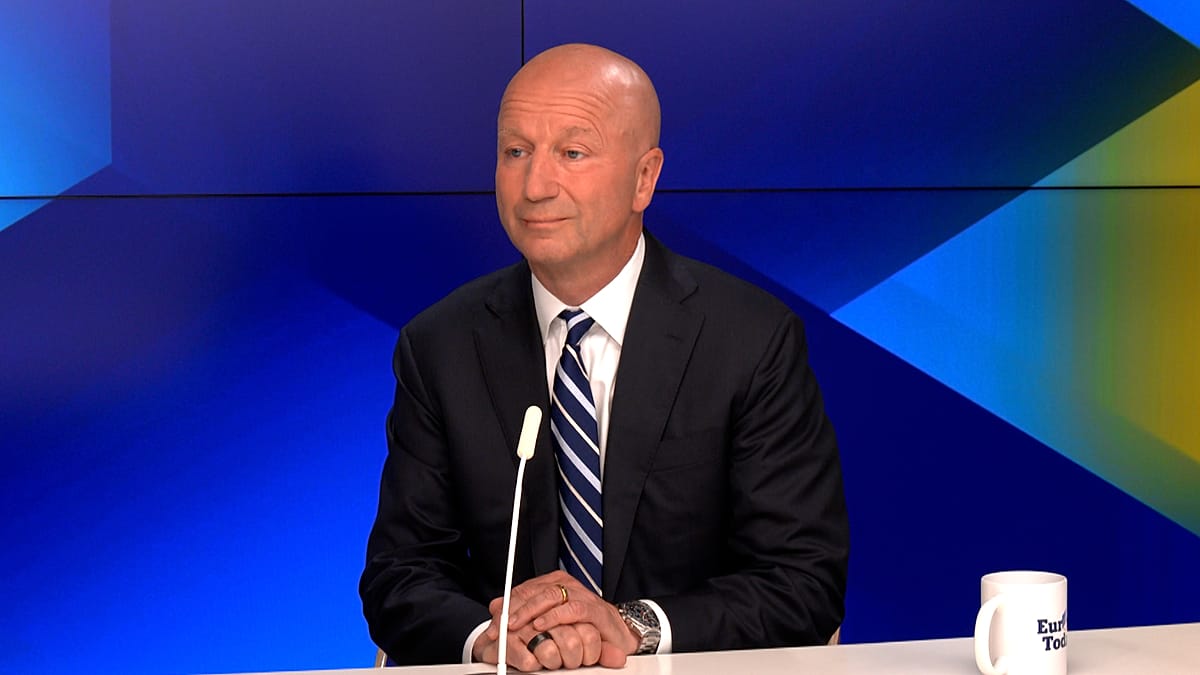
Meanwhile, Lithuanian foreign minister Kęstutis Budrys told Euronews that the constant use of vetoes from Budapest meant the status quo cannot continue unchallenged.
“We have to either review the decision-making process, or the powers of one member state,” he told Euronews’ flagship show Europe Today. “We cannot be disrupted each time by these vetoes. We have to see whether we are really effective at 27.”
The comments signal a growing frustration at Hungary but also lay bare the limits of the European Commission, increasingly concerned about the instrumentalisation of its actions on the campaign trail in Hungary ahead of the April 12 election.
Orbán is running an aggressive campaign portraying the Ukrainian leader Zelenskyy as corrupt and money-grabbing. He also portrays Brussels, embodied by Commission President Ursula von der Leyen, as conspiring with the opposition candidate Péter Magyar, who is often framed as a puppet, to take over Hungary.
Recent polls show Orbán is trailing Magyar in his most serious challenge in decades. The Hungarian prime minister is presenting the pipeline spat as a matter of national sovereignty and has suggested that Brussels and Kyiv want to push energy prices up to hurt Hungarians.
When asked about what a possible compromise could look like, diplomats suggested there is no clear path if the oil flows do not resume as Budapest isn’t budging and has little incentive to do so with a brutal election campaign underway.
“I really don’t know,” said one diplomat, even as the EU insists both the sanctions and the loan will go ahead. A separate diplomat suggested that the energy question is serious for Hungary, but it’s also being used as political tool to bolster Orbán’s election narrative.
“It’s not the first time Hungary does this. Veto in the name of something entirely separate. The loan is collateral damage,” the diplomat added.
Meanwhile, the focus is turning to the Commission.
The Hungarians, a diplomat argued, inflicted maximum damage to the EU’s unity in a highly choreographed move, building the tension over the weekend and striking down an agreement approved by leaders just hours before von der Leyen arrived in Ukraine.
The question is whether the last-minute tribulations could have been avoided had the Commission intervened sooner, with a meeting of an oil coordination group only called last week as Budapest escalated its rhetoric and the informal deadline to approve a fresh sanctions package by February 24, coinciding with the grim anniversary, began to trickle.
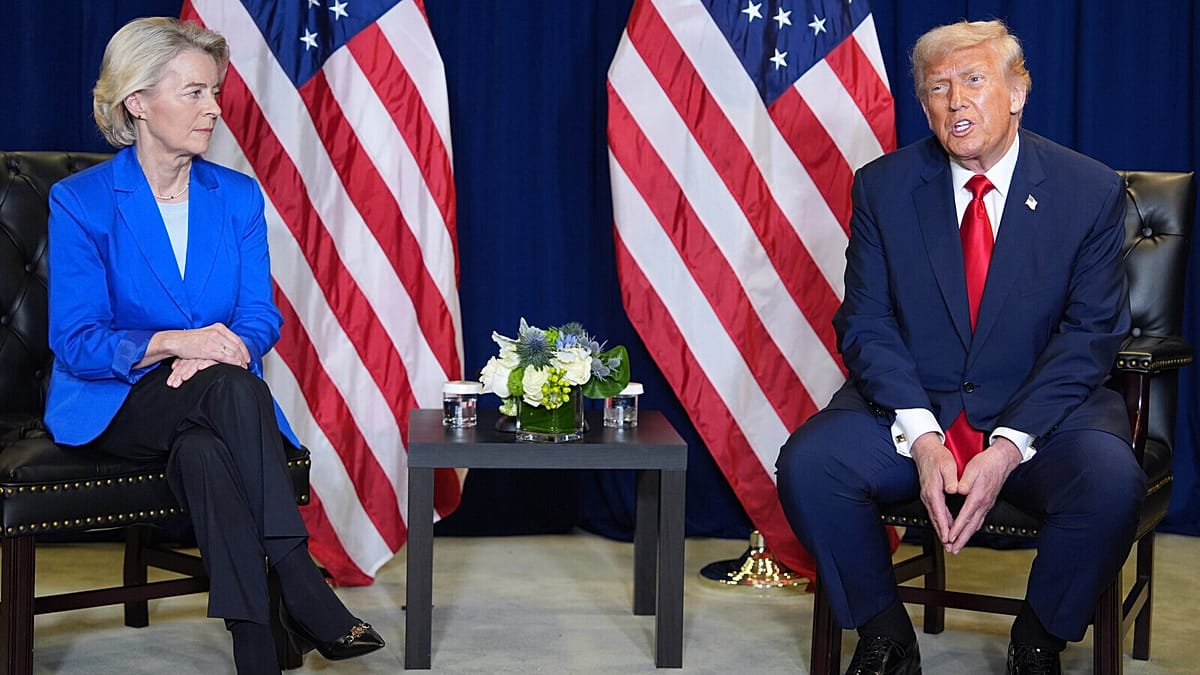
From Kyiv, Ursula von der Leyen suggested Brussels has “options and will use them” to get the package through the finish one way or another.