


Published on •Updated
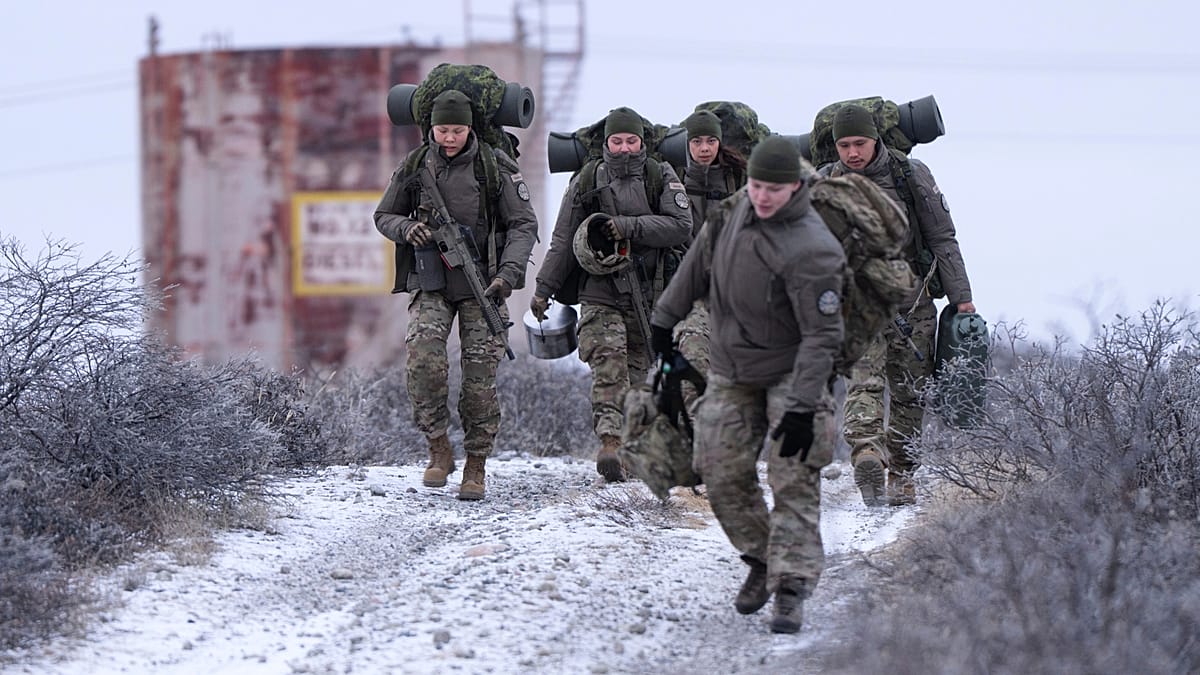
Denmark and its allies reportedly deployed troops to Greenland in January because they feared a US invasion, Danish broadcaster DR said on Thursday.
ADVERTISEMENT

ADVERTISEMENT
DR said it had seen a military operations order dated 13 January, which served as the basis for the deployment of Danish forces in the autonomous Danish territory as tensions spiked over US President Donald Trump’s bid to annex it.
The document described an operation organising the defence of Greenland, immediately after the US operation in Venezuela to oust President Nicolás Maduro.
“When Trump says all the time that he wants to buy Greenland, and then we see what happens in Venezuela, we had to take all possible scenarios seriously,” a Danish military official speaking on condition of anonymity told DR.
“The official machinery of the United States is not working the way it used to,” the official added.
In January, several EU nations, including France, Germany, Sweden, the Netherlands, and others, sent troops to Greenland under a Danish-led NATO exercise dubbed “Arctic Endurance”. It was a real deployment and not an exercise, another military source told DR.
“There was no possible ambiguity,” he said. The troops were deployed with blood for transfusions and explosives, the source said to back up the claim it was not an exercise.
Neither the Danish military nor government, nor the Greenlandic government, have commented on the report.
Trump has repeatedly said he believes the US must control Greenland to ensure its national security, and long refused to rule out the use of military force to get it.
Like the US, Denmark is a founding member of NATO.
After several intense weeks of aggressive remarks that plunged the alliance into its deepest crisis in years, Trump backed down from his threats on 21 January, announcing that he had reached a “framework” agreement on Greenland with NATO’s secretary general, the details of which remain vague.
In the weeks that followed, NATO launched its Arctic Sentry mission to beef up security in the region, in which Danish and US forces are participating, among others.
Denmark is heading towards an early general election next week, called by Prime Minister Mette Frederiksen last month.
Polls show that Frederiksen benefited from a “Greenland bounce”, with her party seeing an increase in support for their handling of the crisis surrounding Trump’s threats.
Frederiksen’s Social Democrats, in power since 2019 and currently leading a left-right coalition, top public opinion polls with around 21% of votes, though that is six points lower than their 2022 election score.
Additional sources • AFP


