



Close Menu
Times Network New Zealand
  • Home
  • Local News
  • World
  • Business
  • Lifetyle
  • Entertainment
  • Technology
  • Travel
  • Food
  • Editor’s Choice
  • Press Release
What's On
EU vows to stand firm on Russia as UK scrambles to explain sanctions decision

EU vows to stand firm on Russia as UK scrambles to explain sanctions decision

May 22, 2026
Cancer, oncogenic viruses found in wastewater: ‘Possible breakthrough for prevention’

Cancer, oncogenic viruses found in wastewater: ‘Possible breakthrough for prevention’

May 22, 2026
NATO ministers meet as US plans to pull away from European security

NATO ministers meet as US plans to pull away from European security

May 22, 2026
The EU simplified its toughest AI law: what changed and why it matters

The EU simplified its toughest AI law: what changed and why it matters

May 22, 2026
Watch: tough love and record-low polls—inside the Friedrich Merz disaster

Watch: tough love and record-low polls—inside the Friedrich Merz disaster

May 22, 2026
Facebook X (Twitter) Instagram
Web Stories
Facebook X (Twitter) Instagram
Times Network New Zealand
Subscribe
  • Home
  • Local News
  • World
  • Business
  • Lifetyle
  • Entertainment
  • Technology
  • Travel
  • Food
  • Editor’s Choice
  • Press Release
Times Network New Zealand
Home » Cancer, oncogenic viruses found in wastewater: ‘Possible breakthrough for prevention’
World

Cancer, oncogenic viruses found in wastewater: ‘Possible breakthrough for prevention’

By Press RoomMay 22, 20263 Mins Read
Cancer, oncogenic viruses found in wastewater: ‘Possible breakthrough for prevention’
Share
Facebook Twitter LinkedIn Pinterest Email

For the first time, researchers have managed to detect and track in wastewater all the main viruses associated with the development of tumours. A discovery that could open up new prospects for prevention, health surveillance and monitoring of oncogenic infections in the population.

ADVERTISEMENT


ADVERTISEMENT

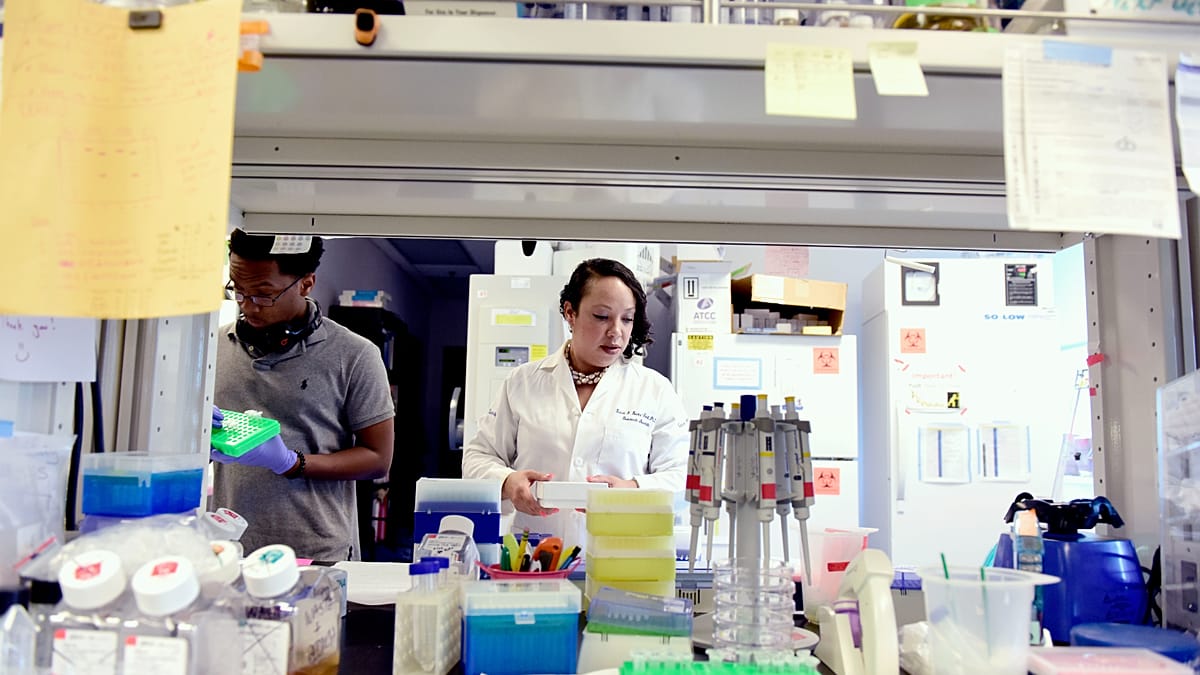
The study, coordinated by Anthony Maresso and Justin Clark of the Baylor College of Medicine and published in the journal Applied and Environmental Microbiology, was carried out in collaboration with the University of Texas Health Science Center at Houston.

The researchers analysed wastewater samples collected between May 2022 and May 2025 at more than 40 sites across 16 cities in Texas, covering around a quarter of the state’s population. For the analysis they used an advanced genetic sequencing technology known as “hybrid-capture”, capable of identifying simultaneously more than 3,000 known human viruses and new possible mutations through a single test.

According to the authors of the study, oncogenic viruses may be responsible for around one in five cancers worldwide. Among the best known are human papillomavirus (HPV), associated with cervical and throat cancers, and hepatitis B and C viruses, linked to liver carcinoma.

“Oncogenic viruses can cause around one in five cancers globally,” explained Anthony Maresso, professor of molecular virology and microbiology. “Since these infections often remain asymptomatic for years or even decades, many people do not realise they are infected until the tumour develops. This makes it very difficult to implement early preventive interventions.”

The analysis of wastewater detected all the main oncogenic viruses known to date, including HPV, hepatitis B and C viruses, cancer-associated polyomaviruses, Epstein-Barr virus and the herpesvirus linked to Kaposi’s sarcoma.

The researchers also observed a significant increase in the presence of several oncogenic viruses over the three years of monitoring. In particular, HPV, Epstein-Barr virus and some polyomaviruses showed marked rises after 2024.

According to the team, the causes of this increase are not yet clear, but could be related to the resumption of travel, more frequent interpersonal contact and the end of the distancing measures introduced during the Covid-19 pandemic.

Particular attention was paid to human papillomavirus. “There are hundreds of HPV types, but only some are considered to be high oncogenic risk,” explained Justin Clark. “HPV-16 and HPV-18 together cause more than 70% of cervical cancers worldwide.”

The study showed that low-risk HPV variants were more widespread, but high-risk variants also recorded a significant increase between late 2024 and early 2025. HPV-16 was consistently more common than HPV-18, in line with previous international clinical studies.

Another important finding concerns the Gardasil 9 vaccine: all nine HPV types targeted by the jab were detected in wastewater. According to the authors, this could in future allow environmental monitoring to be used to assess the effectiveness of vaccination campaigns in the real population.

“Our study shows that tumour-associated viruses can be monitored through wastewater,” Maresso concluded. “This opens up new opportunities to better understand the relationship between these viruses and the human population and to develop more effective public health strategies.”


Share. Facebook Twitter Pinterest LinkedIn Tumblr Email

Keep Reading

EU vows to stand firm on Russia as UK scrambles to explain sanctions decision

EU vows to stand firm on Russia as UK scrambles to explain sanctions decision

NATO ministers meet as US plans to pull away from European security

NATO ministers meet as US plans to pull away from European security

The EU simplified its toughest AI law: what changed and why it matters

The EU simplified its toughest AI law: what changed and why it matters

Watch: tough love and record-low polls—inside the Friedrich Merz disaster

Watch: tough love and record-low polls—inside the Friedrich Merz disaster

Baltics must adapt to drone incursions because more will come, Lithuanian defence minister warns

Baltics must adapt to drone incursions because more will come, Lithuanian defence minister warns

Paris nursery abuse probe expands as 16 staff held over extended custody

Paris nursery abuse probe expands as 16 staff held over extended custody

Technological sovereignty is not about isolation, EU digital chief says

Technological sovereignty is not about isolation, EU digital chief says

Air France and Airbus convicted of manslaughter in 2009 Rio-Paris crash over Atlantic

Air France and Airbus convicted of manslaughter in 2009 Rio-Paris crash over Atlantic

Mother arrested after two French boys found abandoned in Portugal, police say

Mother arrested after two French boys found abandoned in Portugal, police say

Editors Picks
Cancer, oncogenic viruses found in wastewater: ‘Possible breakthrough for prevention’

Cancer, oncogenic viruses found in wastewater: ‘Possible breakthrough for prevention’

May 22, 2026
NATO ministers meet as US plans to pull away from European security

NATO ministers meet as US plans to pull away from European security

May 22, 2026
The EU simplified its toughest AI law: what changed and why it matters

The EU simplified its toughest AI law: what changed and why it matters

May 22, 2026
Watch: tough love and record-low polls—inside the Friedrich Merz disaster

Watch: tough love and record-low polls—inside the Friedrich Merz disaster

May 22, 2026
Latest News
EU vows to stand firm on Russia as UK scrambles to explain sanctions decision

EU vows to stand firm on Russia as UK scrambles to explain sanctions decision

May 22, 2026
Cancer, oncogenic viruses found in wastewater: ‘Possible breakthrough for prevention’

Cancer, oncogenic viruses found in wastewater: ‘Possible breakthrough for prevention’

May 22, 2026
NATO ministers meet as US plans to pull away from European security

NATO ministers meet as US plans to pull away from European security

May 22, 2026
Facebook X (Twitter) Pinterest TikTok Instagram
© 2026 Times Network New Zealand. All Rights Reserved.
  • Privacy Policy
  • Terms
  • Advertise
  • Contact

Type above and press Enter to search. Press Esc to cancel.