



It’s a long and winding road to 2050.
ADVERTISEMENT

ADVERTISEMENT
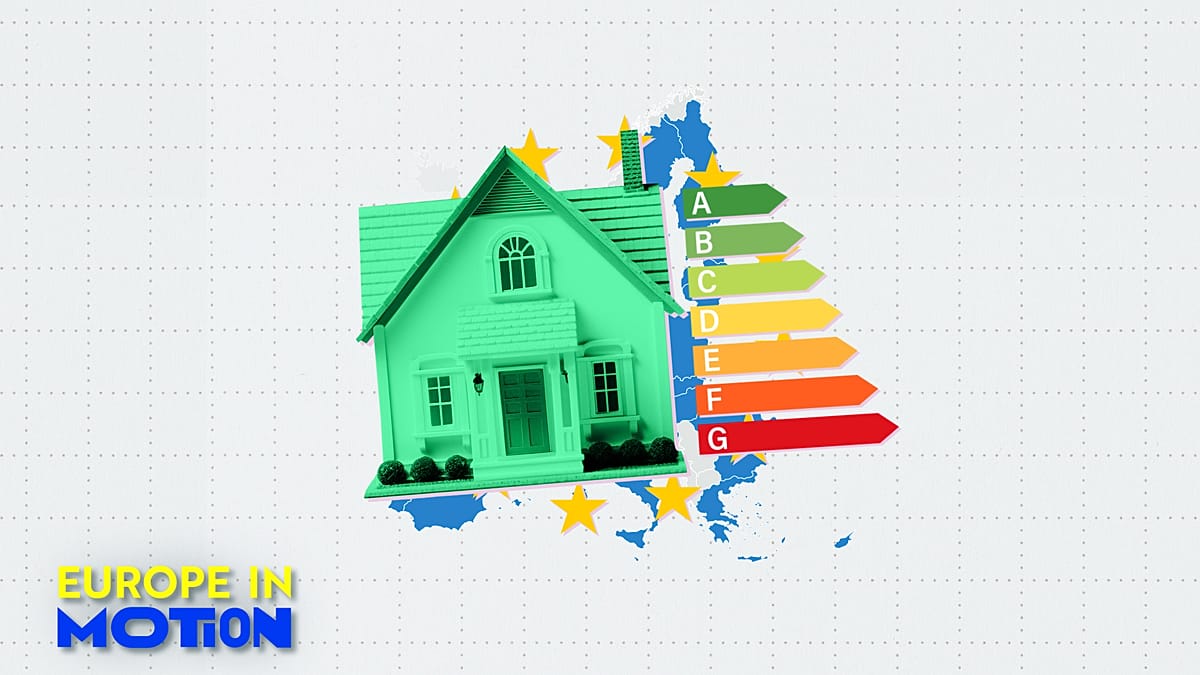
Last week, the EU launched an infringement procedure against all members for failing to fully transpose the Energy Performance of Buildings Directive (EPBD), also called the Green Homes Directive, into law. The deadline to do so was 29 May 2026.
Brussels planned to put the bloc on a common trajectory towards net-zero emissions by the first half of the century with a mandatory modernisation of buildings, Europe’s largest energy consumer.
The opening of the infringement procedure, which means that each member state has been sent a letter of formal warning to complete the transposition, doesn’t mean that Europe isn’t progressing on that front.
In fact, many buildings are becoming more energy-efficient, even though not as fast as Brussels may like.
Today, around one in four EU citizens lives in greener complexes than six years ago, according to Eurostat, but the speed of action varies widely across the bloc.
The highest rate was reported in the Netherlands, with 60.5%, followed by Denmark (34%), France (33%), and Slovenia (33%), with about a third each.
The figures represent a massive gap with Italy, which comes in last place for the speed of its renovation, with only 3% of buildings classified as more efficient compared to 2018.
Malta (8%) and Greece (9.5%) are not much further ahead, with less than 10% of their buildings being greener.
Making buildings more energy-efficient means, for example, improving roof and window insulation to reduce energy consumption. However, the EU aims to phase out incentives and subsidies for old gas and fossil fuel boilers in favour of heat pumps and solar panels.
Yet the plans have faced criticism, as many member states say it’s too expensive to implement the changes within such a short timeframe.
“It’s not a question of agreeing or not with the EU, but rather of numbers”, said Gilberto Pichetto Fratin, Italy’s environment and energy security minister. “How can we intervene by 2033 and make a couple of pensioners spend €50,000 to bring their home to energy class B?”
Criticism also came from Germany’s former housing minister, Klara Geywitz, from the centre-left SPD party, who said it was not right to force people to renovate their buildings or sell their property to comply with energy-efficiency standards.
Eight countries have submitted a National Building Renovation Plan
Nonetheless, even if no country has yet fully transposed the full EU directive into law, something is moving on the renovation front.
Eight member states have already submitted their draft National Building Renovation Plan (NBRP) to the European Commission, marking the first concrete step in implementing the EPBD.
These countries are Belgium, Bulgaria, Croatia, Finland, Lithuania, Romania, Slovenia and Spain.
The NBPRs are meant to set out a detailed renovation roadmap for both residential and non-residential buildings and must include an analysis of the national building stock, as well as targets for 2030, 2040 and 2050, and policies to reach those targets, including an assessment of investment needs.
“Unlike previous strategies, NBRPs follow a common EU-level template, enabling a more consistent assessment of progress across Member States.
However, while the strategies already provided gave a general direction, “they lacked a harmonised structure, common indicators and binding milestones across the Union”, the Commission said.
The deadline to submit the final versions of the plans is 31 December 2026.