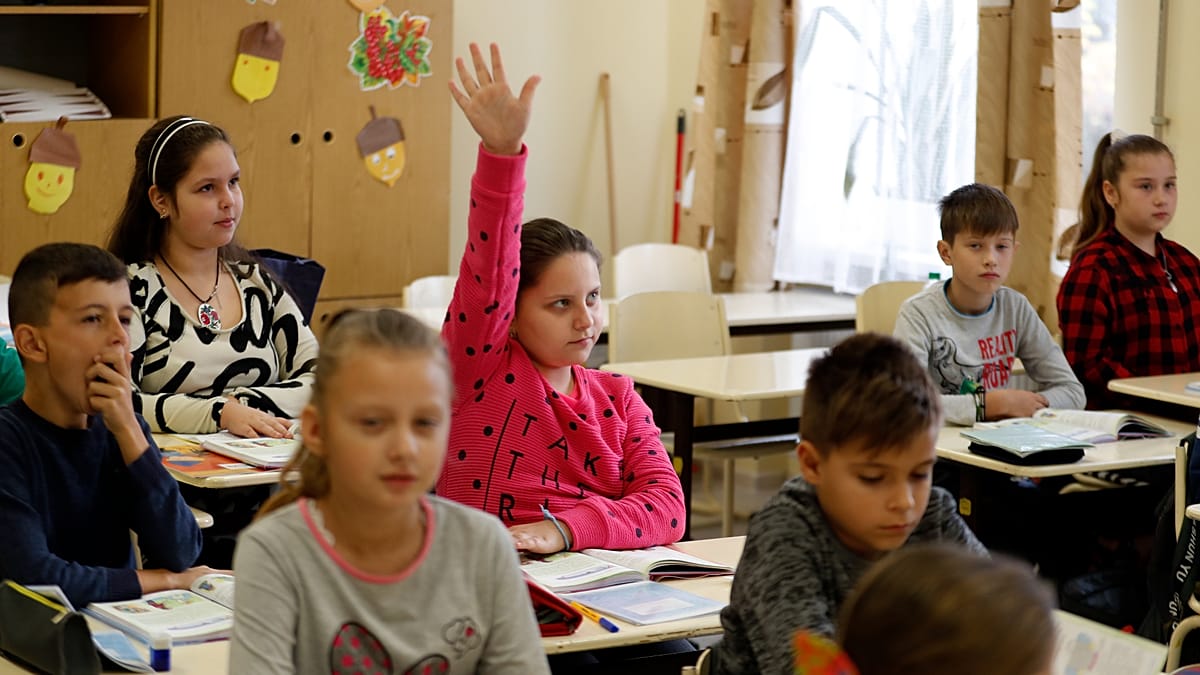

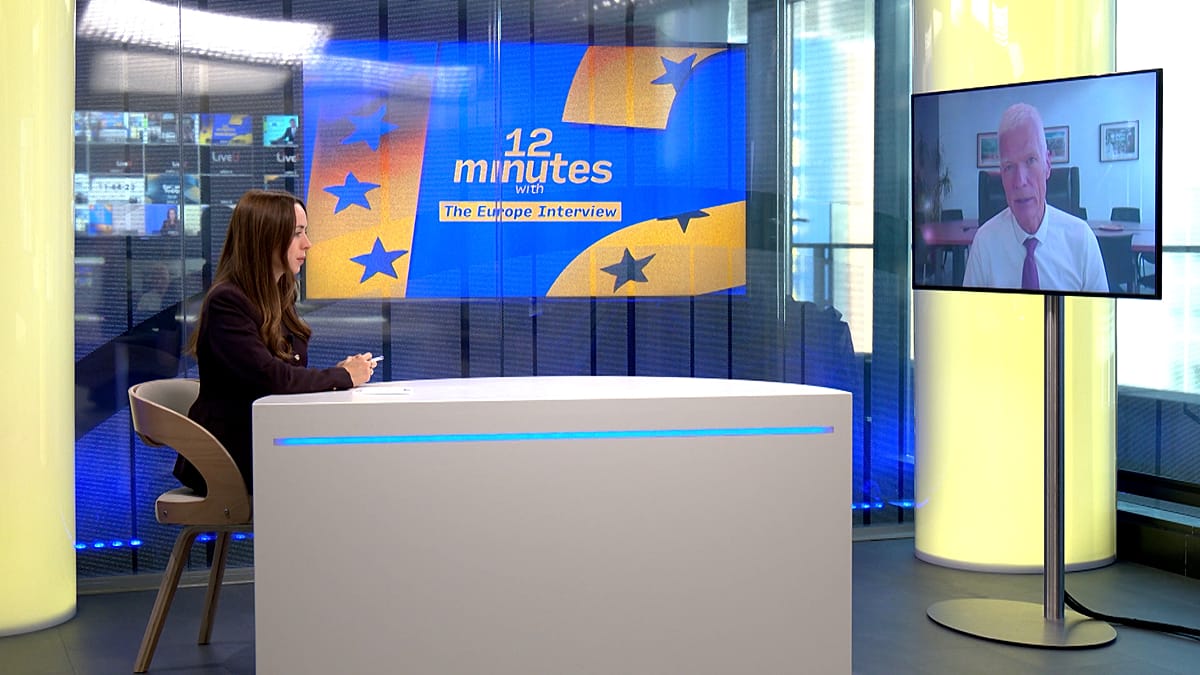

The picture of student performance in Europe is “really concerning”, with a recent report showing young people are losing essential skills that are “particularly important for the times we live in”, Andreas Schleicher, the founder of the OECD’s renowned PISA tests, has told Euronews.
ADVERTISEMENT

ADVERTISEMENT
The results of the 2025 standardised test, taken by 15-year-olds across 91 countries, were released this week, and found that performance in reading and mathematics had reached record lows across OECD countries.
The assessment measures students’ ability to apply reading, mathematics and science skills to real-world problems.
“We see that young people not only have lower literacy skills, but we are seeing a decline in students’ capacity to triangulate and to critically reflect on information, to engage with more complex texts,” said Schleicher, adding that these are essential skills in the world of artificial intelligence (AI).
“This technology is not necessarily accurate and therefore that intuition to check and verify should be really present,” he added.
He also described a vicious cycle in which young people’s use of such tools, which “are not designed to make us think harder”, is further “hollowing out exactly the capabilities that we need”. This was reflected in the PISA results: Students not using AI tend to be higher-performing.
“The bottom line is quite simple: You don’t get fit by watching sports. You get fit by doing sports,” Schleicher said. “And the same is true with learning. Learning doesn’t come through the consumption of content; learning comes by engaging with ideas to compare and contrast. And AI can hollow out that very process. That’s what we observe.”
One factor at play is that the speed at which new technologies such as AI have advanced in many countries outpaces education systems’ ability to reform. “Humans have always been better at inventing new things than using them wisely,” Schleicher said.
However, the OECD assessment also found that guided, active use that forces cognitive friction — for example, challenging AI’s output — translates to better learning outcomes.
“There are really interesting examples of countries where AI is used to make pupils think harder, to make them think about the right questions, to give teachers powerful tools to help students learn better,” Schleicher said, adding that the education system needs to “shift gears away from a consumptive use of AI to a more creative use.”
Small countries stand out
Schleicher has become one of the most influential voices in global education since he created the PISA test during the 1990s.
“We started work on this because, in the 90s, we measured success in education mainly by how much was spent on education and for how many years pupils sat in a classroom, which actually tells us very little” about the skills produced, he explained.
The assessments provide data-driven comparisons of national education systems across the world, and highlight major discrepancies, even within Europe. The latest results show that pupils’ scores in seven EU countries were significantly above the OECD average, while in 13 member states, they were considerably below it.
“The biggest declines were recorded in large European countries, like France, Germany, and Spain. The most interesting solutions were found in the small, dynamic economies,” Schleicher said.
An example is Estonia: Its students ranked first in Europe and in the global top ten in all three domains of the assessment. “It’s a clear example of a country that is engaging with the digital world in a cautious but very thoughtful, very productive way,” Schleicher explained.
Advice for parents and teachers
When looking to the future, Schleicher stressed that the focus should shift away from teaching skills that are easy to digitise, to more human skills such as “ethical decisions” and “our capacity to navigate complex human relationships”.
He noted that students can no longer be “passive consumers” of education, but should become active learners. This raises questions in many parents’ minds after the test results came out: What can they do?
“For parents, the answer is really simple. One of my real concerns is that parental interest in education in Europe has dramatically declined.”
He explained that the solution is less about “doing three hours of homework with your child at the kitchen table” and more about “showing your child that what they are working on in school really matters to you”.
Children whose parents ask them how their school day went, he noted, are two school years ahead in their test results.
Meanwhile, teachers’ job should expand from being a good instructor to being “a great coach, a good mentor, a great facilitator” who takes a “genuine interest in who your students are and who they want to become and to accompany them on that journey”.
However, in a Europe where many countries are suffering from teacher shortages, he stressed that the education system must “give teachers more time and more to play that much more important role.”