Taunted, scorned, belittled, pushed aside, ditched – it is fair to say that the European Union and Canada each know how the other feels.
ADVERTISEMENT

ADVERTISEMENT
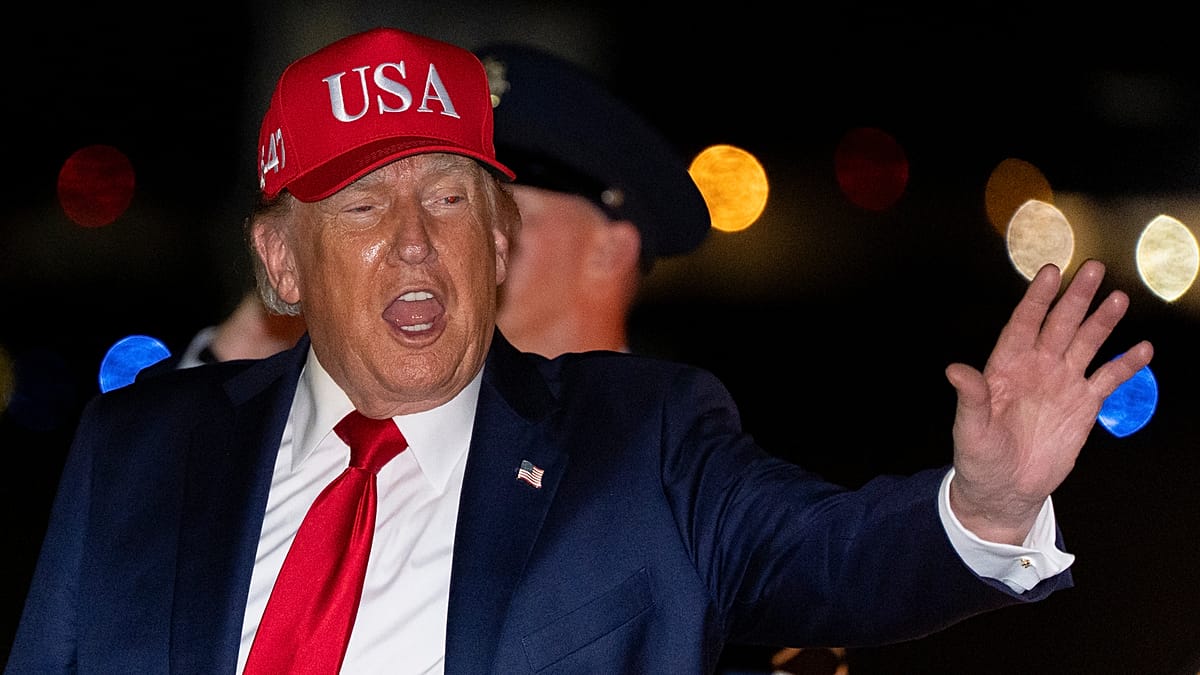
For the past 20 months, the two have been relentlessly subjected to Donald Trump’s threats, demands and commands. Their experiences have been nearly identical: punitive tariffs, annexationist attempts, regulatory intrusion, bitter recriminations, all amplified in scathing personal attacks splashed all over social media.
The breakup has been painful, to say the least. After all, both the EU and Canada have long defined the United States as their closest ally, their main security provider, their trade partner of choice. But Trump’s return to the White House abruptly overturned these long-held assumptions, forcing them to reckon with their place in a cruel, cold world.
This week, they found solace in each other’s arms. In back-to-back highly publicised speeches, the EU and Canada brought their courtship into a full-fledged, out-in-the-open romance.
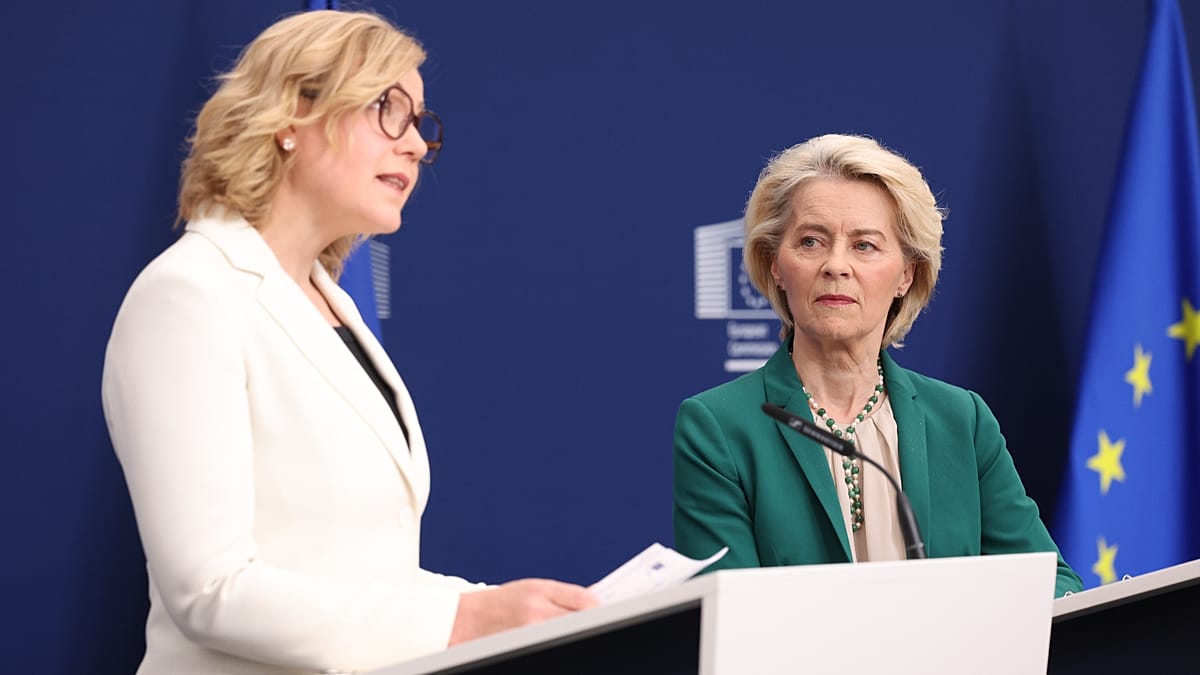
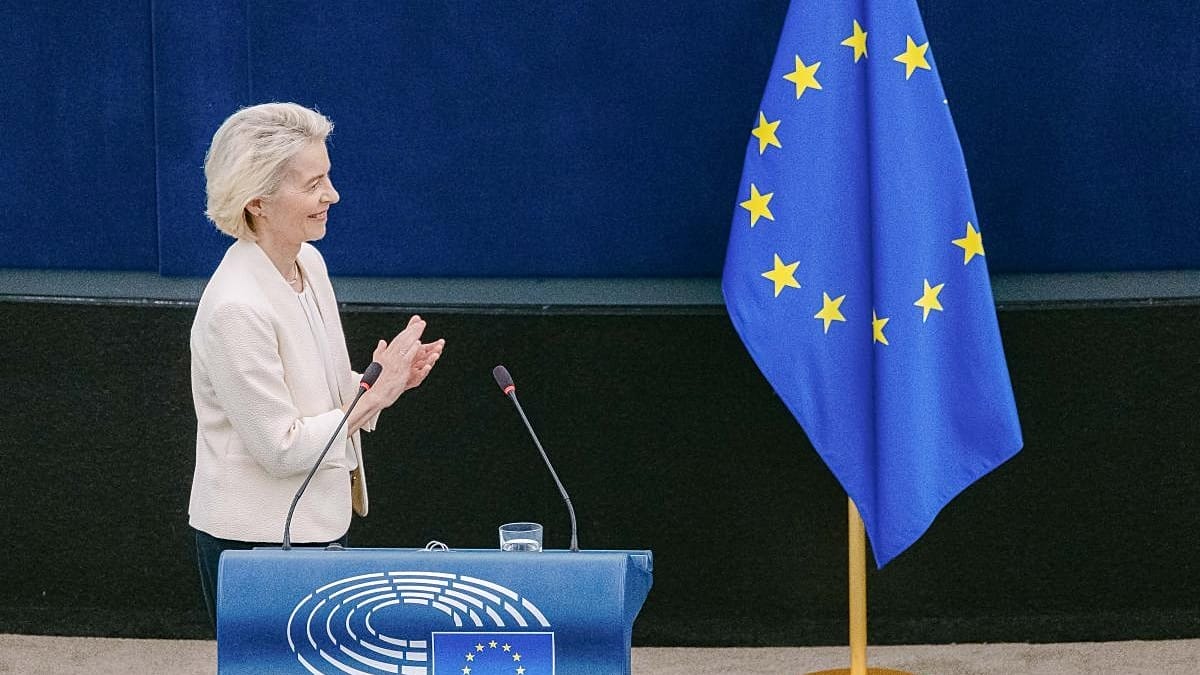
Ursula von der Leyen made the first move during her State of the Union address, inviting Canada to make history by becoming the bloc’s first-ever “associate member” – a brand new legal status devised to accommodate Ottawa.
“We believe that power does not belong to the strongest, the richest or the loudest, but to all of us,” the European Commission president said, in a thinly veiled swipe at Trump.
“This is a partnership not against anyone else, but for our common strength,” she went on. “We want to bring the relationship with Canada to the highest level possible.”
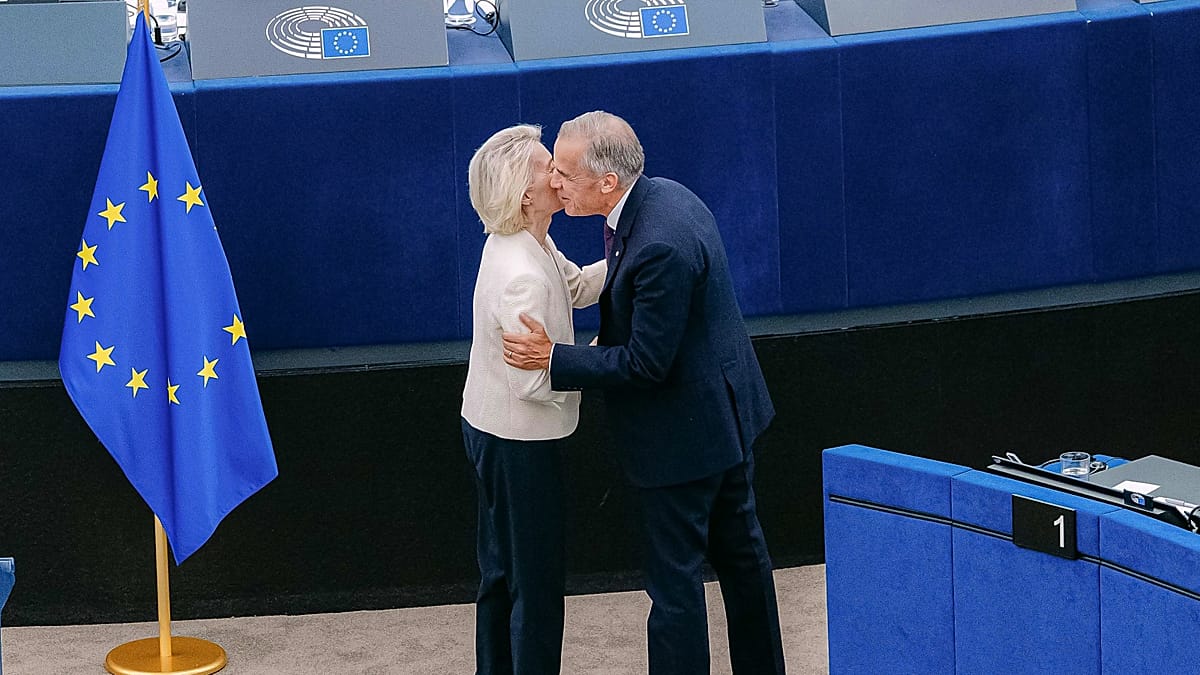
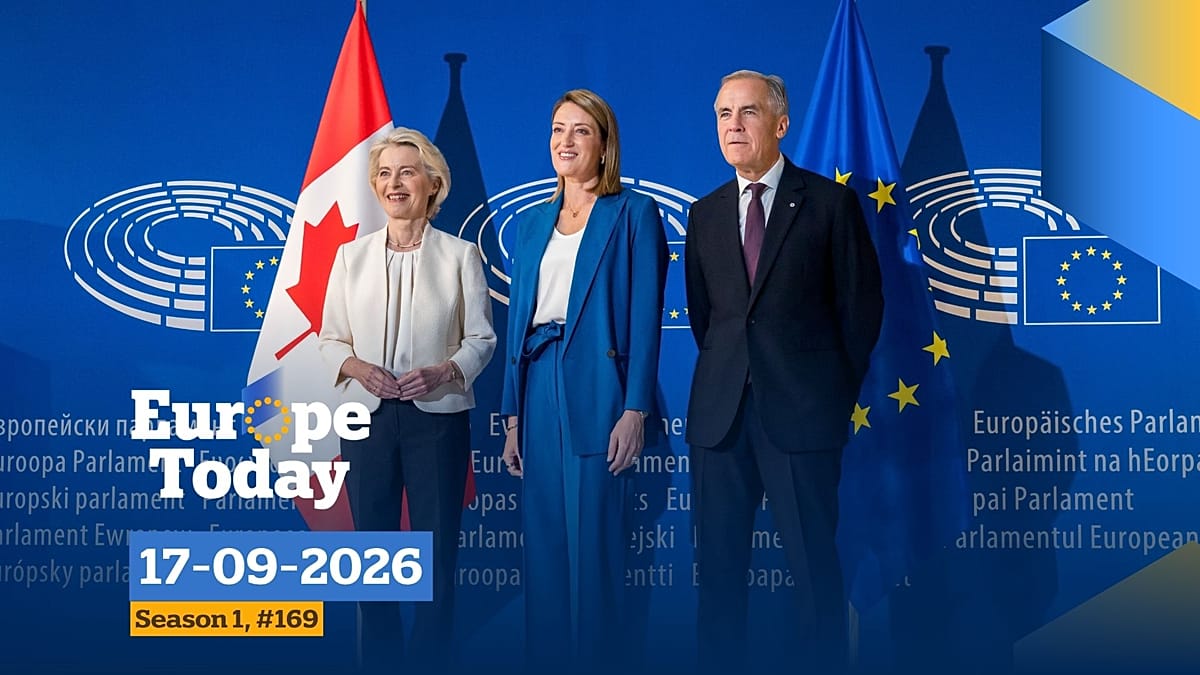
The announcement, which was not included in the embargoed speech sent in advance to the press, was met with thunderous applause inside the European Parliament. Smiling in the audience, Canadian Prime Minister Mark Carney got up to kiss von der Leyen on the cheek.
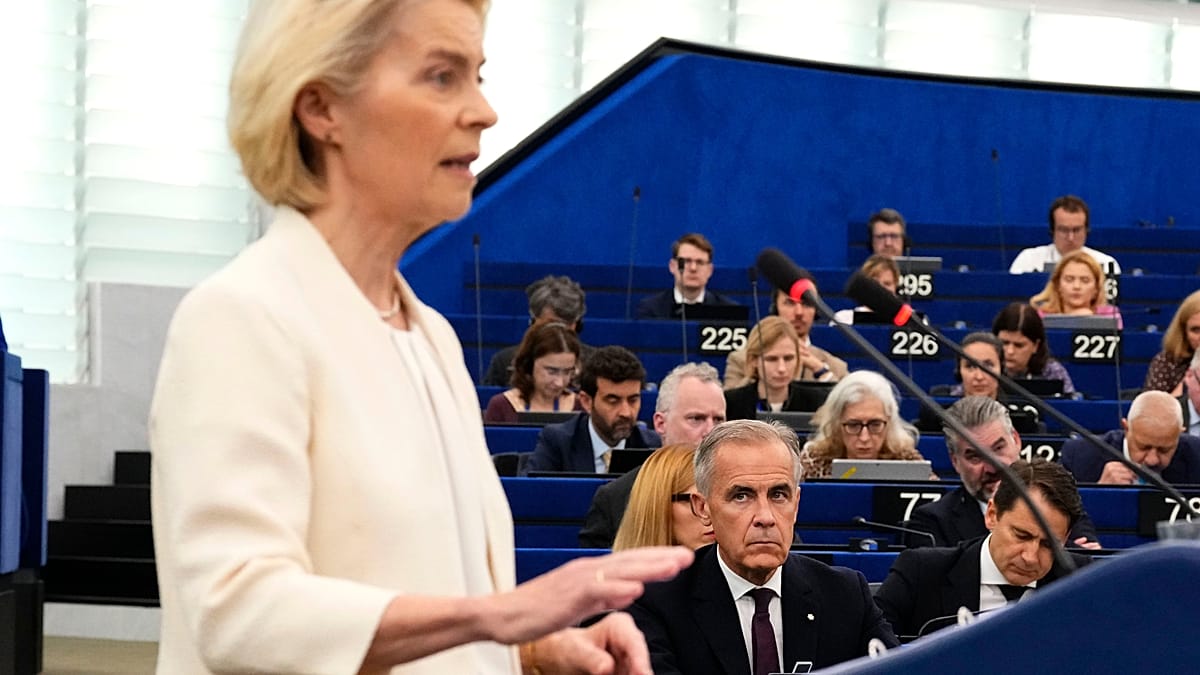
The following day, she took a seat as he addressed the same audience himself.
“Europe and Canada are stronger together,” Carney declared to more applause. “Let us now deepen these roots, widen this canopy and grow a transatlantic forest under which our citizens can flourish as free people on free ground.”
The grand statements sent Europe’s Canada fever into overdrive. Lawmakers in Strasbourg lined up to take selfies with Carney. The leader of the Greens, Terry Reintke, donned a Canada jersey for his speech; Spanish Prime Minister Pedro Sánchez tweeted a European flag with a maple leaf next to the 12 stars, while French Foreign Minister Jean-Noël Barrot said the EU and Canada were “destined” to closer bonds.
Roberta Metsola, the European Parliament president, went further and name-checked Australia and New Zealand as next in line to be the bloc’s “associate members”.
“I don’t doubt that it will include other countries, and others will come knocking at our door,” Metsola told Euronews. “In such times of uncertainty, having friends matters.”
The other side was no less enthusiastic: a poll conducted ahead of Carney’s trip showed that 56% of Canadians think they have more in common with the EU, which is one ocean away, than with the US, with which they share an 8,891 km land border.
Beyond the love, anxiety
Brussels and Ottawa have framed their fascination as self-evident.
The two see themselves as equally committed to liberal democracy, the rule of law and open markets, making them, on paper, a perfectly compatible match.
In their speeches, von der Leyen and Carney spare no effort in listing the multiple areas of cooperation in which the EU and Canada can thrive together: trade, energy, critical raw materials, batteries, AI, quantum, finance, defence, space, the Arctic.
Carney touted a scheme to grant young people freedom of movement to “live, work and study where they want on either side of the Atlantic”, while von der Leyen spoke of a “common prosperity and economic security space”.
It is not by coincidence that these are areas where cooperation with the US has become increasingly difficult, at times prohibitive, under Trump, with whom Carney is currently embroiled in a trade war that could wreck key sectors of the Canadian economy.
They did, however, disagree on semantics.
Von der Leyen went all in on the headline-making “associate member” title, despite lacking legal precedent and raising more questions than answers. It was not clear how, or if, the Commission chief had consulted with capitals before her pitch.
Carney, meanwhile, opted for “alliance for the future”, a less charged term. For the premier, “associate membership” carries the connotation of ceding sovereignty to Brussels, something he stressed would not be the case under any circumstance.
“The precise nomenclature is a question for Europe,” he said.
Beyond that hiccup, the two stayed very much on the same script, sometimes using the same words to lavish praise on each other.
But underneath the smiles, the hugs and the adulation lay a creeping anxiety about what the future holds.
The EU and Canada are today trapped between adversarial forces – Trump’s “America first” agenda, China’s unfair competition, Russia’s aggression – that risk undoing their wealth and plunging them into a spiral of stagnation. They can only watch as the global norms they seek to uphold are weakened from within.
Their friendship is therefore as much about thriving as it is about surviving.
Trump, in particular, has proven a powerful push factor forcing them closer together. His penchant for disruption has made the blossoming partnership feel almost inevitable.
The US president was quick to take note of the love fest and threatened to impose “very serious tariffs” if the “associate membership” were perceived as a “hostile act”.
Carney insisted the EU-Canada alliance was a “positive initiative” and “not a reaction to something else”. But in his speech, he implicitly chided Trump when he said Canada was not a “fair-weather” ally that pursues “zero-sum deals”.
Penny Naas, the director of the Brussels office at the German Marshall Fund, believes the newfound EU-Canada affinity is but a “natural outgrowth” of the past 20 months.
“The US is moving away from anchoring and leading its traditional alliance of democratic countries. This is clearly motivating the look for new partners in an uncertain world,” Naas told Euronews.
“Trade status and regulatory alignment are no longer background conditions for prosperity. They are the terrain on which power is being contested directly,” she added.
“Any EU-Canada architecture will be judged, and attacked, on those terms from the start.”