

Published on •Updated
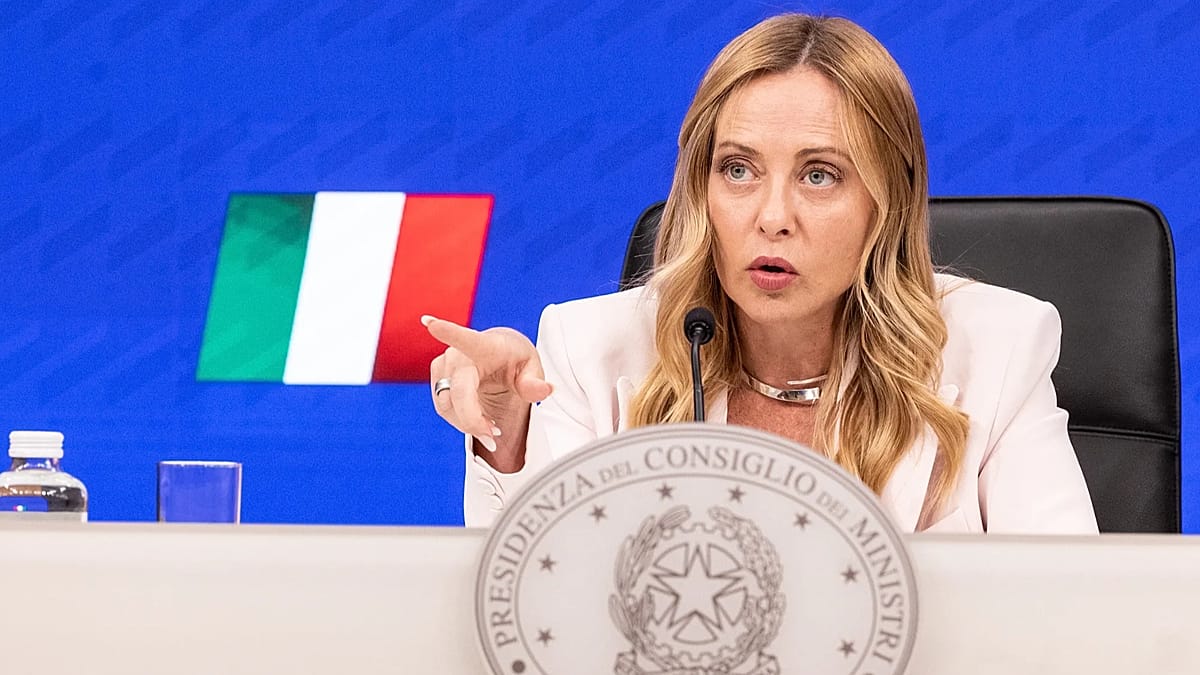
Italian Prime Minister Giorgia Meloni is urging Brussels once again to give capitals more room to cushion households and companies from the latest energy-price shock, arguing that European Union fiscal rules are becoming increasingly restrictive as inflation drives up government spending.
ADVERTISEMENT

ADVERTISEMENT
In a letter addressed to European Commission President Ursula von der Leyen, seen by Euronews, Meloni said the prolonged Middle East crisis has left European energy markets “extremely tight,” with oil prices up almost 80% and gas up to 156%.
“Against this backdrop, the agreed net expenditure paths under the European fiscal framework leave limited room to alleviate the impact on households and firms without resorting to tightening measures at a time of significant downside risks for the economy,” Meloni added.
Italy, which is heading to polls next year, holds one of the highest debt-to-GDP ratios in the EU, trailing only Greece, which has recently sought a similar appeal to relax fiscal rules with the Commission.
The Italian leader argues that governments are collecting more tax revenue because prices are higher, but EU fiscal rules make it difficult to recycle that windfall into temporary energy support.
Higher inflation automatically increases indirect tax receipts such as VAT, but using that additional revenue to finance measures that reduce energy costs can count as discretionary fiscal action and run into limits imposed by agreed national spending paths, Meloni noted.
As a solution, the Italian leader is asking Brussels to recognise that some of the additional spending is not the result of governments choosing to spend more, but of inflation mechanically increasing existing obligations.
Meloni wants the Commission to find a way to allow at least part of those additional revenues to be used for “temporary and targeted measures” to reduce the impact of high energy prices — an approach that has been repeatedly recommended by EU officials.
EU budget rules put a limit on how much governments can increase spending, based on the amounts agreed in their budget plans. But when inflation rises more than expected, some government costs automatically go up — such as pensions linked to the cost of living — leaving governments with less room to absorb those extra costs.
The EU’s fiscal framework sets national spending limits in nominal terms, meaning governments cannot simply raise expenditure when inflation comes in significantly above initial forecasts. At the same time, some areas of public spending automatically increase as prices rise.
Meloni said that spending directly affected by inflation exceeding the assumptions underpinning Italy’s budget plan amounts to 20.4% of GDP, while a further 12% of GDP in other expenditure is also expected to come under pressure in 2027.
“We are mindful of the risk of amending newly introduced fiscal rules that pursue a goal we all share, debt sustainability. We are also fully mindful of Italy’s commitments under the ongoing excessive deficit procedure and of the need to comply with the corrective net expenditure path,” reads the letter.
Meloni called for the issue to be discussed at the upcoming meeting of finance ministers in Brussels on 9 October.