

Co-legislators struck a deal on 15 June to update air passenger rights. The Parliament approved it on 7 July (646 to 12), and the Council on 13 July.
ADVERTISEMENT

ADVERTISEMENT
The Commission first proposed updating the rules in 2013, but negotiations failed due to differing views among co-legislators over the level of protection.
In June, the Parliament effectively won the battle by rejecting the Council’s attempt to water down protections. It kept most rights for flight disruptions while securing clearer reimbursement procedures, greater price transparency and a ban of no-show flights.
While airlines’ representatives consider it a missed opportunity, MEP Andrey Novakov of the European People’s Party and rapporteur on air passenger rights in the Parliament, said:
“We changed not only the rights, but the way we implement them. From having an improvement on paper, to receiving compensation in your pocket, we provide a procedure which is made to facilitate passengers to get compensation”.
Why the new rules?
Since 2004, Regulation EC 261 has protected air travellers. On paper, it guarantees strong rights. In practice, it has failed to deliver.
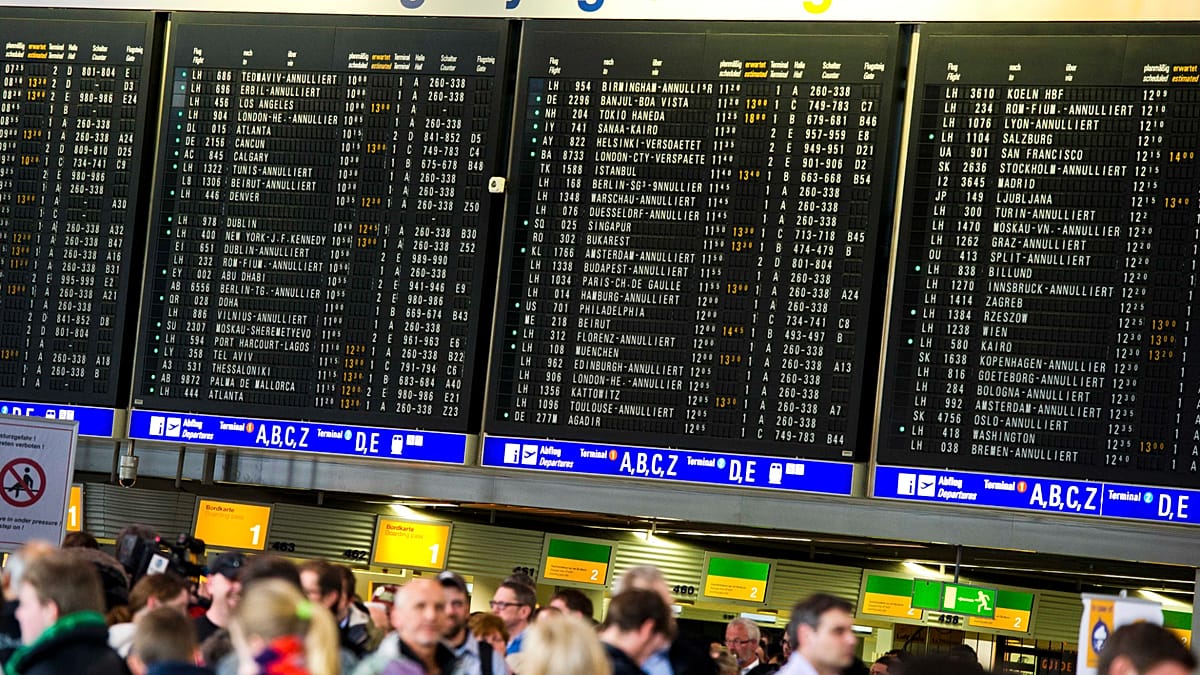
Passengers struggle to use their protections under the regulation. Current rules do not proactively inform travellers of their rights or provide automatic compensation. Passengers have to navigate complex claim procedures on their own, often without knowing how. Long waiting times and confusing airline websites discourage them from seeking payouts.
79 per cent of passengers don’t know their rights, a survey by the claim agency AirHelp found. The European Consumer Association (BEUC) reports that only 38 per cent of passengers eligible for compensation exercise their rights, while 22 per cent ultimately benefit from them.
“Airlines are sitting on approximately €3.2 billion of unpaid compensation for delays. This is money that could have been claimed, but was not, either because people are unaware or the procedure is difficult. This shows that enforcement is still a real challenge”, explained Kristína Gírethová, Aviation and Rail Policy Officer at BEUC.
Airlines can refuse compensation only in extraordinary circumstances, such as severe weather or air traffic issues, but have exploited the term’s vagueness to avoid compensation. National Enforcement Bodies (NEBs) should intervene in these cases, but inconsistent enforcement leaves many passengers on their own.
Pressure for new rules has grown over the past decade as delays kept outpacing traffic growth. The International Air Transport Association (IATA) reports that between 2015 and 2025, Europe recorded 11.5 per cent growth in flight traffic, while delays rose by 82.7 per cent, costing airlines and passengers around €17.5 billion.
Old rights remained untouched
MEPs pushed through their key point: passengers will continue to receive compensation if a flight is delayed by at least three hours, cancelled less than 14 days before departure, or for denied boarding. Reimbursement or rerouting for cancellations also survived.
Compensation for delays remains at current levels and depends on the flight distance: €250 for journeys up to 1,500 km, €400 for journeys between 1,500 km and 3,500 km, and €600 for all other longer journeys.
While the amount remains unchanged, “we now make it accessible. This is cash in the hands of those entitled to get compensation […] this is now a cost for the airlines. They must pay what they avoided somehow in the past”, explained Novakov.
Rules also clarify the right to refreshments every two hours of waiting time during disruptions, a meal after three hours, and an overnight stay of up to three nights for long delays. Passengers can ask for reimbursement if the airline fails to provide assistance.
New protections
“Currently, passengers are a product […] Now, we made them human. It’s all about the passengers and the way they travel, with dignity”, Novakov told Euronews. “The regulation is not against the interest of the airlines”, he added, as MEPs “listened to their needs”.
For Gírethová the deal is a win for consumers. “We codified existing case law into hard law because many of these rules were part of the judges’ decisions, but now it has made its way into the regulation”.
Passengers must now receive clear information about their rights for disruptions and the cause. Airlines must electronically inform passengers within four days on how to request compensation, provide standardised EU-wide forms or their own forms, and allow a 9-month window to claim electronically or by post. Airlines have 30 days to pay, justify rejection, or invoke extraordinary circumstances, and guide passengers through complaint procedures.
While MEPs originally asked for pre-filled compensation forms, Novakov said that standardised forms “was the only possible [agreement], which is a clear improvement from the status quo. We shift the responsibility to the airlines, to deal with bureaucracy, emails, and forms”.
Passengers booking through third parties must get a full refund within 7 days, including intermediary fees, for flight cancellations. Extra fees for correcting name errors or for requesting printed boarding passes after digital check-in are banned. Passengers can get a digital boarding pass without an account and don’t need to pay for the return flight if they skip the outbound.
People with reduced mobility (PRM) receive compensation, rerouting, and assistance from airlines if they miss a flight due to airport service or infrastructure. Children under 14, pregnant women and PRM must sit next to their accompanying persons for free.
New obligations for airlines
The EU paid “insufficient attention to some of the structural causes. More attention is needed at national and EU levels on improving European air traffic management that is a key reason for delays”, Neva Sadikoglu-Novaky, Director of EU Affairs and Head of EU Affairs at IATA said.
For airlines, the deal is not just a consumer-rights update but an operational and procedural reset that requires costly adjustments. “The overall cost of EU261 is already estimated at around €8 billion per year, and this financial burden will keep increasing”, Sadikoglu-Novaky explained.
Airlines can still avoid paying compensation when flight disruptions are beyond their control. The new rules provide an open list of “extraordinary circumstances”, but airlines must prove them and clearly explain why they reject claims.
For Sadikoglu-Novaky, “the inclusion of a non-exhaustive list of extraordinary circumstances is an important outcome of this revision, but there are some very concerning omissions. For example, safety is the industry’s number one priority […]. Yet technical defects that affect flight safety are not considered an extraordinary circumstance”.
To improve price transparency, airlines must include the cost of a trolley bag in the basic ticket fare at the start of the booking.
“Airlines can still offer different types of fare, including those without cabin bags, so the impact is primarily on how information is presented to passengers during the booking process, rather than on the underlying business model. We do hope that this will be a useful tool for passengers to make a better-informed decision”, Sadikoglu-Novaky explained.
If passengers request rerouting after a cancellation or denied boarding, the airline must find the quickest option (by any airline, rail, or bus) within 3 hours. No extra cost and no multiple connections are allowed if passengers originally booked a direct flight. If airlines fail, passengers can claim up to 400 per cent of the original ticket price.
Airlines will face sanctions if they bypass the rules. “It’s like a part of the income of the company, so it’s something that I am sure all companies will try to avoid”, Novakov told Euronews.
One more year of the old rules
None of this will change anything yet. While both the Parliament and the Council gave their final approval, the rules will apply as of mid-2027.
Until then, passengers are bound by the old laws. Current EU261 rules apply to flight disruptions, with the €250-€600 compensation range. Passengers must handle claims themselves and can’t exclude long wait times or rejections without good reasons, while enforcement gaps favour airlines.
For airlines, this is the final stretch to bypass payouts using the same vague extraordinary-circumstances excuse and the same misleading information-sharing, while still benefiting from add-ons. Every cancelled or delayed flight between now and the start of the new rules is an easier win for airlines.
Novakov cannot guarantee that airlines won’t exploit these practices until the new rules apply. Yet he thinks that most airlines will start implementing the new rules before mid-2027. “Airlines will face the pressure from the passengers to start implementing them [because] the patience of passengers has faded away”, he said.