


Times Network New Zealand
  • Home
  • Local News
  • World
  • Business
  • Lifetyle
  • Entertainment
  • Technology
  • Travel
  • Food
  • Editor’s Choice
  • Press Release
What's On
What Canada, accustomed to extreme winters, can teach Europe

What Canada, accustomed to extreme winters, can teach Europe

January 10, 2026
Mercosur: How Macron’s domestic weakness undercut his Brussels clout

Mercosur: How Macron’s domestic weakness undercut his Brussels clout

January 10, 2026
As Bulgaria joins the euro, how do the other 20 member states see the currency?

As Bulgaria joins the euro, how do the other 20 member states see the currency?

January 10, 2026
Repair and reuse: inside Europe’s refurbished tech market

Repair and reuse: inside Europe’s refurbished tech market

January 10, 2026
EU rejects violence against protesters in Iran, backs ‘legitimate aspiration’ for change

EU rejects violence against protesters in Iran, backs ‘legitimate aspiration’ for change

January 10, 2026
Facebook X (Twitter) Instagram
Web Stories
Facebook X (Twitter) Instagram
Times Network New Zealand
Subscribe
  • Home
  • Local News
  • World
  • Business
  • Lifetyle
  • Entertainment
  • Technology
  • Travel
  • Food
  • Editor’s Choice
  • Press Release
Times Network New Zealand
Home » Air quality near airports and ports needs to improve fast, EU environment agency says
World

Air quality near airports and ports needs to improve fast, EU environment agency says

By Press RoomNovember 28, 20253 Mins Read
Air quality near airports and ports needs to improve fast, EU environment agency says
Share
Facebook Twitter LinkedIn Pinterest Email
Air quality near airports and ports needs to improve fast, EU environment agency says

Published on
27/11/2025 – 16:24 GMT+1

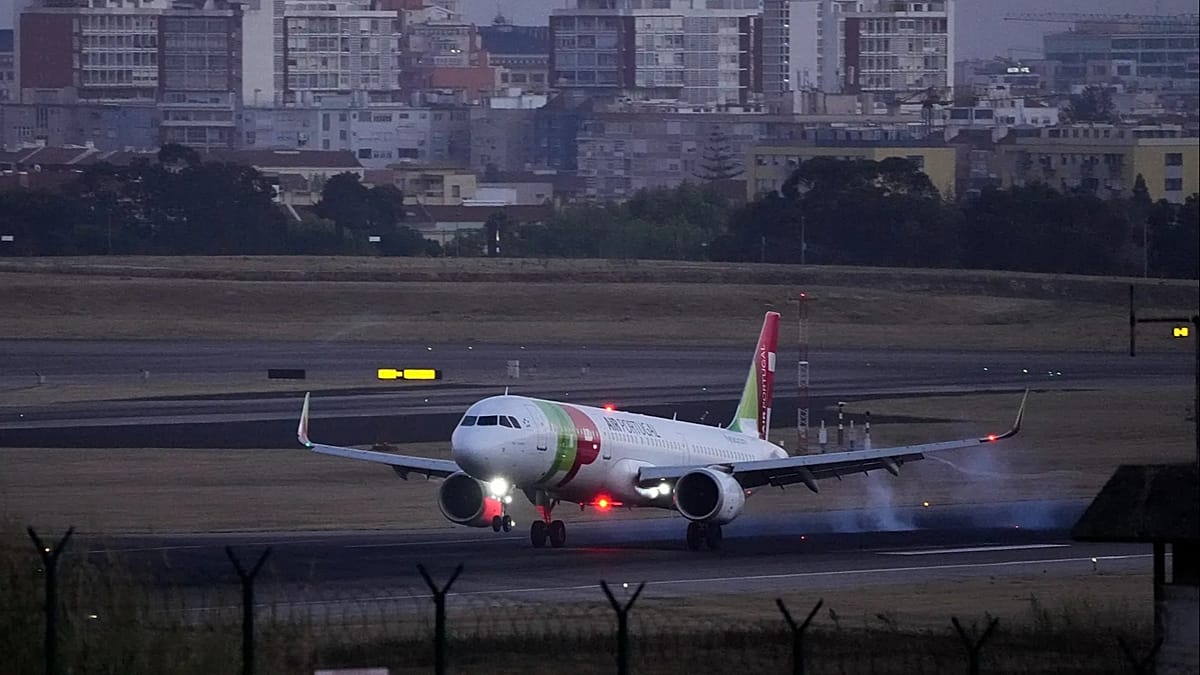
People living near airports and ports are exposed to increasingly high levels of air pollution from shipping and aviation, according to a briefing from the European Union’s environment agency, which calls for greater monitoring of air pollutants in these areas.

Aviation and maritime transport are the hardest sectors to decarbonise as they remain highly reliant on fossil fuels. According to EU data, they account for around 8.4% of the EU’s total greenhouse gas emissions.

Maritime transport alone is projected to become the main source of transport-related air pollution in coastal cities by 2030, according to a briefing from the European Environment Agency (EEA) on air quality levels at key European ports and airports.

“Monitoring air quality in and around ports, airports and nearby cities will become more important in the coming decades,” the agency writes. “This will help assess the role of emissions from shipping and aviation as well as all related activities.”

Too high and rising

Nitrogen dioxide (NO2) emissions from maritime transport are rising, and the sector’s contribution to total NO2 and particulate matter (PM2.5) emissions from transport is becoming more relevant compared to other sectors, the EEA explains, noting that aviation emissions of NO2 and PM2.5 have also increased in recent decades.

NO2 levels detected at ports and airports are consistently higher than in surrounding regions – and in some cases, such as Piraeus and Napoli ports and Milan Linate airport, were above the 2030 EU annual limit value under the bloc’s air quality law.

For half of the ports analysed, NO2 levels were over double those in the surrounding regions.

According to EEA’s analysis, Amsterdam and Antwerp have the highest NO2 concentrations, followed by Algeciras, Barcelona, Stockholm, Hamburg, and Napoli.

Significant increases in NO2 concentrations were found in Napoli (over 100%), Hamburg (86%), Algeciras (77%) and Antwerp (75%). Still, the trends varied by wind sector and may include contributions from other urban pollution sources, like cars, vans and trucks.

However, the EEA also explained that the impact on PM2.5 is complex and less directly attributable to port or airport emissions alone, even though six airports and 13 ports showed levels above the revised 2030 limit value.

Inesa Ulichina, shipping policy officer at the Brussels-based campaign group Transport & Environment, regretted the “unnecessary” pollution caused by idling ships, and suggested electrification as an alternative to curb maritime pollution.

“Electric plug-in technology is available and would reduce shipping’s impact on local air pollution and the climate overnight. For shipping segments that spend a lot of time at ports like cruise ships, plugging in would be a game-changer,” she said.
Share. Facebook Twitter Pinterest LinkedIn Tumblr Email

Keep Reading

What Canada, accustomed to extreme winters, can teach Europe

What Canada, accustomed to extreme winters, can teach Europe

Mercosur: How Macron’s domestic weakness undercut his Brussels clout

Mercosur: How Macron’s domestic weakness undercut his Brussels clout

As Bulgaria joins the euro, how do the other 20 member states see the currency?

As Bulgaria joins the euro, how do the other 20 member states see the currency?

Repair and reuse: inside Europe’s refurbished tech market

Repair and reuse: inside Europe’s refurbished tech market

EU rejects violence against protesters in Iran, backs ‘legitimate aspiration’ for change

EU rejects violence against protesters in Iran, backs ‘legitimate aspiration’ for change

EU member states back Mercosur deal, French MEPs vow fight in Parliament

EU member states back Mercosur deal, French MEPs vow fight in Parliament

Podcast: What does Maduro’s capture mean for the EU?

Podcast: What does Maduro’s capture mean for the EU?

Donald Trump intends to visit Hungary’s Orbán during key election campaign

Donald Trump intends to visit Hungary’s Orbán during key election campaign

EU troops might be needed to stop a US showdown in Greenland

EU troops might be needed to stop a US showdown in Greenland

Editors Picks
Mercosur: How Macron’s domestic weakness undercut his Brussels clout

Mercosur: How Macron’s domestic weakness undercut his Brussels clout

January 10, 2026
As Bulgaria joins the euro, how do the other 20 member states see the currency?

As Bulgaria joins the euro, how do the other 20 member states see the currency?

January 10, 2026
Repair and reuse: inside Europe’s refurbished tech market

Repair and reuse: inside Europe’s refurbished tech market

January 10, 2026
EU rejects violence against protesters in Iran, backs ‘legitimate aspiration’ for change

EU rejects violence against protesters in Iran, backs ‘legitimate aspiration’ for change

January 10, 2026
Latest News
What Canada, accustomed to extreme winters, can teach Europe

What Canada, accustomed to extreme winters, can teach Europe

January 10, 2026
Mercosur: How Macron’s domestic weakness undercut his Brussels clout

Mercosur: How Macron’s domestic weakness undercut his Brussels clout

January 10, 2026
As Bulgaria joins the euro, how do the other 20 member states see the currency?

As Bulgaria joins the euro, how do the other 20 member states see the currency?

January 10, 2026
Facebook X (Twitter) Pinterest TikTok Instagram
© 2026 Times Network New Zealand. All Rights Reserved.
  • Privacy Policy
  • Terms
  • Advertise
  • Contact

Type above and press Enter to search. Press Esc to cancel.