



The European Commission has welcomed the joint proposal by Hungary and Slovakia to send a fact-finding mission to inspect the damaged section of the Druzhba pipeline, seeing it as a first step to ease the standoff between the two countries and Ukraine.
ADVERTISEMENT

ADVERTISEMENT
The Commission does not rule out joining such a mission if Kyiv gives permission.
But the plan remains in very early stages, and the executive does not have a track record of participating in exercises of this type.
“We consider this a welcome step. We are now in contact with the Ukrainian authorities on this matter and continue to work with our member states to ensure the security of supply,” Anna-Kaisa Itkonen, the Commission’s spokesperson for energy, said on Friday.
“We need to take the next steps to see what shape and form this fact-finding mission will take,” she added.
Hungarian Prime Minister Viktor Orbán has vetoed a €90 billion loan for Kyiv in retaliation for the interruption of oil deliveries through Druzhba, which he blames on “political considerations” of Ukrainian President Volodymyr Zelenskyy.
Orbán is facing re-election on 12 April and trailing in opinion polls by double digits.
Hungary and Slovakia, which can buy Russian oil thanks to an indefinite opt-out from EU sanctions, have accused Zelenskyy of concealing the facts about the pipeline.
“The Ukrainians are not willing to accept a verification, fact-finding mission,” Orbán said on Friday morning. “President Zelenskyy is lying. He is not telling the truth.”
Zelenskyy has hit back at the accusations, saying Russian forces were responsible for bombing the pipeline and suggesting Orbán should seek answers in Moscow.
The confrontation has triggered a political crisis for the entire European Union and thrown the carefully crafted deal on the €90 billion loan into disarray.
“We expect all EU leaders to honour their commitments,” Itkonen said.
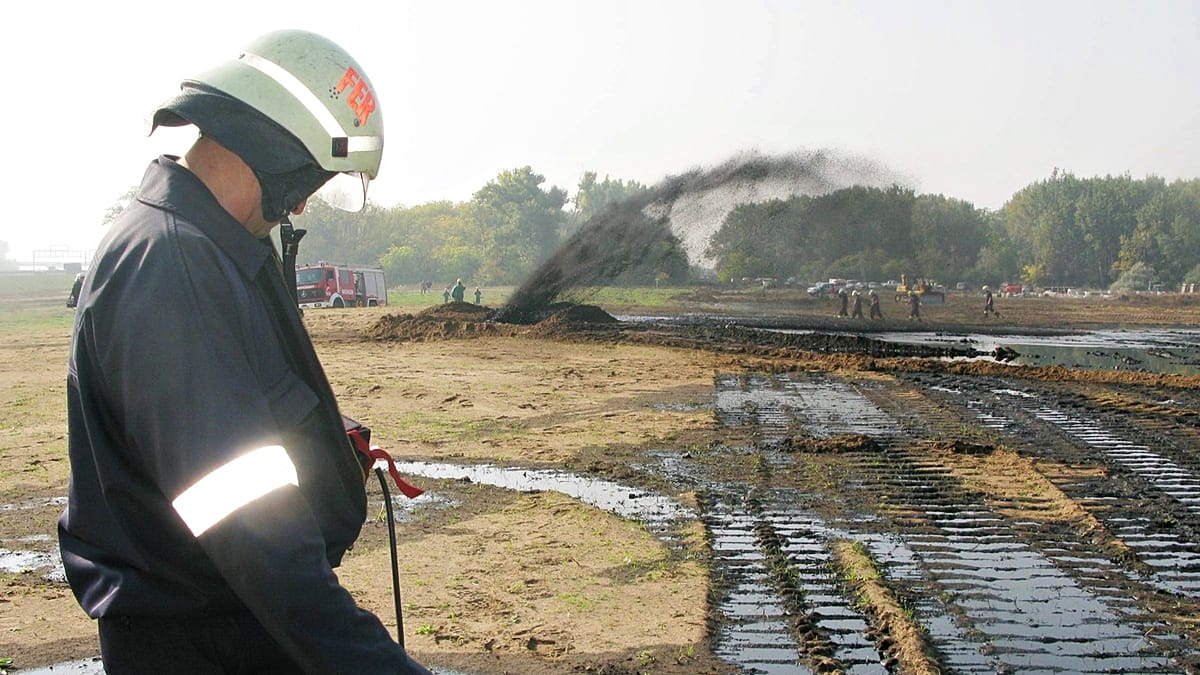
“It is important to recall that it was a Russian attack (on) an oil pumping station of the Druzhba pipeline on 27 January that caused the damage.”
Finding a way out
As tensions rise, Orbán wrote a new letter to António Costa, the president of the European Council, and the other 26 leaders proposing a fact-finding mission with Hungarian and Slovak experts to “verify the status” of the Druzhba pipeline.
The tone of Thursday’s letter was substantially different from the incendiary messages that the Hungarian premier has been posting on social media for the past week.
“I am fully aware of the political difficulties created by the delay in the implementation of the European Council conclusions on the financial support for Ukraine,” Orbán told Costa.
“My initiative also aims at facilitating the timely resolution of this issue.”
The following day, Slovak Prime Minister Robert Fico spoke with Zelenskyy and called on the Commission to participate in the “joint inspection group”. Zelenskyy invited Fico to visit Ukraine and discuss the matter.
“The national interests of Slovakia and Hungary cannot be pushed aside. If solidarity within the EU is to be mutual, it must apply to everyone,” Fico said.
It is still unclear whether Kyiv will allow the fact-finding mission to access the site in the region of Lviv, where a Russian drone strike was recordedon 27 January.
The Ukrainian goverment has previously warned that technicians are at risk of being targeted by Russian strikes when they are out on the ground. Energy infrastructure is considered a strategic point, which further complicates access.
The Commission has expressed sympathy for the dangerous conditions while, at the same time, asking Ukraine to accelerate the repairs of the Druzhba pipeline.
Privately, EU officials and diplomats say this is the most practical way to solve the crisis, lift the Hungarian veto and ensure the final approval of the €90 billion loan.
During an experts’ meeting on Wednesday, Ukraine provided a document, seen by Euronews, saying that it was “actively carrying out repair and restoration works”.
“Security and stabilisation measures continue amid daily threats of new missile attacks,” the document said. “The Ukrainian side is interested in restoring transit as soon as possible within the available legal framework.”


