Close Menu
Times Network New Zealand
  • Home
  • Local News
  • World
  • Business
  • Lifetyle
  • Entertainment
  • Technology
  • Travel
  • Food
  • Editor’s Choice
  • Press Release
What's On
Newsletter: Zelenskyy in town for talks with NATO and EU leaders

Newsletter: Zelenskyy in town for talks with NATO and EU leaders

June 18, 2026
Synthetic opioids: can Europe keep up with a new drug created every week?

Synthetic opioids: can Europe keep up with a new drug created every week?

June 18, 2026
G7 leaders agree to increase weapons deliveries for Ukraine, step up pressure on Russian economy

G7 leaders agree to increase weapons deliveries for Ukraine, step up pressure on Russian economy

June 18, 2026
Portugal urges EU rethink on carbon market cuts for industry

Portugal urges EU rethink on carbon market cuts for industry

June 18, 2026
Norwegian Crown Princess undergoes successful lung transplant

Norwegian Crown Princess undergoes successful lung transplant

June 18, 2026
Facebook X (Twitter) Instagram
Web Stories
Facebook X (Twitter) Instagram
Times Network New Zealand
Subscribe
  • Home
  • Local News
  • World
  • Business
  • Lifetyle
  • Entertainment
  • Technology
  • Travel
  • Food
  • Editor’s Choice
  • Press Release
Times Network New Zealand
Home » Direct talks with Russia would make EU a ‘neutral mediator’, Estonia warns
World

Direct talks with Russia would make EU a ‘neutral mediator’, Estonia warns

By Press RoomMay 27, 20264 Mins Read
Direct talks with Russia would make EU a ‘neutral mediator’, Estonia warns
Share
Facebook Twitter LinkedIn Pinterest Email

The question of whether the European Union should engage in direct talks with Russia to bring the war in Ukraine to an end continues to split member states, as Estonia warns that the diplomatic outreach would amount to becoming a “neutral mediator” expected to provide Moscow with sanctions relief and appease its maximalist demands.

ADVERTISEMENT


ADVERTISEMENT

Until now, the talks have been led by the US, which has cut all financial and military assistance to Ukraine and eased sanctions on Russian oil.

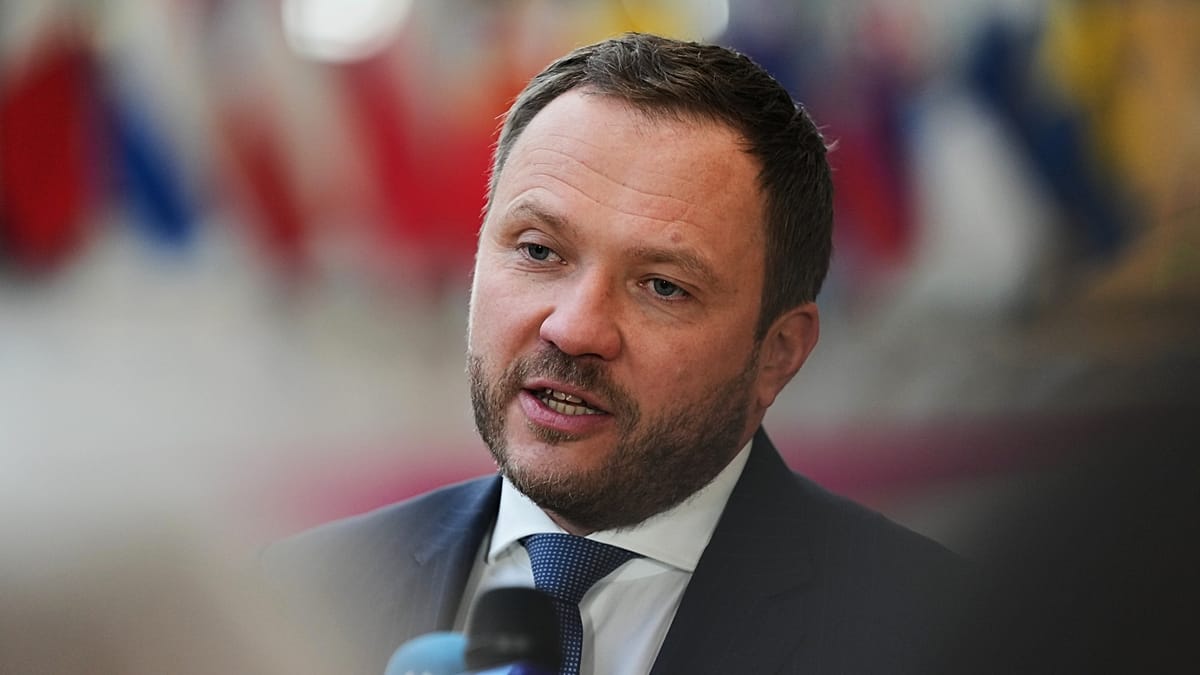
“We know that Russia is desperately working to bring Europe into talks because Putin needs to win time, and his position is to put Europe in a neutral position as a mediator,” Margus Tsahkna, Estonia’s foreign minister, said on Tuesday morning in Brussels.

“But we are not mediators, actually. We are supporting Ukraine, and we are talking not only about some territories in Ukraine, but we are also talking about the European security architecture.”

“Instead of (doing) that – to go and talk to Putin because he doesn’t want to negotiate anything, he’s just putting new demands on the table – we should focus on putting more pressure on Russia. So this is not the right time to rush into any kind of talks.”

Tsahkna also condemned Putin for refusing to commit to a ceasefire, a long-standing request from Europeans, and instead continuing Russia’s heavy bombardment of Ukraine.

Over the weekend, Russia launched a massive attack of drones and missiles against Ukrainian cities that destroyed residential buildings, supermarkets and energy facilities. The deadly assault included a hypersonic Oreshnik ballistic missile.

“We need to have strategic patience to put more pressure on Russia so that Putin (will) finally come into real negotiations,” he said.

Pros and cons

The Estonian warning comes as member states weigh the pros and cons of breaking the diplomatic isolation imposed upon Russia in 2022 and launching direct talks.

With the White House firmly focused on the Middle East, Ukrainian President Volodymyr Zelenskyy has asked EU countries to speak with “one common voice” and designate a point person who could represent the bloc’s interests vis-à-vis Moscow.

The leaders of France, Italy, Austria and Belgium have openly embraced the idea. By contrast, those in Germany, Poland, the Baltics and the Nordics have expressed reservations and prefer to focus on squeezing the strained Russian economy.

The buzz has seen certain big names floated as prospective special envoys, among them Finnish President Alexander Stubb, European Council President António Costa, former Italian Prime Minister Mario Draghi and former German Chancellor Angela Merkel.

“There is no point now to talk about who will represent Europe because it probably will divide Europe more,” Tsahkna said.

His Romanian counterpart, Oana Țoiu, was similarly sceptical.

“What we need to do now, before we talk about any names or envoys, is to make our work consistent in increasing the pressure in terms of sanctions and in terms of coordinating those sanctions whenever possible with the United States,” Țoiu told Euronews on the margins of Tuesday’s meeting.

Speaking in Vilnius, Lithuania, European Commission President Ursula von der Leyen cautioned that the circumstances were not conducive to direct talks.

“Russia is showing, at this point, no willingness for peace. The bombardment of the past weekend speaks for itself. And this is despite Russia losing a huge number of its young men for no territorial gains. And its economy is increasingly suffering,” von der Leyen said, noting a new package of sanctions was already in the works.

“At this time, I don’t want to speculate about any names” for special envoy.

The debate around direct talks will continue on Wednesday and Thursday among foreign affairs ministers during an informal gathering in Cyprus. The meeting will be chaired by High Representative Kaja Kallas, who has repeatedly said dialogue with Russia will be pointless as long as Putin retains his uncompromising stance.

Putin insists that Ukraine give up the entire Donbas region and that Western allies recognise the occupied territories as legally Russian – two red lines for Kyiv.

This article has been updated with von der Leyen’s remarks.
Share. Facebook Twitter Pinterest LinkedIn Tumblr Email

Keep Reading

Newsletter: Zelenskyy in town for talks with NATO and EU leaders

Newsletter: Zelenskyy in town for talks with NATO and EU leaders

Synthetic opioids: can Europe keep up with a new drug created every week?

Synthetic opioids: can Europe keep up with a new drug created every week?

G7 leaders agree to increase weapons deliveries for Ukraine, step up pressure on Russian economy

G7 leaders agree to increase weapons deliveries for Ukraine, step up pressure on Russian economy

Portugal urges EU rethink on carbon market cuts for industry

Portugal urges EU rethink on carbon market cuts for industry

Norwegian Crown Princess undergoes successful lung transplant

Norwegian Crown Princess undergoes successful lung transplant

UK minister ‘very confident’ of getting triple EU reset deal done at July summit

UK minister ‘very confident’ of getting triple EU reset deal done at July summit

Germany and Poland sign new defence deal as balance of power in Europe shifts

Germany and Poland sign new defence deal as balance of power in Europe shifts

How can Europe compete with the US and China economically? MEPs debate on The Ring

How can Europe compete with the US and China economically? MEPs debate on The Ring

WFP welcomes €695m donation from US as it warns acute hunger to worsen in 13 hotspots

WFP welcomes €695m donation from US as it warns acute hunger to worsen in 13 hotspots

Editors Picks
Synthetic opioids: can Europe keep up with a new drug created every week?

Synthetic opioids: can Europe keep up with a new drug created every week?

June 18, 2026
G7 leaders agree to increase weapons deliveries for Ukraine, step up pressure on Russian economy

G7 leaders agree to increase weapons deliveries for Ukraine, step up pressure on Russian economy

June 18, 2026
Portugal urges EU rethink on carbon market cuts for industry

Portugal urges EU rethink on carbon market cuts for industry

June 18, 2026
Norwegian Crown Princess undergoes successful lung transplant

Norwegian Crown Princess undergoes successful lung transplant

June 18, 2026
Latest News
Newsletter: Zelenskyy in town for talks with NATO and EU leaders

Newsletter: Zelenskyy in town for talks with NATO and EU leaders

June 18, 2026
Synthetic opioids: can Europe keep up with a new drug created every week?

Synthetic opioids: can Europe keep up with a new drug created every week?

June 18, 2026
G7 leaders agree to increase weapons deliveries for Ukraine, step up pressure on Russian economy

G7 leaders agree to increase weapons deliveries for Ukraine, step up pressure on Russian economy

June 18, 2026
Facebook X (Twitter) Pinterest TikTok Instagram
© 2026 Times Network New Zealand. All Rights Reserved.
  • Privacy Policy
  • Terms
  • Advertise
  • Contact

Type above and press Enter to search. Press Esc to cancel.