Times Network New Zealand
  • Home
  • Local News
  • World
  • Business
  • Lifetyle
  • Entertainment
  • Technology
  • Travel
  • Food
  • Editor’s Choice
  • Press Release
What's On
Repair and reuse: inside Europe’s refurbished tech market

Repair and reuse: inside Europe’s refurbished tech market

January 10, 2026
EU rejects violence against protesters in Iran, backs ‘legitimate aspiration’ for change

EU rejects violence against protesters in Iran, backs ‘legitimate aspiration’ for change

January 10, 2026
EU member states back Mercosur deal, French MEPs vow fight in Parliament

EU member states back Mercosur deal, French MEPs vow fight in Parliament

January 10, 2026
Podcast: What does Maduro’s capture mean for the EU?

Podcast: What does Maduro’s capture mean for the EU?

January 10, 2026
Donald Trump intends to visit Hungary’s Orbán during key election campaign

Donald Trump intends to visit Hungary’s Orbán during key election campaign

January 9, 2026
Facebook X (Twitter) Instagram
Web Stories
Facebook X (Twitter) Instagram
Times Network New Zealand
Subscribe
  • Home
  • Local News
  • World
  • Business
  • Lifetyle
  • Entertainment
  • Technology
  • Travel
  • Food
  • Editor’s Choice
  • Press Release
Times Network New Zealand
Home » Ecolabels: Which EU countries lead the way in sustainable goods?
World

Ecolabels: Which EU countries lead the way in sustainable goods?

By Press RoomNovember 8, 20253 Mins Read
Ecolabels: Which EU countries lead the way in sustainable goods?
Share
Facebook Twitter LinkedIn Pinterest Email
Ecolabels: Which EU countries lead the way in sustainable goods?

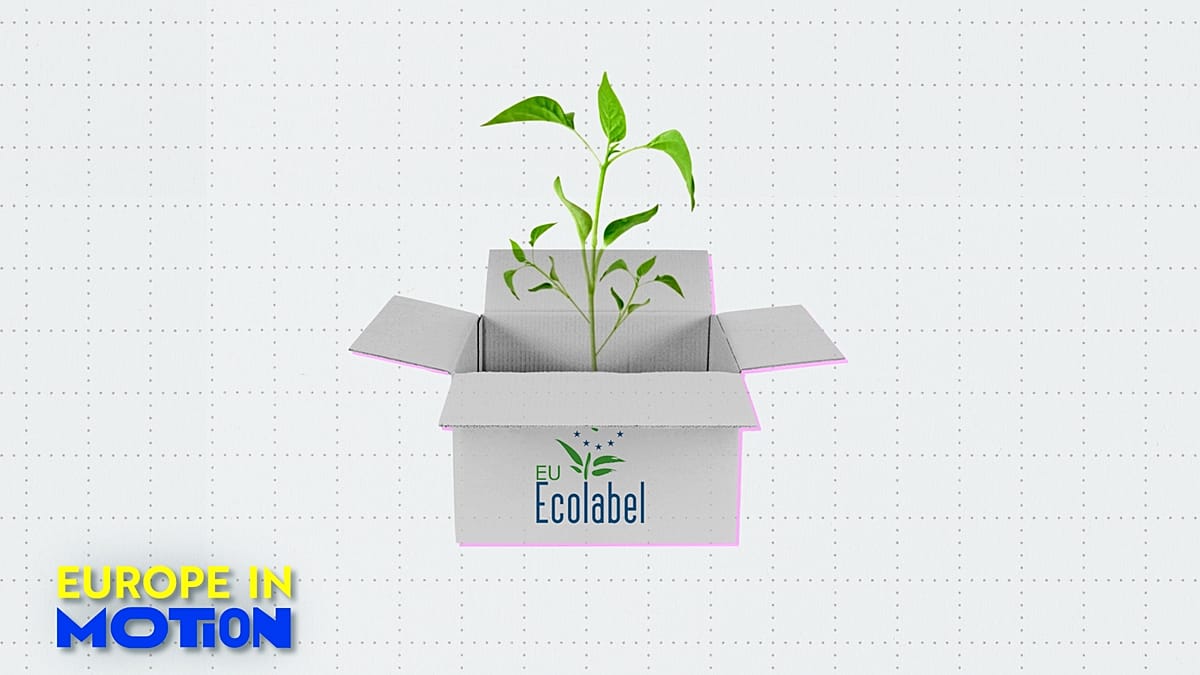
Is Italy the leading EU country in sustainable goods? New European Commission data shows the country markets almost 19,000 products carrying the EU Ecolabel, a certification for products with a lower environmental impact throughout their entire lifecycle.

Launched in 1992, it promotes greener industrial practices to help consumers and businesses make more sustainable choices.

Today, more than 100,000 goods and services across Europe carry the EU Ecolabel.

Spain is the bloc’s second most prolific country with around 16,000 Eco-labelled products, ahead of France (13,000), Germany (10,000) and Portugal (7,000)

Its reach keeps growing, with a 15% increase in licences since 2024.

Which sectors are pushing for green certification?

The largest certified sector is paints and varnishes, with approximately 38,000 licences, accounting for more than one-third of the total.

To be clear, this doesn’t mean that paints have suddenly become non-polluting.

Volatile organic compounds (VOCs) found in traditional paint products can be as harmful to human health as car emissions.

VOCs are present in nearly all traditional and commercially available paints, according to Paints for Life, an online platform encouraging the development of sustainable paints and coatings.

“VOCs are a wide array of gases or fumes that come off of paints and are potentially hazardous from the first moments of exposure till, in some cases, years after, while doing repair works, namely, they can emit toxins in the indoor air, which are later inhaled by people being in the room,” it said.

In recent years, developers have started working on less harmful alternatives.

One of the most remarkable examples is Airlite, an EU-funded project that developed a paint using “nanoparticles instead of toxic chemicals that break down VOCs and airborne pollutants while also repelling bacteria, viruses and mould spores”.

What’s the newest Ecolabel-eligible sector?

The sector with the second-largest number of awarded products is papers (28,697), followed by cleaning items (14,912).

Tourism is also on the rise, with around 900 establishments now meeting Ecolabel standards, with more than 60 licences granted since the beginning of the year.

The list of eligible sectors has now been extended to include even pet care products, after a dog shampoo produced in Catalonia became the first in its category to receive the certification.

How much does it cost to apply? Do eligible businesses get tax cuts?

Ecolabels fall under the International Organization for Standardization (ISO) family. Specifically, under the Type I ISO 14024, according to Maastricht University.

The certification can be awarded by a public body or a private party, such as NGOs, industry groups, or a combination of stakeholders.

Applicants need to follow predetermined steps indicated by the EU authorities. There is no single EU body awarding the certification; the decision is taken by each relevant national body.

Getting an Ecolabel doesn’t come free of charge. Applications range from €200 to €350 for micro-enterprises, while fees for SMEs go from €200 to €600.

All other companies’ applications are charged between €200 and €2,000.

Some discounts are available, however. For example, companies registered under the Eco-Management and Audit Scheme (EMAS) can enjoy a 30% reduction, while businesses certified under ISO 14001 get 15% less. The two discounts are not cumulative.

On top of the application fee, there might also be an annual fee to pay. It can be flat or based on the product’s annual sales within the EU.

The Ecolabel certification doesn’t grant any tax cut per se; however, being eligible might increase chances to fall under taxation schemes that reward green practices.
Share. Facebook Twitter Pinterest LinkedIn Tumblr Email

Keep Reading

Repair and reuse: inside Europe’s refurbished tech market

Repair and reuse: inside Europe’s refurbished tech market

EU rejects violence against protesters in Iran, backs ‘legitimate aspiration’ for change

EU rejects violence against protesters in Iran, backs ‘legitimate aspiration’ for change

EU member states back Mercosur deal, French MEPs vow fight in Parliament

EU member states back Mercosur deal, French MEPs vow fight in Parliament

Podcast: What does Maduro’s capture mean for the EU?

Podcast: What does Maduro’s capture mean for the EU?

Donald Trump intends to visit Hungary’s Orbán during key election campaign

Donald Trump intends to visit Hungary’s Orbán during key election campaign

EU troops might be needed to stop a US showdown in Greenland

EU troops might be needed to stop a US showdown in Greenland

Analysis: From Venezuela to Greenland, the EU scrambles to find a voice and a plan

Analysis: From Venezuela to Greenland, the EU scrambles to find a voice and a plan

Paris to vote ‘No’ on Mercosur, risking major diplomatic setback for Macron

Paris to vote ‘No’ on Mercosur, risking major diplomatic setback for Macron

Belgium urges EU to use aid as bargaining chip to increase migrant returns

Belgium urges EU to use aid as bargaining chip to increase migrant returns

Editors Picks
EU rejects violence against protesters in Iran, backs ‘legitimate aspiration’ for change

EU rejects violence against protesters in Iran, backs ‘legitimate aspiration’ for change

January 10, 2026
EU member states back Mercosur deal, French MEPs vow fight in Parliament

EU member states back Mercosur deal, French MEPs vow fight in Parliament

January 10, 2026
Podcast: What does Maduro’s capture mean for the EU?

Podcast: What does Maduro’s capture mean for the EU?

January 10, 2026
Donald Trump intends to visit Hungary’s Orbán during key election campaign

Donald Trump intends to visit Hungary’s Orbán during key election campaign

January 9, 2026
Latest News
Repair and reuse: inside Europe’s refurbished tech market

Repair and reuse: inside Europe’s refurbished tech market

January 10, 2026
EU rejects violence against protesters in Iran, backs ‘legitimate aspiration’ for change

EU rejects violence against protesters in Iran, backs ‘legitimate aspiration’ for change

January 10, 2026
EU member states back Mercosur deal, French MEPs vow fight in Parliament

EU member states back Mercosur deal, French MEPs vow fight in Parliament

January 10, 2026
Facebook X (Twitter) Pinterest TikTok Instagram
© 2026 Times Network New Zealand. All Rights Reserved.
  • Privacy Policy
  • Terms
  • Advertise
  • Contact

Type above and press Enter to search. Press Esc to cancel.