Close Menu
Times Network New Zealand
  • Home
  • Local News
  • World
  • Business
  • Lifetyle
  • Entertainment
  • Technology
  • Travel
  • Food
  • Editor’s Choice
  • Press Release
What's On
Jørgensen urges cohesive national responses to avoid energy market disruptions

Jørgensen urges cohesive national responses to avoid energy market disruptions

April 1, 2026
EU citizenship: Which countries are issuing the most passports to non-EU nationals?

EU citizenship: Which countries are issuing the most passports to non-EU nationals?

April 1, 2026
Strait of Hormuz shutdown: What implications for Europe, for how long and how high can prices go?

Strait of Hormuz shutdown: What implications for Europe, for how long and how high can prices go?

April 1, 2026
Watch: EU governments are throwing billions at the petrol shock. Will it help?

Watch: EU governments are throwing billions at the petrol shock. Will it help?

April 1, 2026
Leaked call shows Szijjártó discussing EU sanctions removal with Russia’s Lavrov

Leaked call shows Szijjártó discussing EU sanctions removal with Russia’s Lavrov

April 1, 2026
Facebook X (Twitter) Instagram
Web Stories
Facebook X (Twitter) Instagram
Times Network New Zealand
Subscribe
  • Home
  • Local News
  • World
  • Business
  • Lifetyle
  • Entertainment
  • Technology
  • Travel
  • Food
  • Editor’s Choice
  • Press Release
Times Network New Zealand
Home » EU citizenship: Which countries are issuing the most passports to non-EU nationals?
World

EU citizenship: Which countries are issuing the most passports to non-EU nationals?

By Press RoomApril 1, 20264 Mins Read
EU citizenship: Which countries are issuing the most passports to non-EU nationals?
Share
Facebook Twitter LinkedIn Pinterest Email

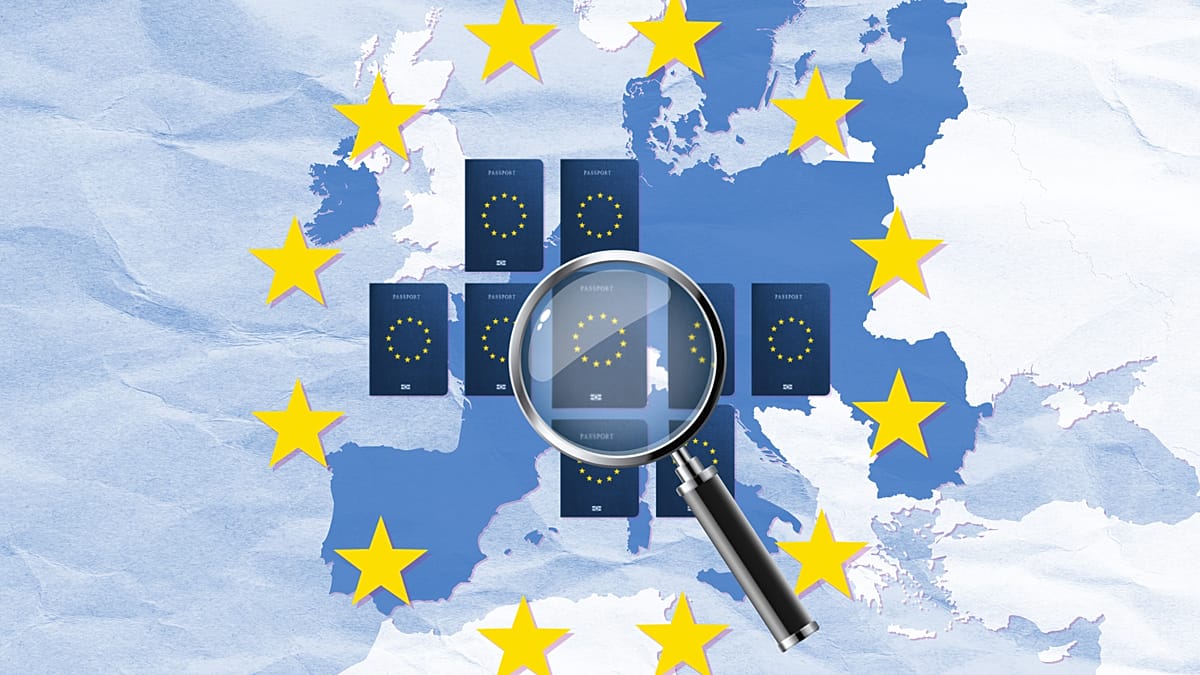
The number of migrants granted citizenship in the EU has boomed over the past decade.

ADVERTISEMENT


ADVERTISEMENT

From 762,000 passports issued in 2014 to 1.2 million in 2024, according to Eurostat, the bloc has seen a stark 54% increase in 10 years and a rise of nearly 12% compared to 2023.

The vast majority of recipients (88%) are non-EU nationals, while nearly 11% acquired a new citizenship after moving from another one of the 27 member states.

Passport vs naturalisation rate: What are the numbers?

Looking at countries granting the most citizenships, Germany leads by far, with nearly 300,000 handed out in 2024, a quarter of the EU’s total. Spain comes next with around 250,000, followed by Italy with 217,000.

However, zooming in, Sweden has the highest naturalisation rate, with 7.5 citizenships granted to every 100 non-national residents.

The next highest rate came from Italy with 4.1, followed by Spain and the Netherlands with 3.9. At the other end of the table, Lithuania, Bulgaria and Estonia had the lowest in the EU.

Which nationalities get the most EU passports?

With over 110,000 passports issued in the EU in 2024, Syrians were the leading group of those acquiring a new EU citizenship.

Moroccans came in second with 97,000, followed by Albanians with 48,000 and Turkish citizens with just over 40,000.

Fifth-placed Romanians are the largest recipients from an EU country, with around 40,000. Next come Venezuelans, Ukrainians, Indians, Russians and Brazilians.

How do you get an EU passport?

There’s no single rule or path among EU countries. The length of residency in a given country averages around five years in general, but there are significant differences and caveats across the bloc.

For example, in Spain, most people need 10 years of residency to apply for a passport.

However, for Latin American nationals — including Argentinians, Mexicans, Brazilians, and Costa Ricans — the waiting time in Spain is only two years, making it one of the fastest pathways to citizenship anywhere in the world.

The same also applies to citizens of Portugal, Andorra, the Philippines, and Equatorial Guinea who want to settle in Spain.

Sweden also offers a shortcut on a geographical basis: two years of continuous residence only for citizens of other Nordic countries, while it’s normally five years for others.

Which European country has the easiest path to citizenship?

Poland — one of the EU’s fastest-growing economies — offers an interesting route in just three years of continuous residence, provided applicants have a stable income.

In Malta, the timeline can be even shorter, dropping to as little as 14 months — but only if you’re planning to invest at least €600,000 in the economy. For most applicants, the standard naturalisation timing still takes around five years.

In Germany, by contrast, rules have recently become stricter. The fast-track scheme for highly skilled workers, Turboeinbürgerung, was scrapped in October 2025. The standard requirement is now five years of residence, but applicants must also meet additional criteria, including a B1 level of German, passing a citizenship test and demonstrating financial stability.

The UK has a similar framework. Applicants must have lived for at least five years, although the government is considering increasing this to 10 years. They are also required to pass the Life in the UK test, which covers topics such as British history, culture, government and law, as well as prove their English language proficiency and show no recent or serious criminal convictions.

Despite having the second-highest naturalisation rate in the EU, things are more complicated in Italy. Here, non-EU citizens must typically wait 10 years before applying for citizenship, while EU citizens can apply after four years.

Even then, it takes up to 24 months to process an application for Italian citizenship, and in some cases, 36.

Share. Facebook Twitter Pinterest LinkedIn Tumblr Email

Keep Reading

Jørgensen urges cohesive national responses to avoid energy market disruptions

Jørgensen urges cohesive national responses to avoid energy market disruptions

Strait of Hormuz shutdown: What implications for Europe, for how long and how high can prices go?

Strait of Hormuz shutdown: What implications for Europe, for how long and how high can prices go?

Watch: EU governments are throwing billions at the petrol shock. Will it help?

Watch: EU governments are throwing billions at the petrol shock. Will it help?

Leaked call shows Szijjártó discussing EU sanctions removal with Russia’s Lavrov

Leaked call shows Szijjártó discussing EU sanctions removal with Russia’s Lavrov

Fact check: Does Hungary have alternatives to the Druzhba pipeline?

Fact check: Does Hungary have alternatives to the Druzhba pipeline?

Lebanese minister speaks to Euronews as Israeli strikes leave 1,200 dead in Lebanon

Lebanese minister speaks to Euronews as Israeli strikes leave 1,200 dead in Lebanon

Newsletter: Lebanese minister says situation ‘dramatic’ as Israel expands ground invasion

Newsletter: Lebanese minister says situation ‘dramatic’ as Israel expands ground invasion

EU to press Israel to scrap law allowing execution of convicted Palestinians

EU to press Israel to scrap law allowing execution of convicted Palestinians

The unanimity trap: what is the EU veto and why is it so hard to reform?

The unanimity trap: what is the EU veto and why is it so hard to reform?

Editors Picks
EU citizenship: Which countries are issuing the most passports to non-EU nationals?

EU citizenship: Which countries are issuing the most passports to non-EU nationals?

April 1, 2026
Strait of Hormuz shutdown: What implications for Europe, for how long and how high can prices go?

Strait of Hormuz shutdown: What implications for Europe, for how long and how high can prices go?

April 1, 2026
Watch: EU governments are throwing billions at the petrol shock. Will it help?

Watch: EU governments are throwing billions at the petrol shock. Will it help?

April 1, 2026
Leaked call shows Szijjártó discussing EU sanctions removal with Russia’s Lavrov

Leaked call shows Szijjártó discussing EU sanctions removal with Russia’s Lavrov

April 1, 2026
Latest News
Jørgensen urges cohesive national responses to avoid energy market disruptions

Jørgensen urges cohesive national responses to avoid energy market disruptions

April 1, 2026
EU citizenship: Which countries are issuing the most passports to non-EU nationals?

EU citizenship: Which countries are issuing the most passports to non-EU nationals?

April 1, 2026
Strait of Hormuz shutdown: What implications for Europe, for how long and how high can prices go?

Strait of Hormuz shutdown: What implications for Europe, for how long and how high can prices go?

April 1, 2026
Facebook X (Twitter) Pinterest TikTok Instagram
© 2026 Times Network New Zealand. All Rights Reserved.
  • Privacy Policy
  • Terms
  • Advertise
  • Contact

Type above and press Enter to search. Press Esc to cancel.