Close Menu
Times Network New Zealand
  • Home
  • Local News
  • World
  • Business
  • Lifetyle
  • Entertainment
  • Technology
  • Travel
  • Food
  • Editor’s Choice
  • Press Release
What's On
Magyar says Hungary and EU ‘close to a deal’ on releasing frozen cash ahead of crunch meeting

Magyar says Hungary and EU ‘close to a deal’ on releasing frozen cash ahead of crunch meeting

May 30, 2026
Newsletter: Brussels-Beijing trade tangle and Hungary’s frozen funds

Newsletter: Brussels-Beijing trade tangle and Hungary’s frozen funds

May 30, 2026
The German village that made itself immune to the Hormuz shock

The German village that made itself immune to the Hormuz shock

May 30, 2026
Hungary unlocks €16.4bn in EU funds after Magyar secures deal with Brussels

Hungary unlocks €16.4bn in EU funds after Magyar secures deal with Brussels

May 30, 2026
Italy wants to pull back on EU defence loan scheme to tackle rising energy costs

Italy wants to pull back on EU defence loan scheme to tackle rising energy costs

May 30, 2026
Facebook X (Twitter) Instagram
Web Stories
Facebook X (Twitter) Instagram
Times Network New Zealand
Subscribe
  • Home
  • Local News
  • World
  • Business
  • Lifetyle
  • Entertainment
  • Technology
  • Travel
  • Food
  • Editor’s Choice
  • Press Release
Times Network New Zealand
Home » EU countries need more ‘targeted measures’ to tackle soaring energy prices, says IMF’s Helge Berger
World

EU countries need more ‘targeted measures’ to tackle soaring energy prices, says IMF’s Helge Berger

By Press RoomMay 6, 20263 Mins Read
EU countries need more ‘targeted measures’ to tackle soaring energy prices, says IMF’s Helge Berger
Share
Facebook Twitter LinkedIn Pinterest Email

Published on 06/05/2026 – 10:56 GMT+2•Updated
11:04

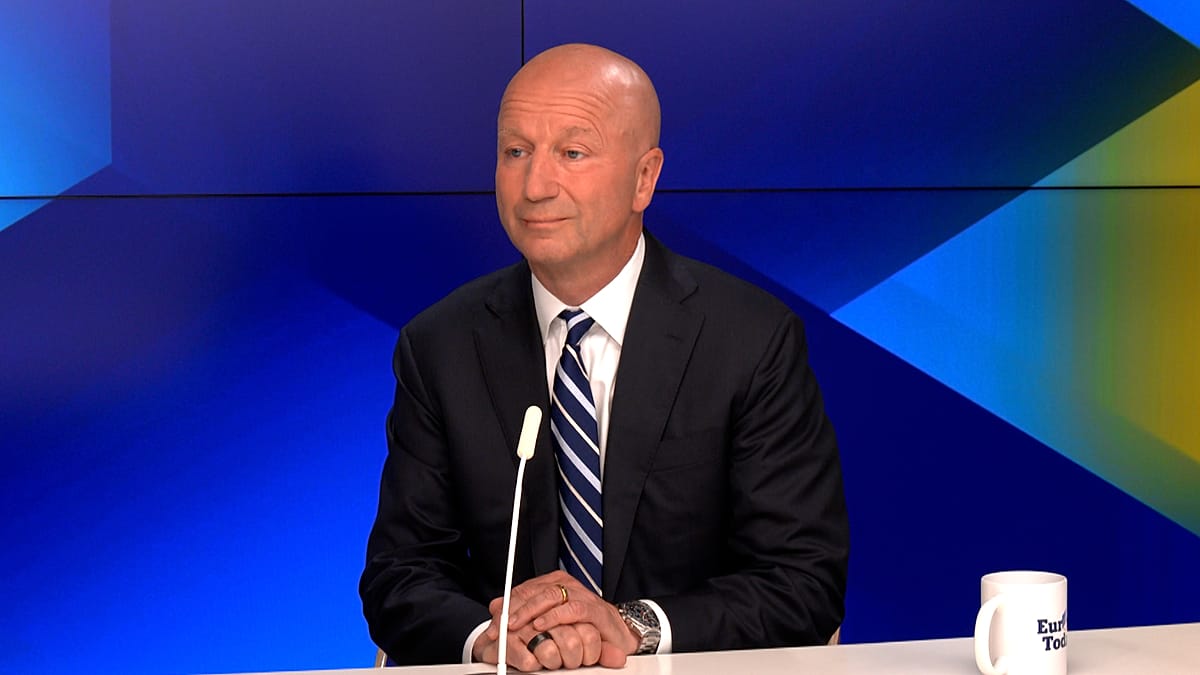
European capitals have failed to provide targeted measures to shield suffering households and businesses from soaring energy prices, Helge Berger, Deputy Director at the International Monetary Fund told Euronews’ Europe Today show, urging member states to focus on concrete solutions for the most vulnerable.

ADVERTISEMENT


ADVERTISEMENT

“Most governments have, in some way or another, tampered with the energy prices, which is not the way it should be going. So as time passes, if the situation continues, we need to be more targeted,” said Berger, who leads the IMF’s European Department.

Berger said the main target should be vulnerable households and urged EU governments to guarantee that measures won’t do “more damage than good” as he recognised a “mix of good and bad policies” put forward by EU member states since the US-led war against Iran sent energy prices through the roof.

According to the IMF, oil prices have surged by around 70%, while European gas prices remain roughly 45% above pre-war levels. Although less severe than the 2022 shock, the increases are still expected to weigh heavily on growth.

As a response, several EU governments have lowered energy taxes, making energy artificially cheaper and discouraging people from using less energy or switching to alternatives, Berger warned.

The IMF representative warned capitals against “dampening the price signal” that results from higher oil, natural gas, and electricity prices, but instead to focus on targeted support.

Untargeted measures are not the answer

During the Eurogroup meeting on Monday evening, the IMF informed finance ministers that around 70% of the total cost of the measures taken in 2022, following Russia’s invasion of Ukraine, were either not targeted or distorted prices, or both.

In the current energy shock, the IMF noted that 33% of electricity subsidies, if untargeted, could go to the 20% richest of the population, compared to 11% for the poorest.

This gap is even wider when it comes to transport-fuel subsidies, which the IMF identified as potentially benefiting the richest households (34%) rather than the poorest (9%) if the measures are untargeted.

The IMF also noted that energy efficiency gains and a cleaner energy mix have made Europe more resilient, with European households having 12% less cost over the past five years.

Eurogroup leader Kyriakos Pierrakakis said on Monday evening that expectations for a rapid normalisation of the crisis in the Middle East have not been confirmed, following the gathering of eurozone ministers.

“This is the difficult reality we are facing, and we must address it with realism and responsibility,” the Greek leader said.

He said the IMF recognised Europe’s “positive starting point”, citing a “robust labour market” with “historic” lowest unemployment, but stressed that the effects of the crisis are not evenly distributed.

“Net energy importers and economies with limited fiscal space obviously face greater pressure. This obliges us to act with caution, with well-designed and with targeted policies,” Pierrakakis added.

With the Iran war and the closure of the Strait of Hormuz, Europe’s dependence on imported fossil fuels has exposed its vulnerability, but the continent’s situation is not as bad as it was in 2022 when Russia invaded Ukraine, the IMF said.

Berger said the continent is more resilient today thanks to the higher share of renewables in its energy mix.

“Any increase in energy prices as well is still bad for the economy, but it isn’t as bad as it used to be,” he added.
Share. Facebook Twitter Pinterest LinkedIn Tumblr Email

Keep Reading

Magyar says Hungary and EU ‘close to a deal’ on releasing frozen cash ahead of crunch meeting

Magyar says Hungary and EU ‘close to a deal’ on releasing frozen cash ahead of crunch meeting

Newsletter: Brussels-Beijing trade tangle and Hungary’s frozen funds

Newsletter: Brussels-Beijing trade tangle and Hungary’s frozen funds

The German village that made itself immune to the Hormuz shock

The German village that made itself immune to the Hormuz shock

Hungary unlocks €16.4bn in EU funds after Magyar secures deal with Brussels

Hungary unlocks €16.4bn in EU funds after Magyar secures deal with Brussels

Italy wants to pull back on EU defence loan scheme to tackle rising energy costs

Italy wants to pull back on EU defence loan scheme to tackle rising energy costs

Video. Romanian minister: Russia bears full responsibility for drone strike

Video. Romanian minister: Russia bears full responsibility for drone strike

Four EU countries push Brussels to ease carbon market pressure on industry

Four EU countries push Brussels to ease carbon market pressure on industry

France launches an inquiry into the treatment of activists on the Gaza flotilla

France launches an inquiry into the treatment of activists on the Gaza flotilla

Is Europe finally waking up to China?

Is Europe finally waking up to China?

Editors Picks
Newsletter: Brussels-Beijing trade tangle and Hungary’s frozen funds

Newsletter: Brussels-Beijing trade tangle and Hungary’s frozen funds

May 30, 2026
The German village that made itself immune to the Hormuz shock

The German village that made itself immune to the Hormuz shock

May 30, 2026
Hungary unlocks €16.4bn in EU funds after Magyar secures deal with Brussels

Hungary unlocks €16.4bn in EU funds after Magyar secures deal with Brussels

May 30, 2026
Italy wants to pull back on EU defence loan scheme to tackle rising energy costs

Italy wants to pull back on EU defence loan scheme to tackle rising energy costs

May 30, 2026
Latest News
Magyar says Hungary and EU ‘close to a deal’ on releasing frozen cash ahead of crunch meeting

Magyar says Hungary and EU ‘close to a deal’ on releasing frozen cash ahead of crunch meeting

May 30, 2026
Newsletter: Brussels-Beijing trade tangle and Hungary’s frozen funds

Newsletter: Brussels-Beijing trade tangle and Hungary’s frozen funds

May 30, 2026
The German village that made itself immune to the Hormuz shock

The German village that made itself immune to the Hormuz shock

May 30, 2026
Facebook X (Twitter) Pinterest TikTok Instagram
© 2026 Times Network New Zealand. All Rights Reserved.
  • Privacy Policy
  • Terms
  • Advertise
  • Contact

Type above and press Enter to search. Press Esc to cancel.