

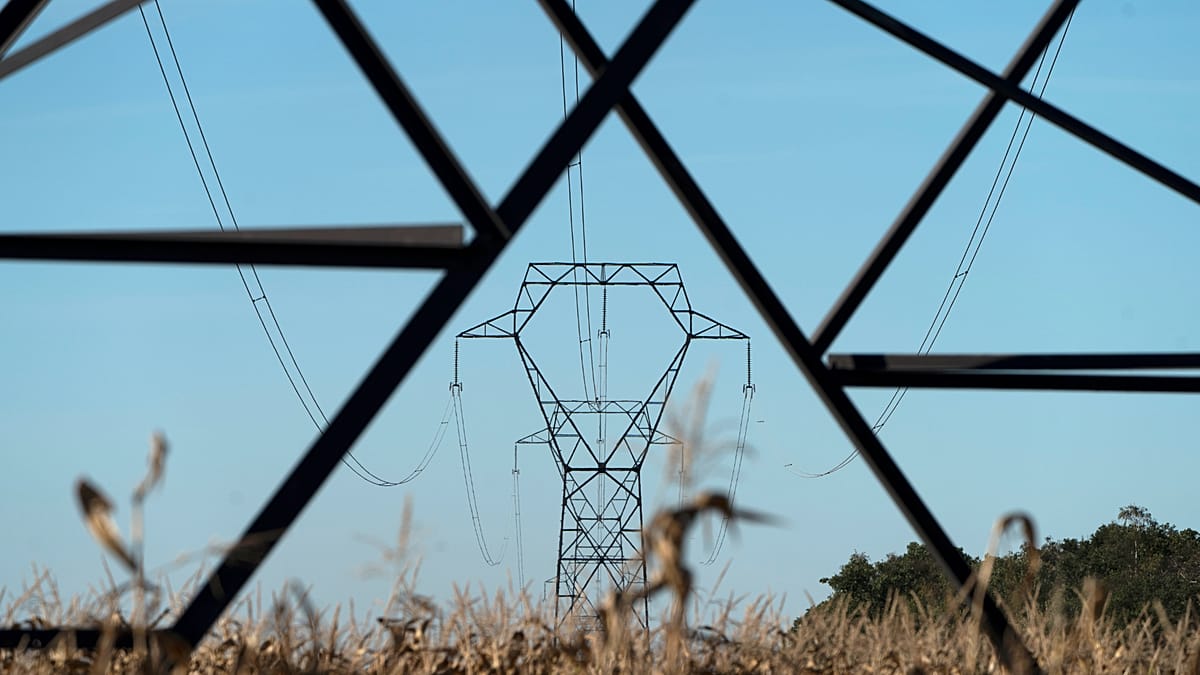
From 2028, European Union countries will be able to expand cross-border energy infrastructure, like grids and pipelines, and renewable energy projects, as energy ministers overwhelmingly backed on Monday the architecture of the bloc’s multi-annual energy budget for 2028-2034.
The funds, under the Connecting Europe Facility (CEF), will target grid infrastructure and renewable energy projects to boost solar and wind power, as outlined in the European Commission’s recent initiative to modernise electricity infrastructure and support cross-border projects.
Hydrogen and natural gas infrastructure are also on the list, with critics arguing that the money will continue to prop up fossil fuels, as they claim the projects listed under the CEF will use fossil hydrogen.
Lars Aagaard, Denmark’s minister for energy, climate and utilities, hailed the adoption of the future bloc’s budget design as a significant step towards lowering energy prices, strengthening competitiveness, and improving energy security.
“Today’s agreement provides the framework for new investments in Europe’s energy infrastructure, strengthens support for cross-border projects and ensures that no member state is left isolated,” Aagaard said.
According to EU diplomats close to the negotiations, there were “no red lines” during the talks, and all member states backed the Connecting Europe Facility’s energy architecture, with only Hungary abstaining.
Portuguese Secretary of State for Energy Jean Barroca said the CEF was particularly relevant for Portugal.
“It allows (Portugal) to finance essential infrastructure projects to achieve the goal of 15% electricity interconnection by 2030 and ensure the full integration of the Iberian peninsula into the energy market, as well as structural issues in our system, such as security of supply and energy storage,” said Barroca.
Cyril Piquemal, France’s deputy permanent representative to the EU, welcomed the Commission’s concession of technological neutrality under the CEF, meaning member states can choose their own methods and power sources when planning infrastructure development.
Piquemal also stressed the importance of a “global approach” that accounts for all costs across the system when strengthening internal networks, a key issue for France, which has long refused to invest in cross-border energy infrastructure with Spain and Portugal.
The Commission proposal of the bloc’s next multi-annual budget sets €29.9 billion for energy projects, far exceeding the €5.8 billion allocated in the previous budget, covering the years 2021-2027.
This surge is part of the bloc’s goal to increase energy resilience by revamping or building new infrastructure capable of transporting clean power. It is also part of the EU’s goal to reach climate neutrality by 2050.
‘Hard to follow the money’
However, new rules under the bloc’s funding programme for cross-border projects will reduce transparency, according to EU lawmakers and auditors.
The Commission decided to introduce greater flexibility in the post-2027 multi-annual budget, which will also apply to the CEF.
The EU executive is proposing to use the Recovery and Resilience Facility’s model (RRF), a financial instrument used to help member states during the pandemic, as a blueprint for CEF.
Lawmakers from the European Parliament’s transport committee rejected the proposal, saying it would grant the Commission more leeway without sufficient checks and balances.
They also criticised the EU executive’s proposal to remove eligibility and award criteria in the design of national plans.
Lawmakers said that such increased flexibility would reduce the Parliament’s ability to scrutinise the spending, as it usually scrutinises the implementation of the EU general budget each year.
Similar concerns were voiced by the European Court of Auditors (ECA), which fears that the flexibilities granted to contracts under the CEF could undermine its auditing work.
“The closer to the RFF, the harder it is to track the money. ECA would have no legal remit to track the funds if the CEF is under the same model as the RFF,” one ECA spokesperson told Euronews.
To address concerns, Transport Commissioner Apostolos Tzitzikostas said that more detailed funding criteria would be set out in the work programmes and in the project call texts issued during implementation.
Gligor Radečić, gas campaign leader at NGO CEE Bankwatch Network, said it is illogical that gas operators will be responsible for assessing the projects listed by the EU executive to receive funding.
“While it is expected that some projects are promoted by transmission system operators, since they are often the only actors with the necessary know-how and capacity, it makes little sense that the very same companies – represented by ENTSOG (gas transmission operators) – are also the ones responsible for assessing those projects,” said Radečić.
Energy ministers backed the Council’s mandate on Monday to start negotiations with the European Parliament.
However, the programme’s 2028-2034 budget decision is still in early discussions and will ultimately depend on the final agreement on the next multi-annual budget, expected no earlier than 2027.