Close Menu
Times Network New Zealand
  • Home
  • Local News
  • World
  • Business
  • Lifetyle
  • Entertainment
  • Technology
  • Travel
  • Food
  • Editor’s Choice
  • Press Release
What's On
EU citizenship: Which countries are issuing the most passports to non-EU nationals?

EU citizenship: Which countries are issuing the most passports to non-EU nationals?

April 1, 2026
Strait of Hormuz shutdown: What implications for Europe, for how long and how high can prices go?

Strait of Hormuz shutdown: What implications for Europe, for how long and how high can prices go?

April 1, 2026
Watch: EU governments are throwing billions at the petrol shock. Will it help?

Watch: EU governments are throwing billions at the petrol shock. Will it help?

April 1, 2026
Leaked call shows Szijjártó discussing EU sanctions removal with Russia’s Lavrov

Leaked call shows Szijjártó discussing EU sanctions removal with Russia’s Lavrov

April 1, 2026
Fact check: Does Hungary have alternatives to the Druzhba pipeline?

Fact check: Does Hungary have alternatives to the Druzhba pipeline?

March 31, 2026
Facebook X (Twitter) Instagram
Web Stories
Facebook X (Twitter) Instagram
Times Network New Zealand
Subscribe
  • Home
  • Local News
  • World
  • Business
  • Lifetyle
  • Entertainment
  • Technology
  • Travel
  • Food
  • Editor’s Choice
  • Press Release
Times Network New Zealand
Home » EU rejects violence against protesters in Iran, backs ‘legitimate aspiration’ for change
World

EU rejects violence against protesters in Iran, backs ‘legitimate aspiration’ for change

By Press RoomJanuary 10, 20264 Mins Read
EU rejects violence against protesters in Iran, backs ‘legitimate aspiration’ for change
Share
Facebook Twitter LinkedIn Pinterest Email

The European Union has sharply condemned the crackdown on protesters in Iran who have taken to the streets to show their discontent over the Islamic Republic.

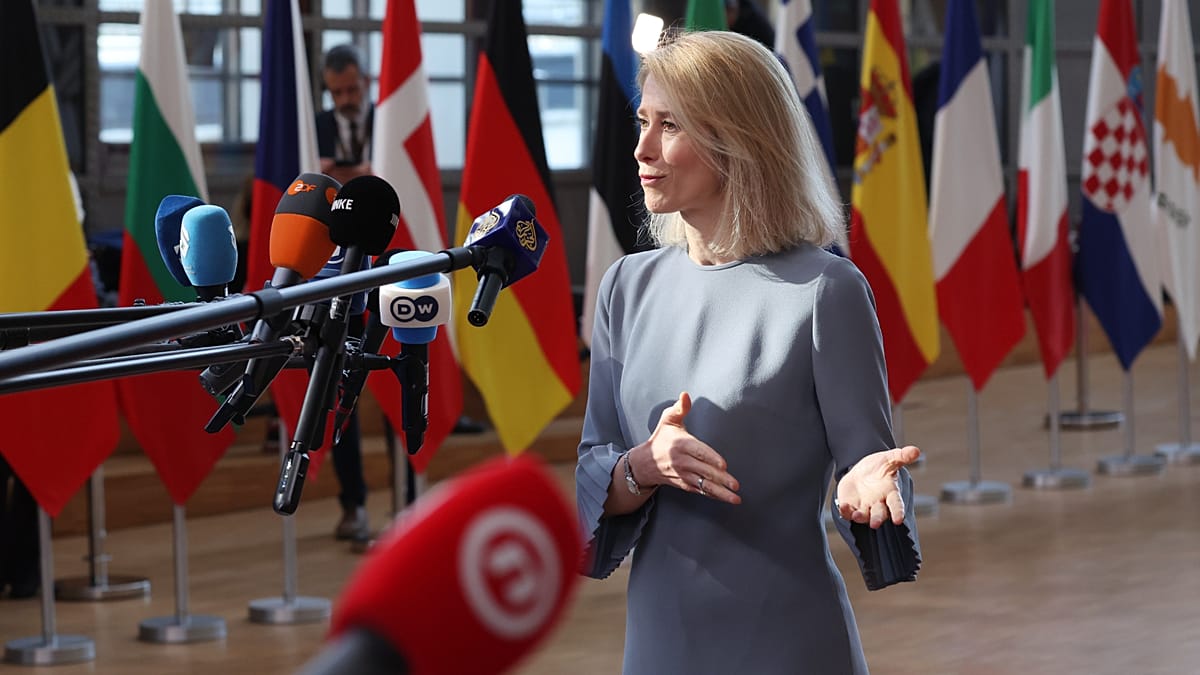
“The Iranian people are fighting for their future. By ignoring their rightful demands, the regime shows its true colours,” High Representative Kaja Kallas said on Friday. “Images from Tehran reveal a disproportionate and heavy-handed response by the security forces. Any violence against peaceful demonstrators is unacceptable.”

Separately, the European Commission denounced “the increasing number of deaths and injuries” and demanded respect for the right of peaceful assembly.

“The people of Iran are expressing their legitimate aspiration for a better life,” a Commission spokesperson said during the daily briefing with journalists.

Asked whether the Commission was in favour of regime change as a result of the widespread demonstrations, the spokesperson noted that “regime change has not been part of our EU consolidated policy vis-à-vis Iran”.

The protests began on 28 December, with demonstrators voicing their frustration at the country’s faltering economy, skyrocketing inflation and free-falling currency. As the movement quickly spread across the country, it gradually morphed into open defiance against the theocratic regime as a whole, with chants of “Death to the dictator!” and “Death to the Islamic Republic!”.

As the protests grew, Iran’s Ayatollah Ali Khamenei said his government “will not back down”and vowed “no leniency”. He also accused protesters of “ruining their own streets to make the president of another country happy” in reference to US President Donald Trump, who had previously warned Iran would get “hit very hard” if it killed its own citizens.

At least 42 people have been killed and more than 2,270 detained in Iran since 28 December, according to the US-based Human Rights Activists News Agency.

The latest escalation came on Thursday night after Reza Pahlavi, the eldest son of Iran’s last shah, encouraged Iranians to fight for their freedom.

In a direct appeal, Pahlavi urged Europeans leaders to follow Trump’s lead, “break their silence and act more decisively” in support of the Iranian people.

“I call on them to use all technical, financial, and diplomatic resources available to restore communication to the Iranian people so that their voice and their will can be heard and seen,” he said. “Do not let the voices of my courageous compatriots be silenced.”

In response to Phalavi’s intervention, Tehran cut off access to the Internet and international phone calls, further fuelling the outcry at home and abroad.

“Shutting down the internet while violently suppressing protests exposes a regime afraid of its own people,” Kallas said in her statement.

‘Shackles of oppression’

Reactions from European leaders began pouring in on Thursday after the Internet shutdown and continued on Friday.

European Parliament President Roberta Metsola was among the first to weigh in, paying tribute to the “generation who want to tear off the shackles of oppression” and denouncing “the cruelty of a regime focused on self-preservation”.

“We know the change that is underway,” Metsola said in a social media video.

Belgian Prime Minister Bart De Wever said, “Courageous Iranians are standing up for freedom after years of repression and economic hardship. They deserve our full support.”

His Swedish counterpart, Ulf Kristersson, echoed the message. “The self-evident demands for freedom and a better future can never in the long run be silenced with violence and oppression,” Kristersson said on social media.

German Foreign Minister Johann Wadephul decried the “excessive use of violence” and urged the Iranian authorities to “adhere to their international obligations”.

The Iranian Mission to the EU hit back at the expressions of solidarity with the protesters, describing them as “interventionist” and reflective of a “double-standard approach”, in reference to Europe’s response to the Israeli offensive on the Gaza Strip.

The protests come at a precarious time for Iran, following last year’s 12-day armed conflict with Israel and the ensuing US strikes on its nuclear facilities. France, Germany and the United Kingdom later decided to reimpose UN sanctions on Iran over its non-compliance with the international agreement meant to curtail its nuclear programme.
Share. Facebook Twitter Pinterest LinkedIn Tumblr Email

Keep Reading

EU citizenship: Which countries are issuing the most passports to non-EU nationals?

EU citizenship: Which countries are issuing the most passports to non-EU nationals?

Strait of Hormuz shutdown: What implications for Europe, for how long and how high can prices go?

Strait of Hormuz shutdown: What implications for Europe, for how long and how high can prices go?

Watch: EU governments are throwing billions at the petrol shock. Will it help?

Watch: EU governments are throwing billions at the petrol shock. Will it help?

Leaked call shows Szijjártó discussing EU sanctions removal with Russia’s Lavrov

Leaked call shows Szijjártó discussing EU sanctions removal with Russia’s Lavrov

Fact check: Does Hungary have alternatives to the Druzhba pipeline?

Fact check: Does Hungary have alternatives to the Druzhba pipeline?

Lebanese minister speaks to Euronews as Israeli strikes leave 1,200 dead in Lebanon

Lebanese minister speaks to Euronews as Israeli strikes leave 1,200 dead in Lebanon

Newsletter: Lebanese minister says situation ‘dramatic’ as Israel expands ground invasion

Newsletter: Lebanese minister says situation ‘dramatic’ as Israel expands ground invasion

EU to press Israel to scrap law allowing execution of convicted Palestinians

EU to press Israel to scrap law allowing execution of convicted Palestinians

The unanimity trap: what is the EU veto and why is it so hard to reform?

The unanimity trap: what is the EU veto and why is it so hard to reform?

Editors Picks
Strait of Hormuz shutdown: What implications for Europe, for how long and how high can prices go?

Strait of Hormuz shutdown: What implications for Europe, for how long and how high can prices go?

April 1, 2026
Watch: EU governments are throwing billions at the petrol shock. Will it help?

Watch: EU governments are throwing billions at the petrol shock. Will it help?

April 1, 2026
Leaked call shows Szijjártó discussing EU sanctions removal with Russia’s Lavrov

Leaked call shows Szijjártó discussing EU sanctions removal with Russia’s Lavrov

April 1, 2026
Fact check: Does Hungary have alternatives to the Druzhba pipeline?

Fact check: Does Hungary have alternatives to the Druzhba pipeline?

March 31, 2026
Latest News
EU citizenship: Which countries are issuing the most passports to non-EU nationals?

EU citizenship: Which countries are issuing the most passports to non-EU nationals?

April 1, 2026
Strait of Hormuz shutdown: What implications for Europe, for how long and how high can prices go?

Strait of Hormuz shutdown: What implications for Europe, for how long and how high can prices go?

April 1, 2026
Watch: EU governments are throwing billions at the petrol shock. Will it help?

Watch: EU governments are throwing billions at the petrol shock. Will it help?

April 1, 2026
Facebook X (Twitter) Pinterest TikTok Instagram
© 2026 Times Network New Zealand. All Rights Reserved.
  • Privacy Policy
  • Terms
  • Advertise
  • Contact

Type above and press Enter to search. Press Esc to cancel.