
European leaders have hailed the initial ceasefire agreement between the United States and Iran, though key issues affecting their own interests — such as access through the strategically crucial Strait of Hormuz— remain vague and uncertain.
ADVERTISEMENT

ADVERTISEMENT
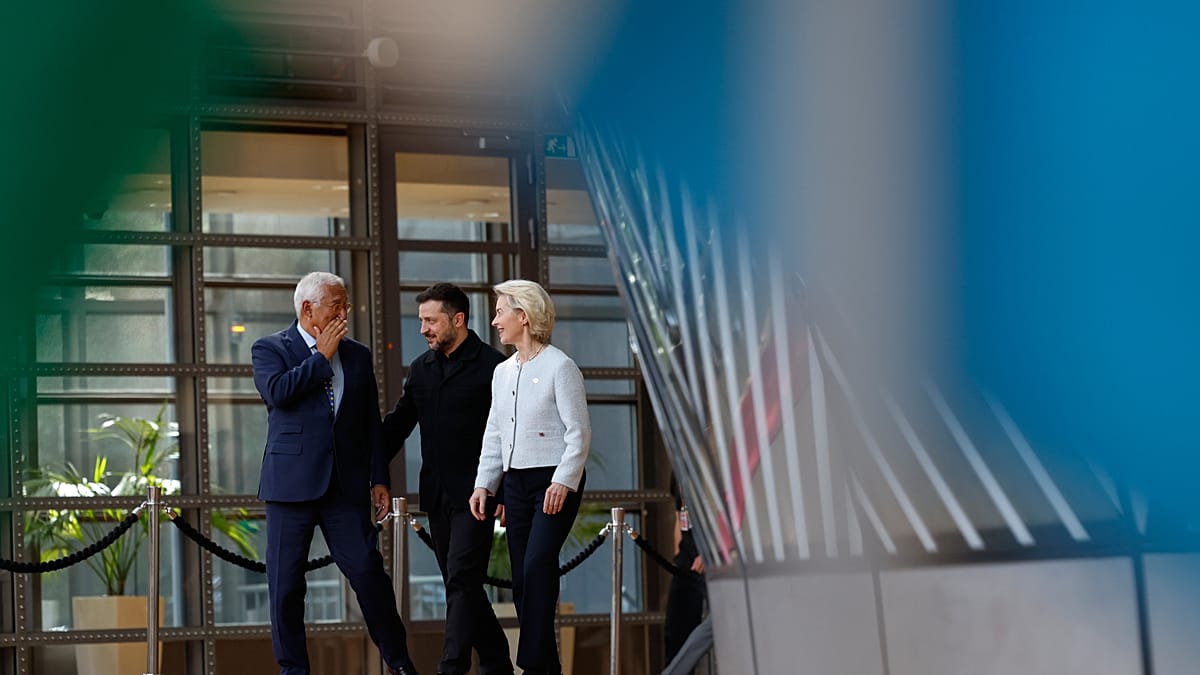
European Commission President Ursula von der Leyen said the deal brokered by Pakistan would bring “much-needed de-escalation” to the Middle East, while German Chancellor Friedrich Merz called for a solution leading to a “lasting end to the war”.
Spanish Prime Minister Pedro Sánchez, who has emerged as one of Europe’s staunchest critics of the US-Israeli strikes, said the ceasefire was “good news” but cautioned it should not “make us forget the chaos, the destruction and the lives lost”.
“The Government of Spain will not applaud those who set the world on fire just because they show up with a bucket,” Sánchez wrote on social media. “What’s needed now: diplomacy, international legality, and PEACE.”
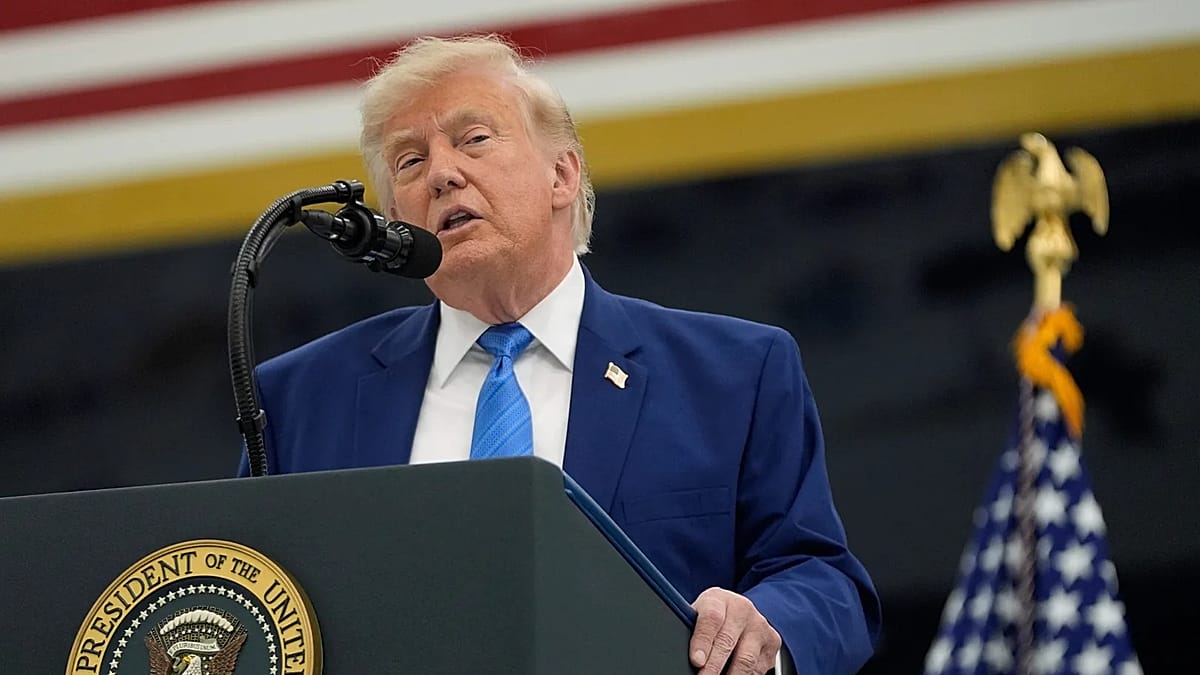
The deal was reached at the eleventh hour on Tuesday evening after a sharp escalation in threats from US President Donald Trump, who had threatened to “blow up” every bridge and every power plant in Iran if the country refused to reopen Hormuz.
“A whole civilization will die tonight, never to be brought back again,” Trump said, in extraordinary remarks that went unchallenged by European leaders.
As the deadline approached, Pakistan tabled a proposal for a two-week ceasefire that both sides eventually accepted. The plan, which is broken down into 10 points, is “a workable basis on which to negotiate” a broader agreement, Trump later said.
The breakthrough, however, leaves several crucial questions unanswered for Europeans, who have been largely sidelined from the diplomatic process and are scrambling to contain the fallout from a war with cascading consequences.
What about Hormuz?
Chief among them is the Strait of Hormuz, a narrow waterway that used to carry a fifth of the world’s oil and gas supplies and has been virtually blocked since the start of the US-Israeli strikes on 28 February. The effective closure has sent oil and gas prices soaring worldwide, prompting fears of shortages, rationing and stagflation.
Europeans have repeatedly voiced their readiness to help secure Hormuz, but only after the hot phase of the conflict is over, given the high risks of deploying military assets to the shipping lane, whose complex geography favours Tehran’s asymmetrical warfare.
Now, with the ceasefire deal on the table, Europeans will be asked to make good on their promise. The focus will be on a nascent coalition of over 40 countries from Europe and beyond that last week committed to securing Hormuz.
However, not every nation is expected to contribute equally. Demining and escorting vessels are expensive operations that only some armies can afford.
French President Emmanuel Macron said on Wednesday that about 15 countries would work on a “a strictly defensive mission, in coordination with Iran, when conditions will be met to allow traffic to resume,” without providing specific details.
Passage through Hormuz is unlikely to return to the pre-war status quo any time soon. Iran’s Foreign Minister Seyed Abbas Araghchi has already said the Iranian army would remain involved in deciding who sails through and under which conditions.
Meanwhile, Trump has floated the idea of a “joint venture” with Iran to charge fees to ships that cross the strait, a system that Tehran has already established on its own.
“It’s a way of securing it, also securing it from lots of other people,” Trump told ABC after the ceasefire news. “It’s a beautiful thing.”
For Europeans, any toll system, regardless of who manages it, would be unacceptable.
The United Nations Convention on the Law of the Sea (UNCLOS) forbids the imposition of charges for simple transit. While the US and Iran are among the few countries that have not ratified UNCLOS, its rules have become customary law worldwide.
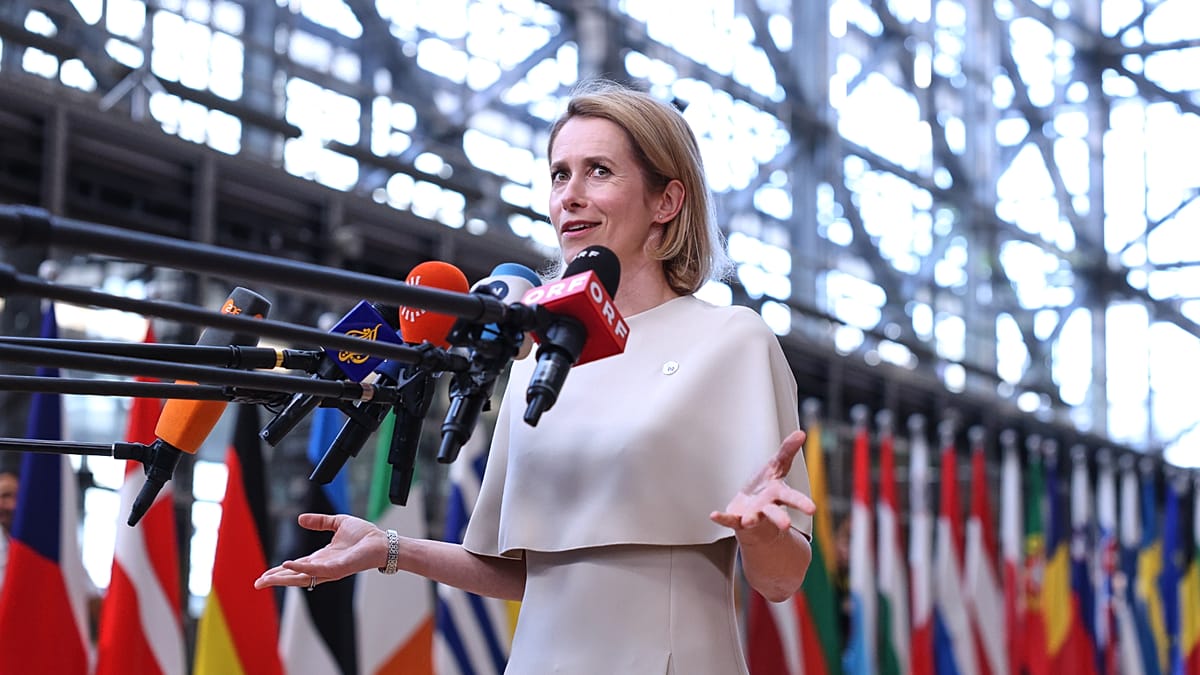
High Representative Kaja Kallas previously said that Hormuz, as a global public good, cannot be subject to “pay-to-pass schemes”.
What about sanctions?
Another question that would inevitably concern the Europeans is the lifting of sanctions, which Tehran claims is one of the 10 points in the ceasefire deal.
The EU has a wide-ranging sanctions regime in place against Iran that covers nuclear proliferation, human rights abuses, repression of protesters and military support for Russia’s full-scale invasion of Ukraine.
Earlier this year, the 27 member states agreed to designate Iran’s Islamic Revolutionary Guard Corps (IRGC) as a terrorist organisation. The IRGC is tasked with ensuring the survival of the clerical regime and today controls the Strait of Hormuz.
Under a 2015 deal, Iran had agreed to limit its nuclear programme in exchange for sanctions relief from the West. The EU did its part but had to reimpose restrictions after Trump invalidated the accord and Tehran breached its nuclear obligations.
Brussels might soon face a similar question: when and how to grant sanctions relief to Iran. The pace will be influenced by any decision Washington takes during the upcoming negotiations. After threatening civilisational erasure, the US president has suddenly adopted a positive tone, promising that “big money will be made”.
“We are, and will be, talking Tariff and Sanctions relief with Iran,” he said on social media.
Sweeping action in favour of Iran could put Europeans in a bind, given Tehran’s ongoing backing of Russia’s war on Ukraine, which the agreement does not appear to cover.
The European Commission declined to comment on the matter, arguing that discussing sanctions relief at this stage was “speculative and hypothetical”.
What about Lebanon?
Europeans are also keeping a nervous eye on Lebanon, a fragile multi-ethnic country that has been badly hit by Israel’s military action, first in Gaza and then in Iran.
The Israeli army has expanded its ground operations in southern Lebanon with artillery and airstrikes against Hezbollah, the Iran-backed Shiite militia. The offensive has displaced more than 1 million people and paved the way for long-term occupation.
As the ceasefire was announced, Pakistan’s Prime Minister Shehbaz Sharif underlined its provisions would cover Lebanon “and elsewhere, effective immediately”.
But shortly after, the office of Israeli Prime Minister Benjamin Netanyahu contradicted the claim, saying “the two-week ceasefire does not include Lebanon.” The Israeli army then launched a fresh wave of airstrikes on southern Lebanon.
The continuation of attacks on Lebanon has alarmed Europeans, who worry that worsening instability and suffering could derail the government’s efforts to strengthen the national army and weaken Hezbollah’s insidious influence.
Further deterioration also risks triggering a migratory wave towards Europe.
“We call on Israel to cease its operation in Lebanon, respecting Lebanon’s sovereignty and territorial integrity,” a European Commission spokesperson said on Wednesday.
Macron echoed the message. “Our wish in this context is to be assured that the ceasefire fully includes Lebanon,” he said.
The EU has allocated €1 billion in financial aid to Lebanon from 2024 to 2027. A share of the funds is earmarked for border management.